Scientists have identified the gene SDMYB as the molecular switch behind daily sex changes in avocado flowers, explaining A- and B-type flowering schedules. By combining genome mapping with precise, hour-by-hour field observations, the researchers showed that two SDMYB alleles produce complementary male/female timing and that B-type trees are homozygous for a recessive allele. These markers let breeders predict flower type early — avoiding a 10–15 year wait — and improve orchard pollination strategies.
Avocados Switch Sex Every Day — Scientists Identify the SDMYB Genetic 'Clock'
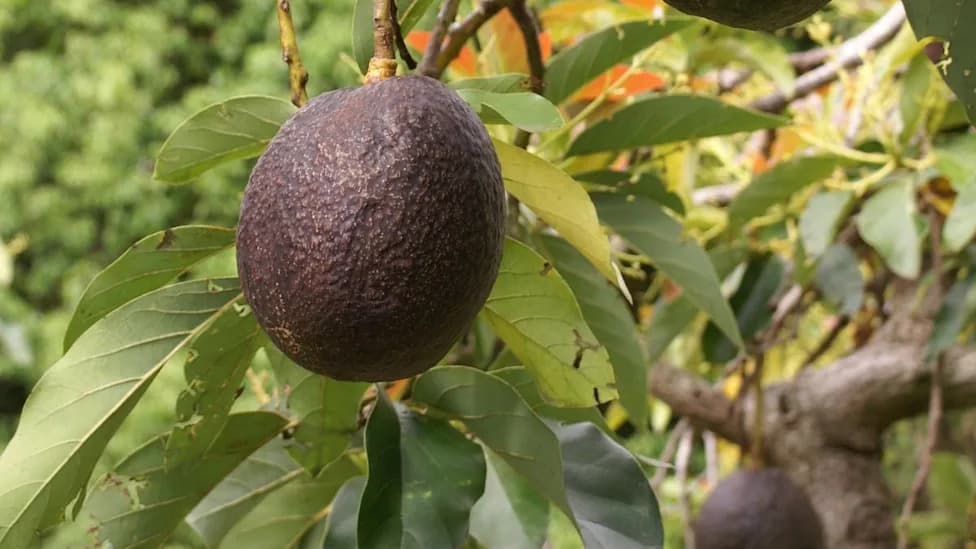
Persea americana avocado fruit, as analyzed in this research. (B.navez/Wikimedia Commons)
Researchers have uncovered the genetic mechanism that makes avocado flowers flip between functional female and male phases on a daily cycle — a strategy called temporal dichogamy that prevents self-pollination.
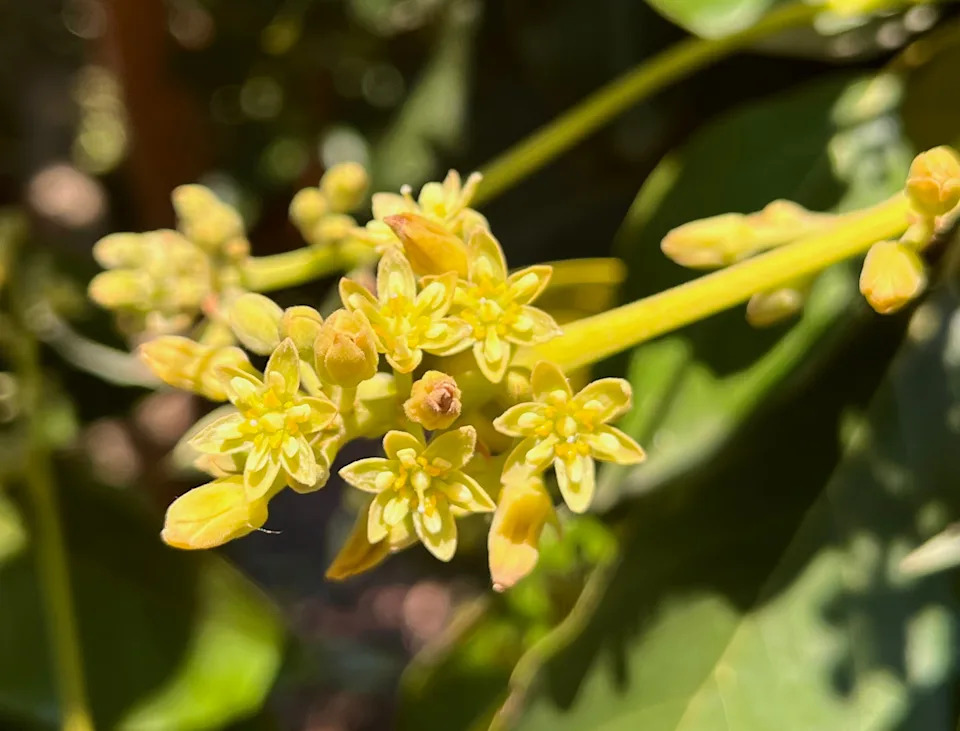
An image showing an avocado tree's flowers being both open and closed.(Jeffrey Groh/UC Davis)
What the Study Found
A team of ecologists and agricultural engineers combined hour-by-hour field observations of thousands of flowers with genome sequencing and timed gene-expression analyses from hundreds of trees. They identified a single gene, SDMYB, whose activity oscillates like a clock and determines whether a tree follows the A- or B-type flowering schedule.
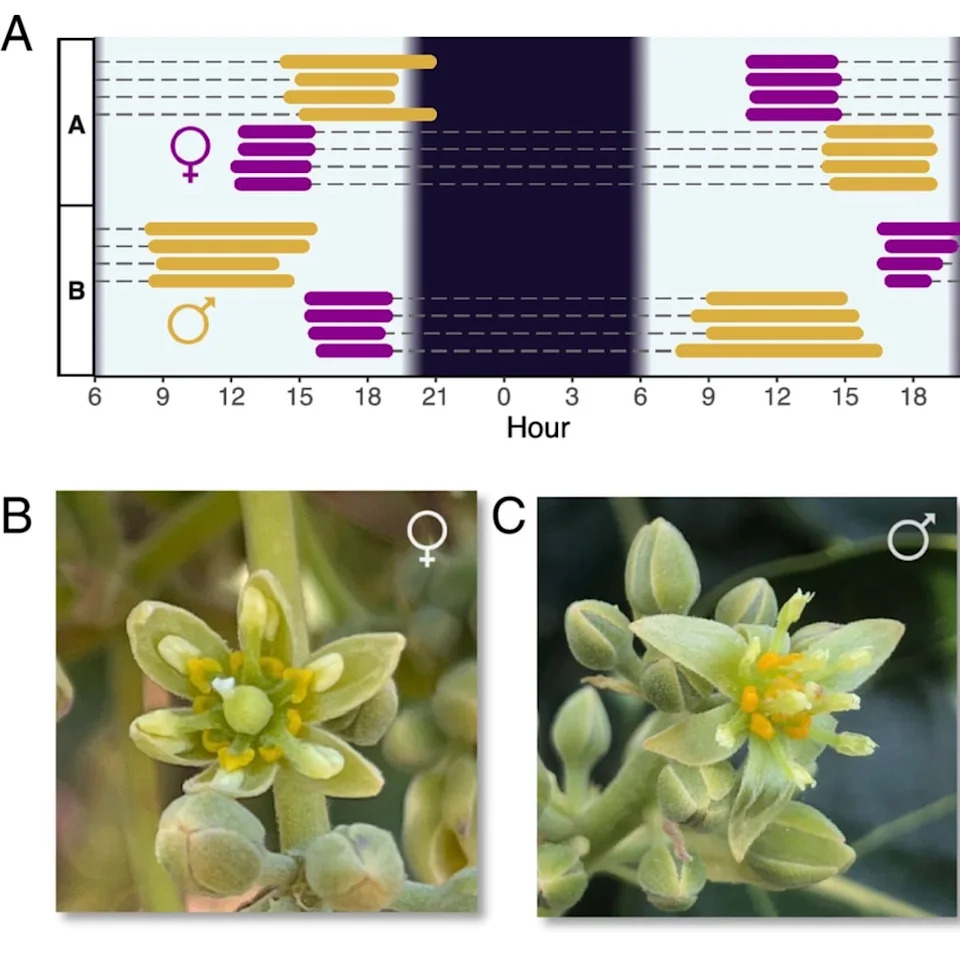
Researchers tracked the flowering phases of A- and B-type avocado plants over consecutive days. Flowers ofPerseaamericanain the female (B) and male phase (C) are also shown. (Groh et al.,PNAS, 2026)
How A and B Types Differ
A-type trees typically open their female-phase flowers in the morning and shift to the male phase in the afternoon, while B-type trees do the opposite. The researchers found that A-type trees carry one copy of each SDMYB allele (heterozygous), whereas B-type trees are homozygous for a recessive SDMYB allele — a simple genetic explanation for the complementary schedules that minimize self-fertilization.

Subscribe to ScienceAlert's free fact-checked newsletter
'Our study provides a genetic explanation for a century-old mystery of avocado pollination,' — Jeffrey Groh, evolutionary geneticist (UC Berkeley)
Methods and Evidence
The team performed a detailed 'sex watch' — monitoring flower opening and closing across days and nights while recording temperature and light — and paired those observations with genomic maps and time-of-day gene-expression data. Together, these lines of evidence support SDMYB as the key regulator of the timing differences between A- and B-type trees.
Practical Implications for Growers and Breeders
Because avocado trees can take 10–15 years to flower, breeders previously had to wait long periods to learn a seedling's flowering type. With SDMYB markers, breeders can genotype seedlings and choose A- or B-type plants early, saving time, labor, and orchard space. The study notes a practical orchard strategy: planting roughly 10% B-type pollinizer trees can improve fruit set in predominantly A-type orchards — useful because popular commercial cultivars like Hass are A-type.
The SDMYB variants appear to be evolutionarily ancient (the researchers estimate they arose over 42 million years ago). While gene editing to alter flavor or other traits remains speculative and years away, these genetic markers already provide an immediate tool for smarter breeding and orchard planning.
Publication: Proceedings of the National Academy of Sciences (PNAS), 2026.
Help us improve.