South Africa marked the 70th anniversary of the Aug. 9, 1956 women’s march, when roughly 20,000 women protested apartheid pass laws. While the march remains a powerful symbol of resistance, many women say full freedom is still out of reach due to high levels of gender-based violence, poverty and structural inequality. A 2024 UN Women-supported study found more than one in three women in South Africa have experienced physical or sexual violence. Activists and figures like Paralympian Kgothatso Montjane say the march set a lasting platform, but persistent barriers continue to limit women’s freedom.
70 Years On: South Africa’s 1956 Women’s March Left a Legacy — But Full Freedom Remains Elusive
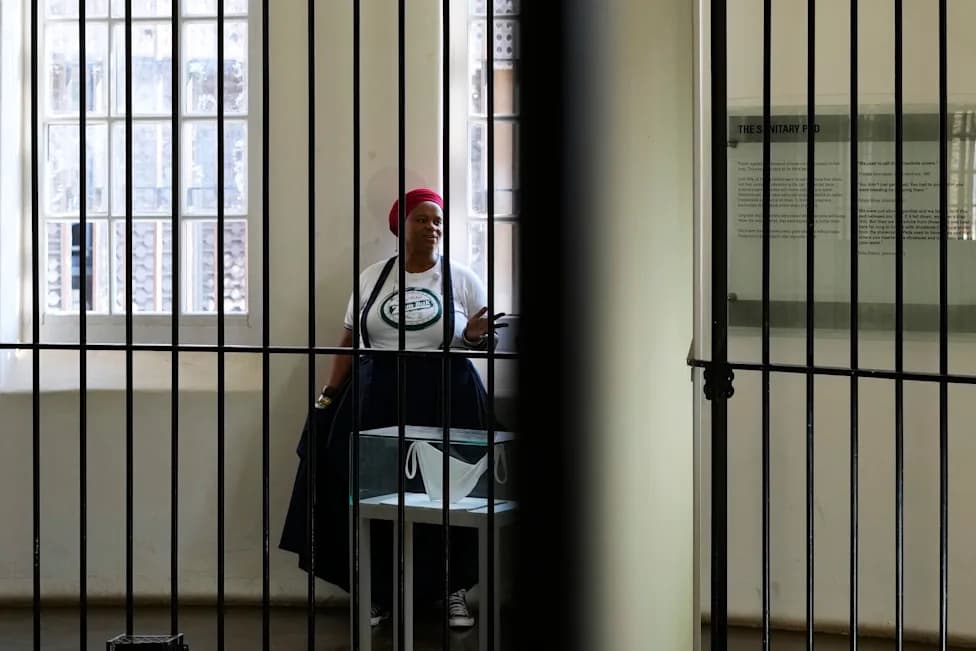
Nolubabalo Memese speaks during an interview while standing in the foyer of Women's Jail, a museum that stands near the Constitutional Court, in Johannesburg, South Africa, Wednesday, July 22, 2026. (AP Photo/Themba Hadebe)(AP Photo/Themba Hadebe)
Johannesburg — On Aug. 9, 1956, about 20,000 women of different races marched to Pretoria to protest apartheid-era pass laws that controlled and limited the movement of Black women. The demonstration became a defining moment in the struggle against white minority rule and remains a powerful symbol of collective resistance.
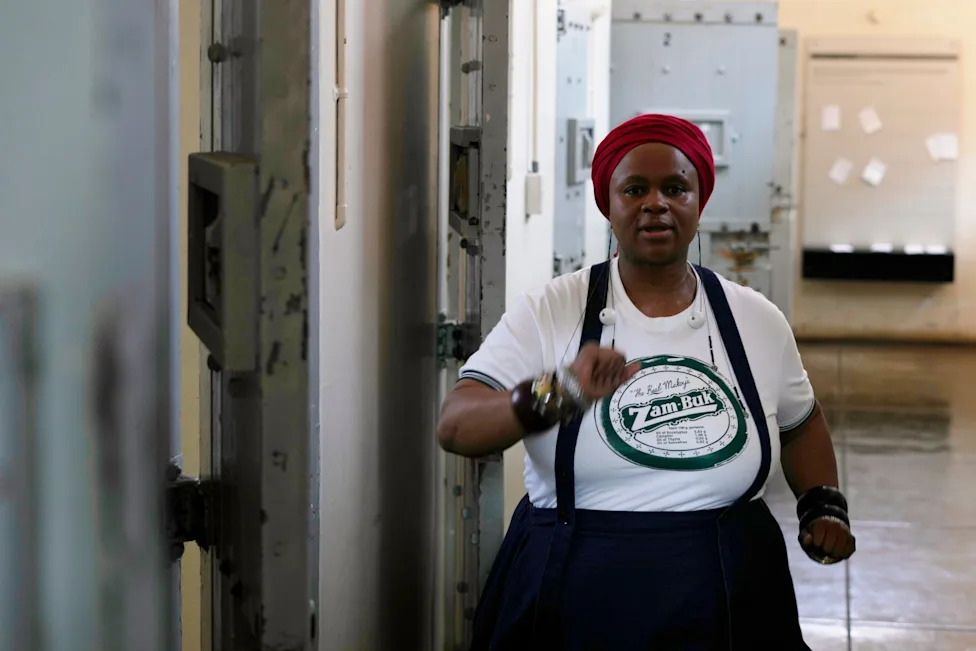
Nolubabalo Memese speaks during an interview while standing against a pillar inside a Women's Jail, a museum that stands near the Constitutional Court, in Johannesburg, South Africa, Wednesday, July 22, 2026. (AP Photo/Themba Hadebe)(AP Photo/Themba Hadebe)
Legacy and Memory
Seven decades after risking arrest, torture and even death to oppose racist legislation, many South African women say the fight for full freedom remains unfinished. While apartheid officially ended in 1994, women continue to confront entrenched poverty, inequality and alarmingly high levels of gender-based violence.
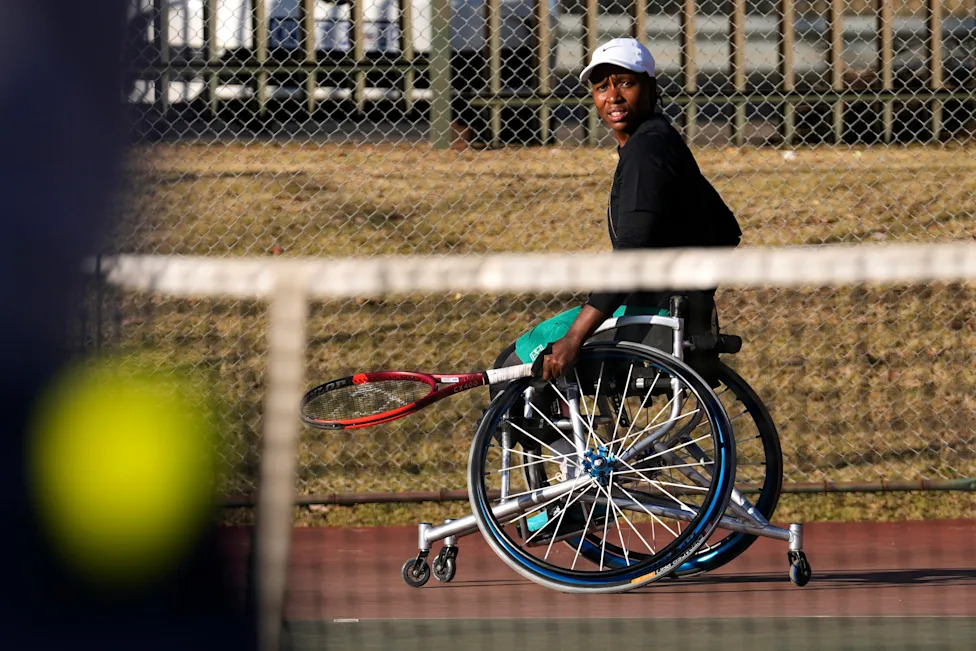
Kgothatso Montjane, a South African Paralympic wheelchair tennis champion, watches the ball after playing a return shot during practice in Pretoria, South Africa, Saturday, Aug. 1, 2026. (AP Photo/Themba Hadebe)(AP Photo/Themba Hadebe)
Voices From the March
Ramnie Dinat, now 84, was a teenager during the 1956 march. She remembers helping her mother, Ama Naidoo, an anti-apartheid activist, organize women in the run-up to the rally. Dinat recalled that women across racial lines — Black, Indian and some white women — joined the protest.
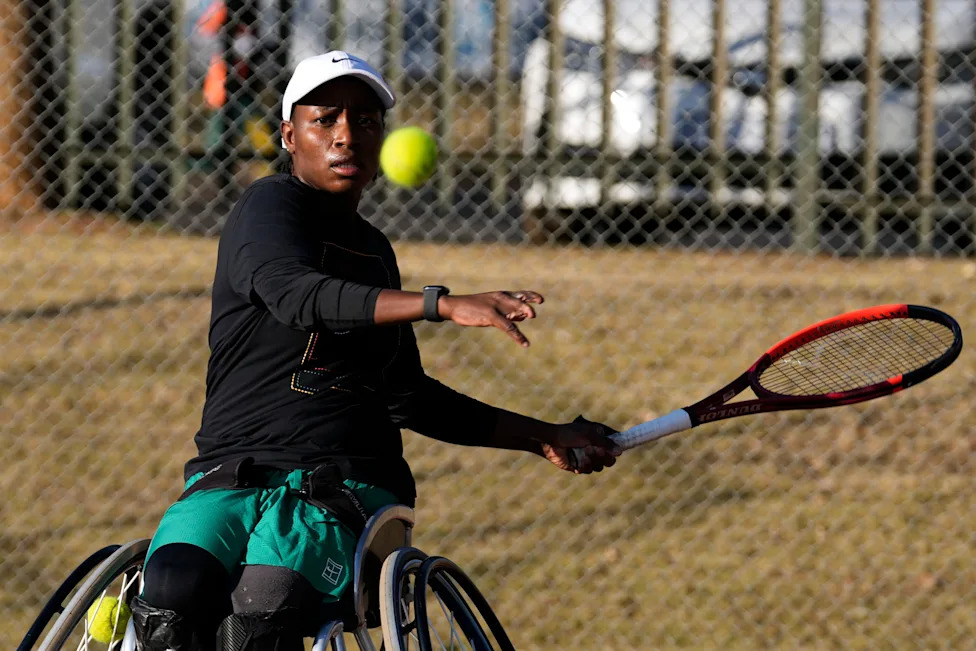
Kgothatso Montjane, a South African Paralympic wheelchair tennis champion, plays a return shot during practice in Pretoria, South Africa, Saturday, Aug. 1, 2026. (AP Photo/Themba Hadebe)(AP Photo/Themba Hadebe)
“Black women were organizing, and Indian women couldn’t be silent,” Dinat told The Associated Press. “We were ordinary women who believed we could make a difference. We simply believed it was the right thing to do.”
From Prison to Museum
Perched on a ridge above central Johannesburg, the former Women’s Jail — once a pillar of the apartheid prison system — is now part of a museum precinct at Constitution Hill near the Constitutional Court. Many march leaders and participants were later detained there, where prisoners were segregated by race and subjected to harsh, dehumanizing conditions.
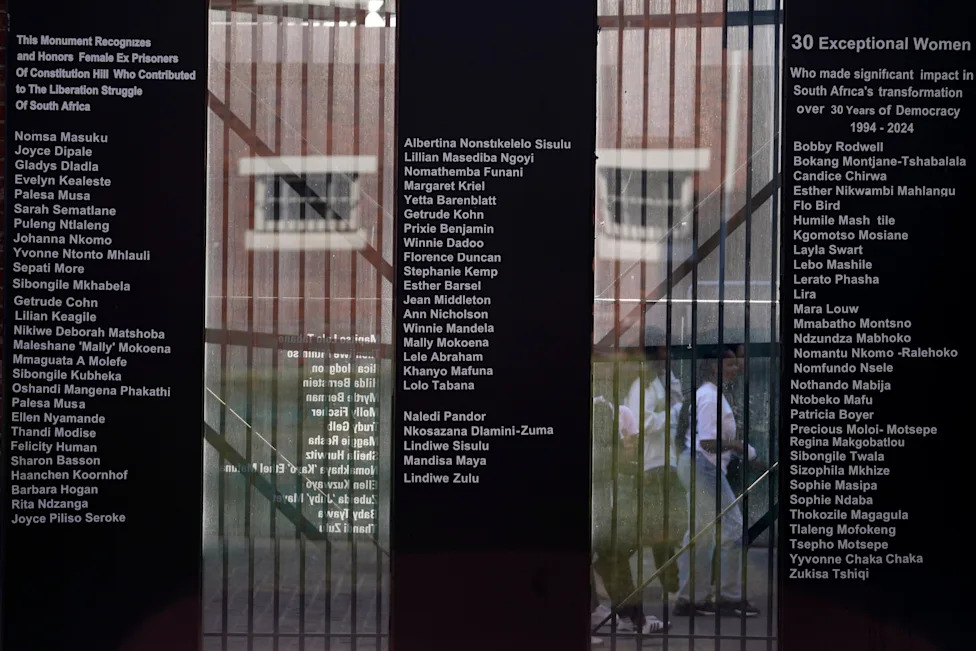
Names of former prisoners are displayed at Women's Jail, a museum that stands near the Constitutional Court, in Johannesburg, South Africa, Wednesday, July 22, 2026. (AP Photo/Themba Hadebe)(AP Photo/Themba Hadebe)
“It was designed to break, humiliate, dehumanize,” said Nolubabalo Memese, Visitors Services Manager at Constitution Hill. She recalled that Black women were denied basics like underwear and proper sanitary supplies.
Memese emphasizes that the museum honors not only famous figures such as Winnie Madikizela-Mandela and Albertina Sisulu, but also thousands of ordinary women whose contributions rarely appear in history books.
Freedom, Then and Now
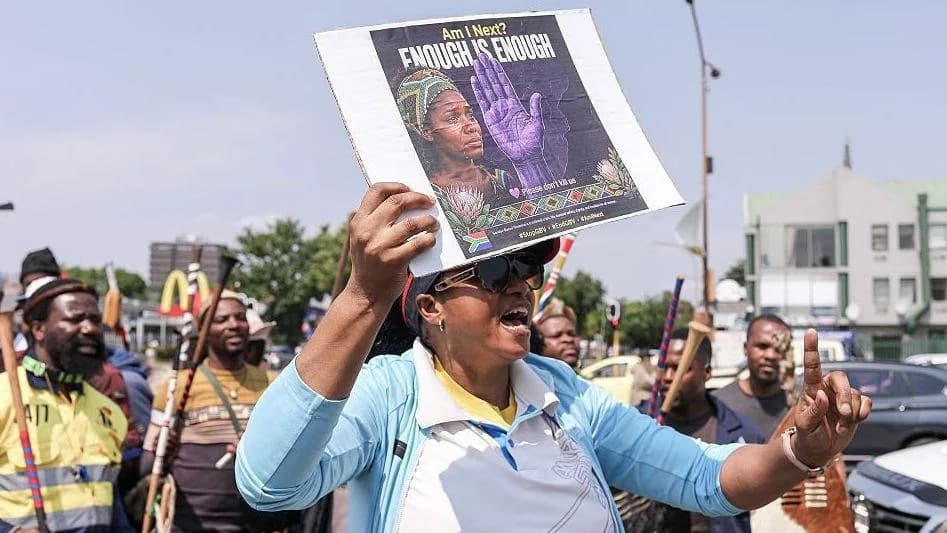
Although apartheid laws no longer restrict movement or employment, many say other barriers now curtail women’s freedoms. A 2024 UN Women-supported study found that more than one in three South African women have experienced physical or sexual violence in their lifetime. The United Nations has described violence against women and girls in South Africa as a crisis and a “national wound.”
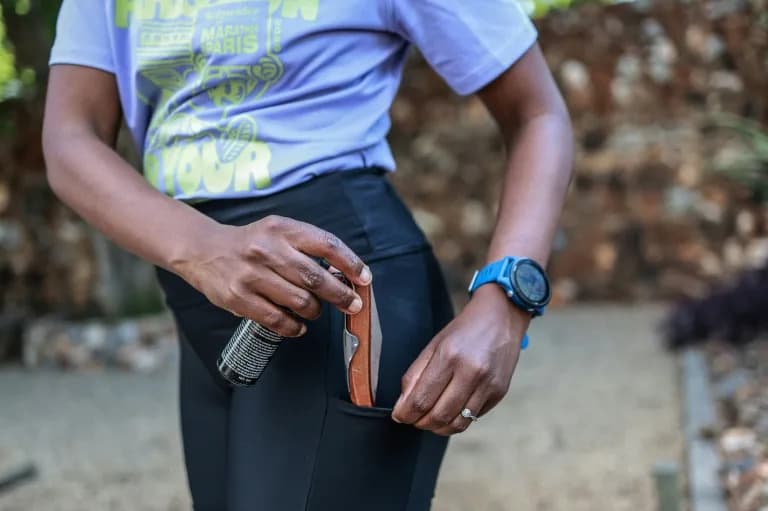
“There’s a different monster which precludes us from enjoying freedom of movement and economic participation. And that’s gender-based violence. That’s crime,” Memese said. She added that fear often limits routine activities such as jogging in the early morning or evening.
Structural Barriers Persist
Government data shows women are more likely than men to be unemployed, to carry the burden of unpaid care work and to be underrepresented in senior leadership roles. These structural disadvantages extend into sport and other areas: Paralympic wheelchair tennis star Kgothatso Montjane, who won the 2024 Wimbledon wheelchair doubles title, highlighted the financial barriers that limit access to elite competition.
“The barriers I had to overcome ... in a sport like tennis, it’s just a financial issue,” Montjane said. “They don’t lie when they say tennis is a white sport, and you don’t really find people of color dominating in this sport.”
Remembering to Move Forward
When the old Women’s Jail was dismantled, some of its bricks were reused to build the museum, a symbolic reuse that underscores continuity between past struggles and future aspirations. “We are using the bricks of the past to build our future,” Memese said. For Dinat, the message remains timeless: every generation must decide whether to stand up for what is right.
What remains clear: the 1956 march created a foundation for progress and solidarity, but many South African women still face daily and structural obstacles to full equality and safety.
Help us improve.