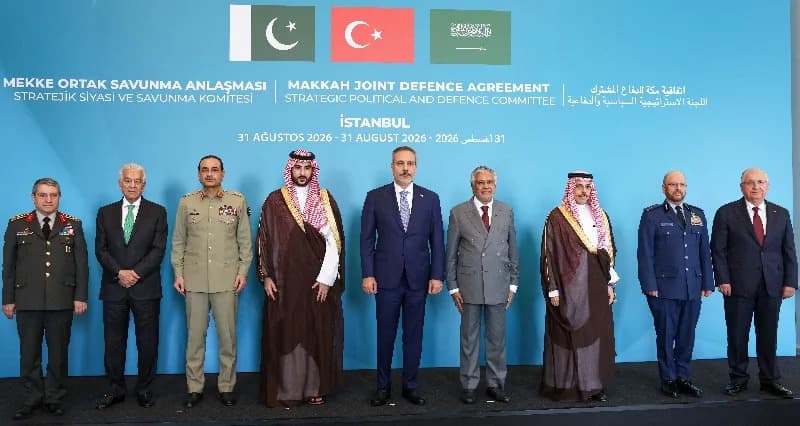
The Mecca Joint Defence Pact, signed by Turkey, Saudi Arabia and Pakistan, is presented as a deterrent but stops short of promising automatic military intervention. Each member offers distinct strengths—Pakistan's military and nuclear deterrent, Turkey's drone and defence industry, and Saudi Arabia's financial backing—yet coordination mechanisms remain untested. Concerns about U.S. reliability and rising regional tensions have accelerated cooperation, though expansion to other states is uncertain. The pact’s true significance will only become clear if members are drawn into a shared crisis.
Will the Mecca Joint Defence Pact Reshape the Middle East? Turkey, Saudi Arabia and Pakistan Sign Historic Security Agreement
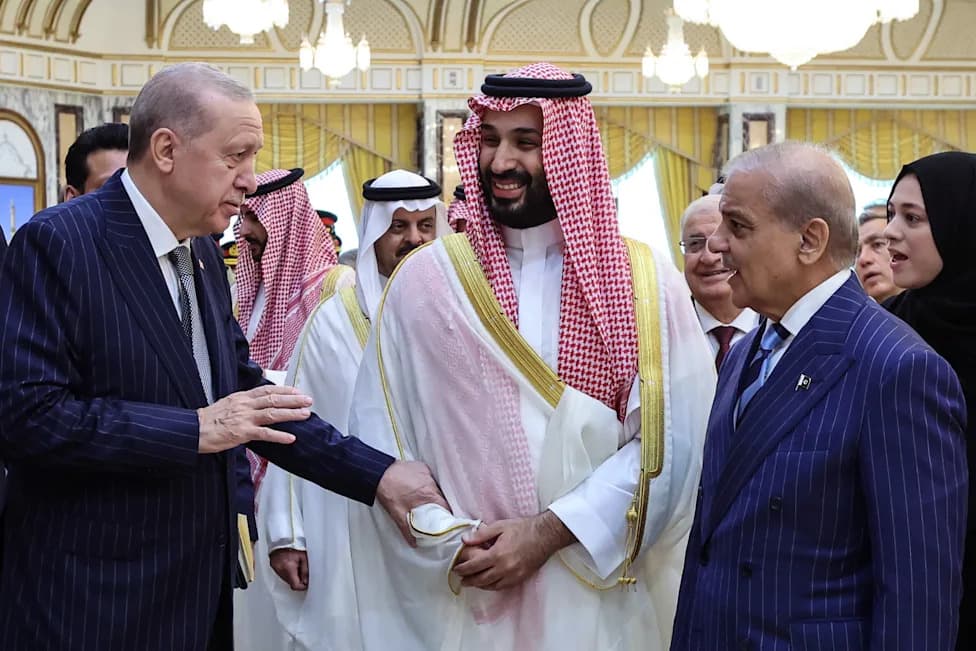
Turkiye's President Recep Tayyip Erdogan, left, Saudi Arabia's Crown Prince Mohammed bin Salman, centre, and Pakistan’s Prime Minister Shehbaz Sharif meet in Mecca on August 7 [AFP]
The Mecca Joint Defence Pact, formalised by Turkey, Saudi Arabia and Pakistan, has prompted a wave of speculation about whether a new regional axis is emerging between Israel and Iran. The agreement — building on a security arrangement between Riyadh and Islamabad last year — is presented as a deterrent but leaves key practical obligations deliberately ambiguous.
What the Pact Says
Leaders framed the pact as a pledge of unity and mutual deterrence rather than an automatic trigger that would obligate signatories to join every conflict. Early reporting suggests the declaration treats an attack on one party as one that 'should be considered an attack on all,' language that analysts say signals commitment in principle but stops short of unconditional mutual defence.
Harlan Ullman, chairman of the Killowen Group, told Al Jazeera that the phrase 'should be' is significant because it does not necessarily create an automatic obligation to intervene.
Immediate Flashpoints
Several nearby crises could test the pact. Pakistan has been involved in a border confrontation with Afghanistan since February and exchanged artillery fire with India in May 2025. Saudi Arabia has faced strikes from Iran and Iranian-backed groups since a major regional escalation in late February. Turkey continues operations against Kurdish armed groups domestically and across borders and has seen tensions with Israel rise.
Complementary Capabilities
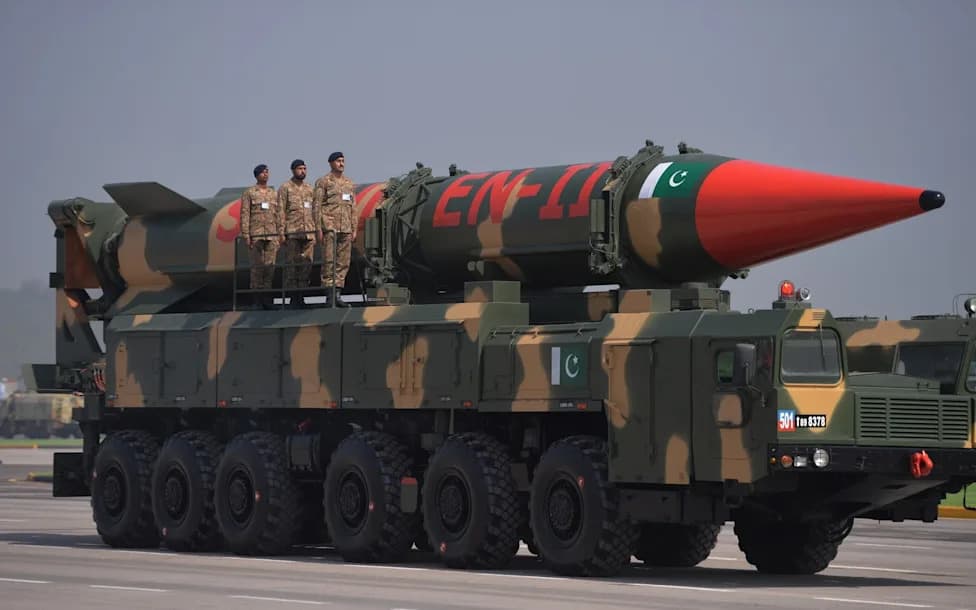
Analysts note that each signatory brings distinct strengths. Pakistan offers combat experience, munitions production and nuclear deterrence; Turkey contributes advanced drone technology and defence manufacturing capacity and maintains ties with NATO; and Saudi Arabia supplies significant financial resources to underwrite joint initiatives. Observers say these complementary assets could make any coordinated response more capable, but coordination mechanisms and political will remain untested.
Al Jazeera correspondent Osamah Bin Javaid summarised the mix of military, technological and financial assets each country brings to the table.
Why Now: Shifting Reliance on the United States
Concerns about the reliability of U.S. security guarantees have helped motivate the search for alternative partnerships. Some regional governments perceive Washington's foreign-policy posture as less predictable, prompting them to explore new defense arrangements and hedging strategies.
Limits to Expansion
Debate continues over whether the pact will widen to include other states such as Egypt, the UAE, Qatar or Syria. Each potential member faces its own constraints: Syria is preoccupied with reconstruction; Egypt prioritises economic stability and has historically avoided commitments that could draw it into conflict; the UAE has diverged from Saudi and Turkish policy on Yemen and normalised ties with Israel. These competing priorities and past disagreements make expansion uncertain.
Strategic Implications
Although the signatories refrained from naming specific adversaries, many regional observers view Israel and Iran as the principal security concerns motivating the agreement. Some analysts warn that public warnings from Israeli leaders about a possible 'Sunni axis' could paradoxically accelerate closer cooperation among Sunni-majority states.
The Real Test
The pact's true significance will be revealed if and when members face a crisis that demands collective action. Would attacks by proxies or non-state actors on one signatory draw armed responses from the others? The answer will depend on political calculations, domestic constraints and the practical mechanisms established for coordination — not solely on the pact’s rhetoric.
Bottom line: The Mecca Joint Defence Pact is a notable step toward closer security cooperation among Turkey, Saudi Arabia and Pakistan, but its practical reach and long-term impact on the regional order will hinge on how the agreement is interpreted, operationalised and tested in real conflicts.
Help us improve.