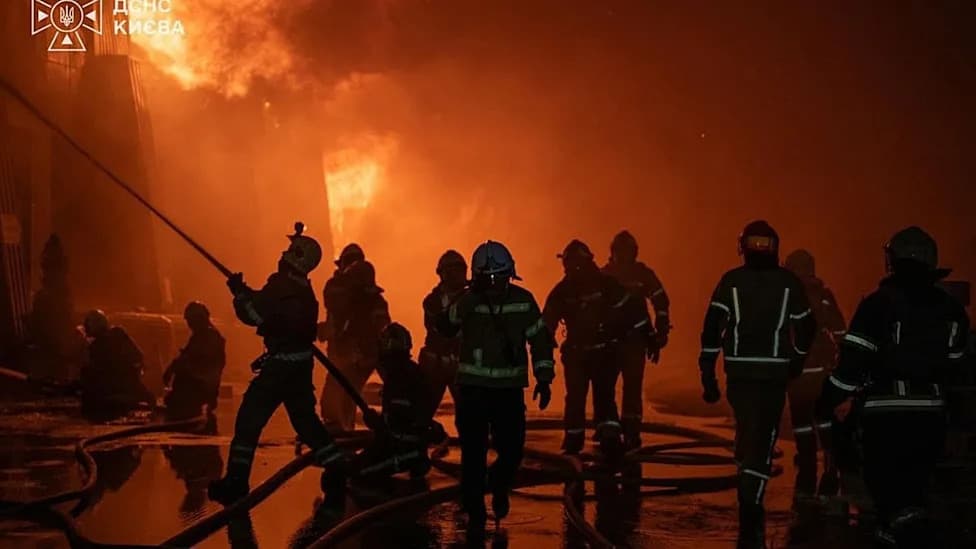
The article recounts paramedic Inna Lytvynenko's narrow escape after an FPV drone struck her ambulance in Kherson and outlines a wider pattern of deliberate attacks on Ukrainian healthcare. The WHO has recorded 3,118 healthcare attacks since February 2022, with year-on-year increases—roughly a 20% rise followed by about a 30% jump in 2024. MSF says many strikes, including FPV and double-tap attacks, appear intentional, forcing clinics and ambulances to withdraw and leaving frontline civilians, especially the elderly and chronically ill, without critical care.
“I Ran Because I Knew I Would Die”: Russian Drones Hunt Medics and Ambulances in Ukraine
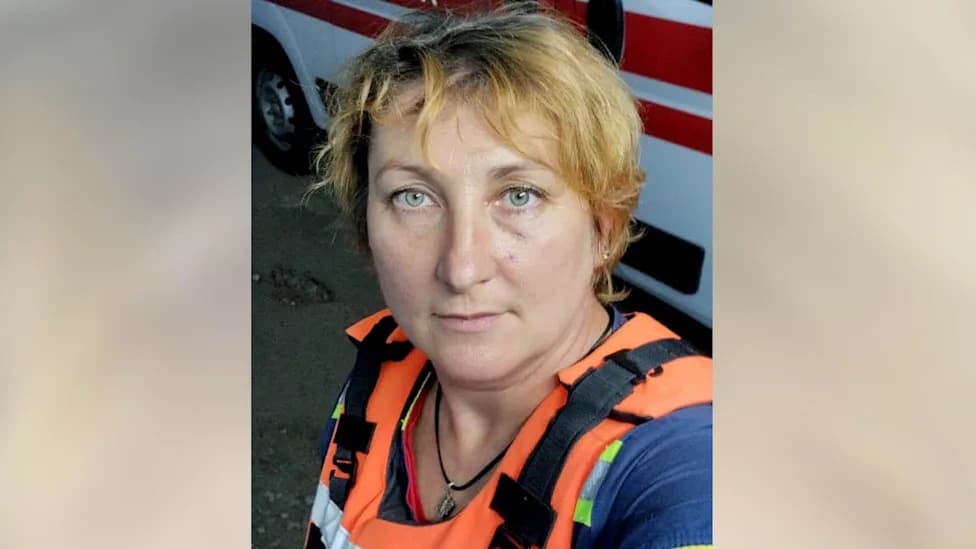
Inna Lytvynenko says she was hunted by Russian drones when she tried to help a wounded woman in Kherson [Inna Lytvynenko]
Inna Lytvynenko always straps on bright orange body armour before answering emergency calls. Last June she went to Kherson to treat a woman wounded in a Russian drone strike when a first-person-view (FPV) drone smashed into her ambulance. Moments later another FPV drone closed in at high speed.
"I panicked. I grabbed my trauma bag and started running," Lytvynenko recalls. "I shouted and screamed. I knew that if I stopped, I would die." After being pursued for roughly ten minutes the drone eventually flew off and police evacuated her. Vehicles that came to move the injured woman toward hospital were hit in follow-up strikes; it took a third police car hours later to extract the patient.
Rising Attacks on Healthcare
Humanitarian and health organisations say strikes on hospitals, ambulances and medical personnel are an increasingly persistent feature of the conflict—contravening the Geneva Conventions, which require medical services to be protected. "This is a new normality, which should not be the normality," says Dr Jarno Habicht, the World Health Organization (WHO) representative in Ukraine.
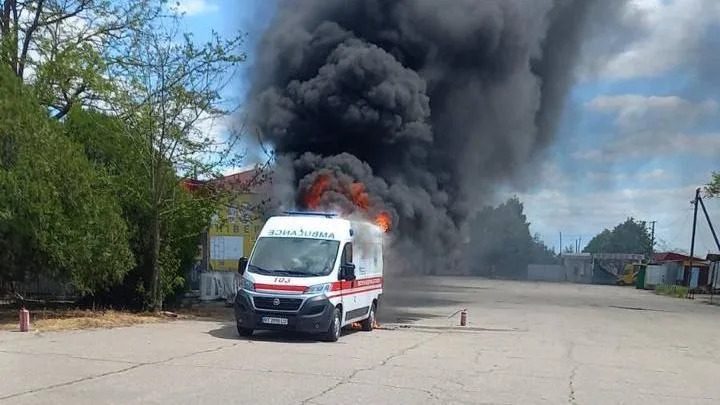
The frequency of attacks on healthcare suggests that they are "a sustained feature of the war", MSF says [Provided by a third party]
The WHO has recorded 3,118 attacks on healthcare since the Russian invasion began in February 2022—about two incidents per day. These incidents have increased year-on-year: the sector saw roughly a 20% rise followed by about a 30% increase in 2024, and medical charities warn the trend appears set to continue.
Patterns and Tactics
A recent report by Médecins Sans Frontières (MSF) concludes that Russian forces often target medical facilities systematically and, in many cases, deliberately. FPV drones—which transmit a live camera feed to the pilot—allow attackers to steer craft directly onto a chosen target. "When an FPV drone hits an ambulance, it has to be on purpose," says Robin Meldrum, MSF's country coordinator in Ukraine.
Another concerning tactic is the "double-tap" strike, where a location is hit twice within minutes: the second strike frequently strikes first responders arriving after the initial attack. During a large air assault on Kyiv, a second strike at the same site killed seven people, including a police officer and a volunteer.
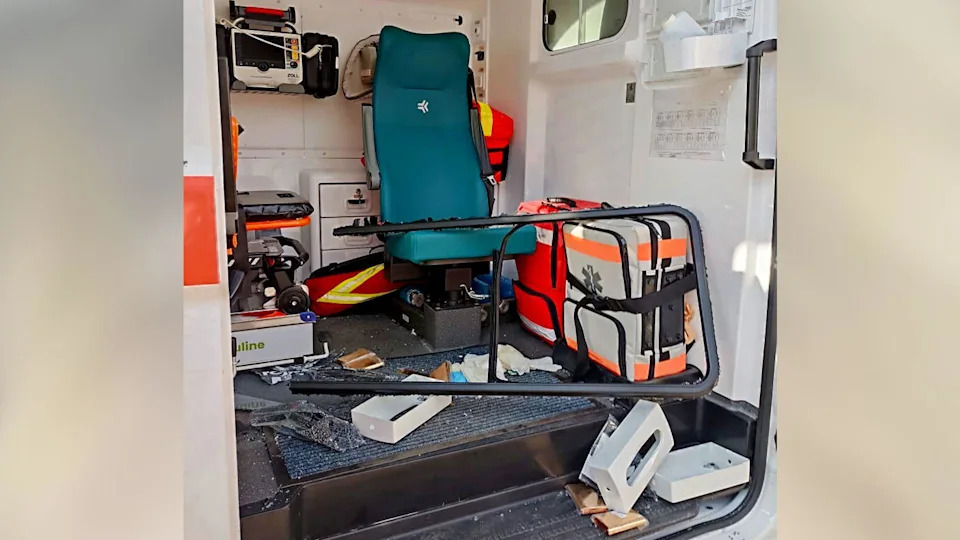
A first drone hit Inna's ambulance in Kherson, while a second targeted her directly [Provided by a third party]
Impact on Services and Civilians
The WHO reports that attacks on ambulances account for about 20% of all assaults on Ukraine's healthcare system, suggesting ambulances and medics are being targeted as part of a calculated strategy. The result is that civilians close to the front lines—many elderly and living with chronic conditions—are increasingly cut off from routine care, medication and emergency treatment.
High risks have forced health organisations to withdraw or restrict services. MSF says mobile clinics have been pushed progressively farther from the frontline: "Two years ago we could go 5–8 km from the frontline; now we avoid areas within 30 km, and that distance keeps growing." Over the past 18 months MSF has stopped routine visits to around 80 frontline villages and recently suspended ambulance services in Sloviansk.
Recent Strikes and International Concerns
Last month, missiles struck a hospital in Kherson, severely damaging the building and killing one doctor. The hospital director called the pattern of multiple strikes within minutes evidence the attack was deliberate. In the same period, warehouses used by three UN agencies, including the WHO, were damaged during air strikes despite the organisations sharing coordinates with both sides in an effort to avoid being hit.
Ukraine's president, Volodymyr Zelensky, has urged the international community to increase pressure on Russia to stop what he described as deliberate "hunting attacks" on civilians. Aid groups say stronger protections, accountability and restrictions on weapon use near medical facilities are urgently needed.
"It doesn't feel like we're protected in this environment," Meldrum says. "We don't feel that the rules of war are being respected."
For medics like Lytvynenko the risk is immediate and personal: they continue to respond despite mounting danger, scanning social media for threats and praying each time they head out. The attacks have not only cost buildings and equipment but eroded the ability of Ukraine's healthcare system to reach its most vulnerable citizens.
Help us improve.