Airborne lidar in the southwestern Amazon revealed hundreds of previously unknown earthworks — and researchers extrapolate tens of thousands across a 70,000-square-mile region now attributed to the so-called Aquiry cultural complex. The study, published in Nature, estimates 24,000–30,000 earthworks and a population of roughly 1.25–3 million people at the civilization's height (100–300 C.E.). Sites average 7 acres, with the largest near 123 acres; many include ditches up to 16 feet deep. If confirmed elsewhere, these results would force a major reassessment of precolonial Amazonian demography, land use, and environmental impact.
Lidar Reveals Massive Lost Amazonian Civilization — Pentagram-Shaped Earthworks and Millions of People

Archaeologists Found a Massive Lost CivilizationAndriy Onufriyenko - Getty Images
New lidar surveys and archaeological analysis suggest a vast, organized precolonial society once reshaped the southwestern Amazon, carving tens of thousands of monumental earthworks — including circles, squares, octagons and even pentagrams — into the rainforest. Published in Nature, the study argues these features point to a dense, highly engineered landscape and a much larger ancient population than previously recognized.
What the Researchers Found
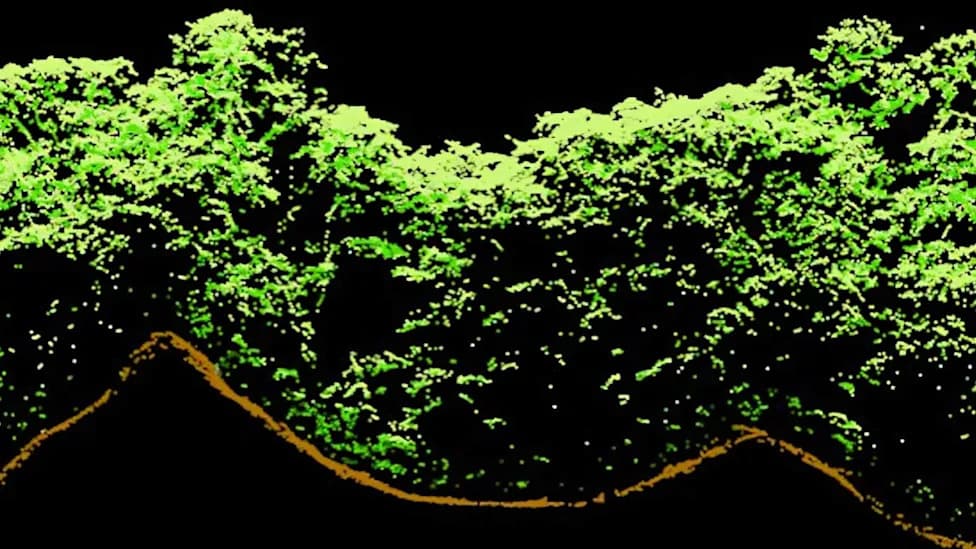
Canopy-penetrating airborne lidar surveyed roughly 3% of the area the authors now associate with a cultural complex they call the Aquiry. In that sample the team documented 432 earthworks, of which 396 had never been recorded before. Combined with 1,279 sites identified earlier from satellite and aerial imagery, the mapped portion now contains roughly 1,700 known sites, including about 120 ditched geometric enclosures (geoglyphs).
Extrapolating the lidar data across the 70,000-square-mile region the researchers assign to the Aquiry, the paper projects between 24,000 and 30,000 earthworks in total, with roughly two-thirds likely constructed by the Aquiry themselves. To support that scale of construction and agricultural infrastructure, the team estimates a population of about 1.25 million to 3 million people during the civilization's peak, roughly between 100 C.E. and 300 C.E.
"The scale and precision of these constructions is simply astonishing," said lead author Martti Pärssinen of the University of Helsinki, emphasizing the planning and labor required to build the enclosures.
Designs, Dimensions and Possible Uses
Most earthworks feature ditches and raised embankments. Sites average about 7 acres, while the largest approach 123 acres. Ditches reported in the study reach up to 16 feet deep and between 30 and 43 feet wide. The geometric forms — from circles and squares to octagons and pentagrams — were likely centers for ceremonial, political or communal activities. The team notes that many features may have been constructed without metal tools or draft animals, which makes their scale even more remarkable.
Timeline and Lifestyle
Archaeological evidence suggests the Aquiry cultural complex began forming around 600 B.C.E., with villages of roughly 300 people living in longhouses and cultivating crops such as squash, maize, manioc, Brazil nuts and peach palms. The sites and settlement patterns indicate deliberate modification of the forested landscape as the population expanded. Most of the earthworks appear to have been abandoned between about 850 and 950 C.E., a period that coincides with declines in other precolonial societies in the region.
Broader Implications and Cautions
If similar densities of earthworks are found across other parts of Amazonia, current estimates of precolonial population, anthropogenic soil formation (including terra preta), biodiversity patterns, and even some reconstructions of past global climate impact will need revision. As co-author Alceu Ranzi of the University of Acre put it, "That old idea of a pristine Amazonia falls apart."
At the same time, the authors and other specialists emphasize caution: the projection is an extrapolation from a small (3%) lidar sample. Further surveys across a wider area and targeted excavations will be essential to confirm dating, cultural attributions and the precise functions of these earthworks.
Next Steps
Future research will expand lidar coverage, increase on-the-ground archaeological testing, and refine population and land-use models. The findings open new questions about social organization, engineering knowledge, and the long-term relationship between people and rainforest ecosystems long before European contact.
Why It Matters: These discoveries challenge long-held assumptions that much of the Amazon was pristine before Europeans arrived and demonstrate that complex, landscape-transforming societies existed in the deep rainforest centuries earlier than commonly believed.
Help us improve.