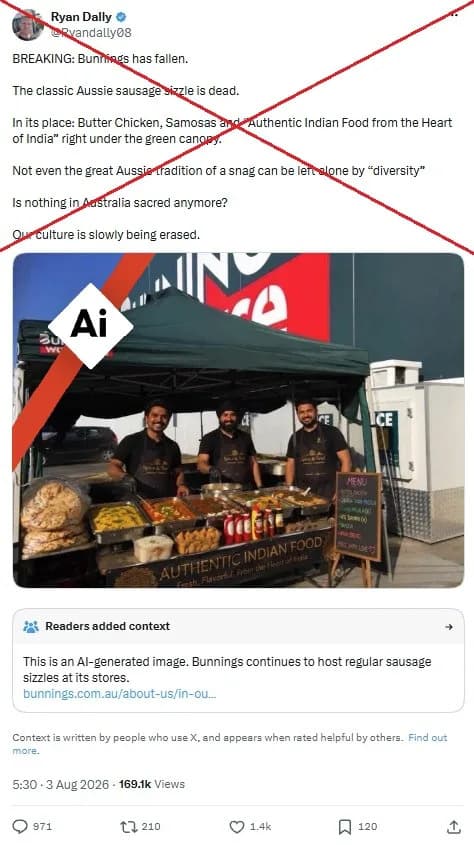
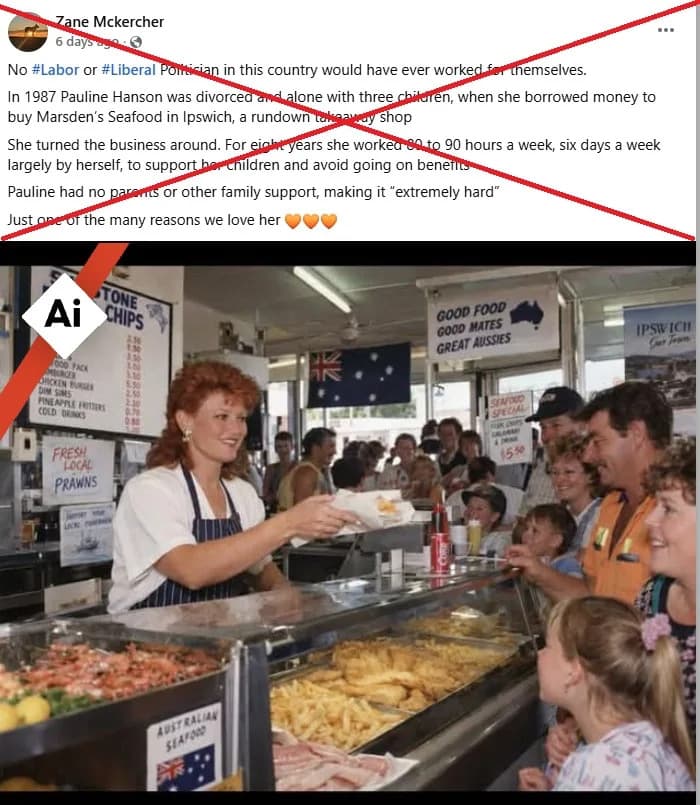
A viral social media post falsely claimed that home‑goods retailer Bunnings had replaced its iconic weekend sausage sizzle with Indian food. The image used to support the claim was produced with AI, and Bunnings told AFP it had "made no change" to its weekly sausage sizzles.
What Was Shared
On August 3, 2026, an X user posted: "BREAKING: Bunnings has fallen. The classic Aussie sausage sizzle is dead," a message that was reshared more than 280 times. The post alleged that Bunnings had swapped the familiar sausage‑on‑bread fundraiser for "Butter Chicken, Samosas and 'Authentic Indian Food from the Heart of India'" under a store canopy.
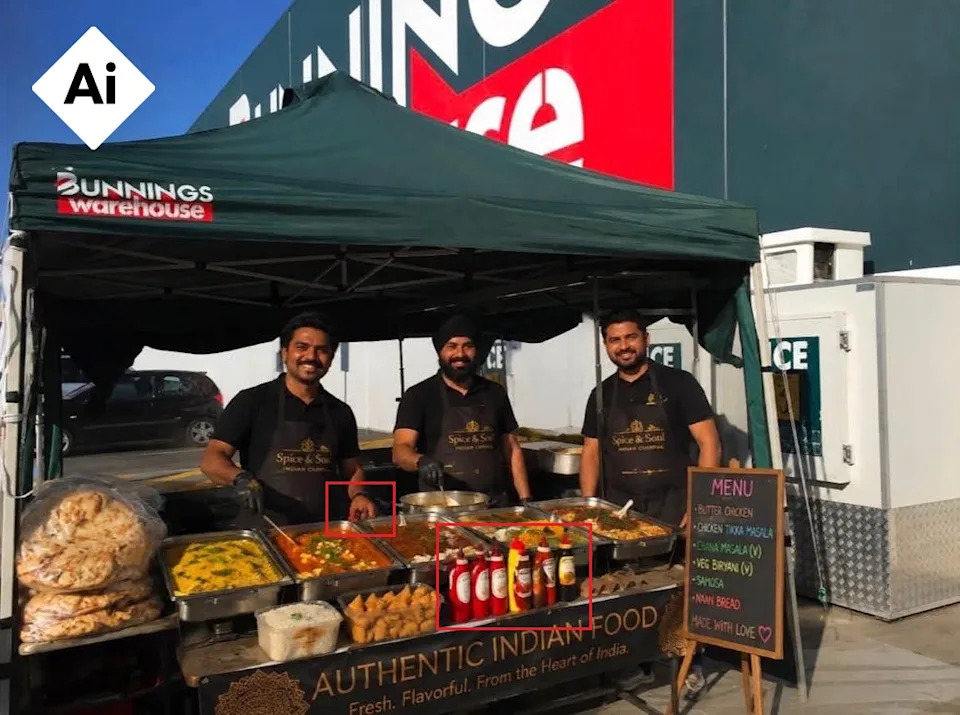
Screenshot of the image with the AI label added and visual discrepancies highlighted in red by AFP
Why The Claim Is False
Bunnings told AFP by email on August 4 that it had "made no change" to its weekend sausage sizzles, which are routinely hosted at many branches to allow community groups to raise funds. AFP also identified visual errors in the circulated image consistent with AI generation — for example, sauce bottles that appear fused together and a distorted finger on one of the figures.
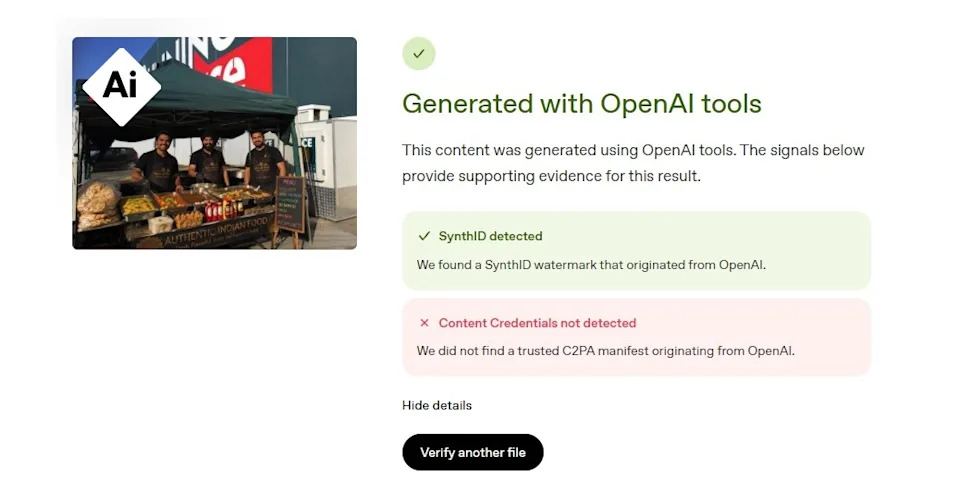
Detection: Running the image through OpenAI's detection tools revealed a SynthID watermark indicating it was created with OpenAI technology.
Broader Context
The false post fed into broader anti‑immigration sentiment in Australia, which has included a series of marches since 2025 and intensified criticism of Prime Minister Anthony Albanese and his centre‑left Labor government. The reaction also comes as the Indian diaspora in Australia has grown: recent statistics show people born in India are now the country's largest overseas‑born group.
Screenshot of the OpenAI tool's result
Impact And Takeaway
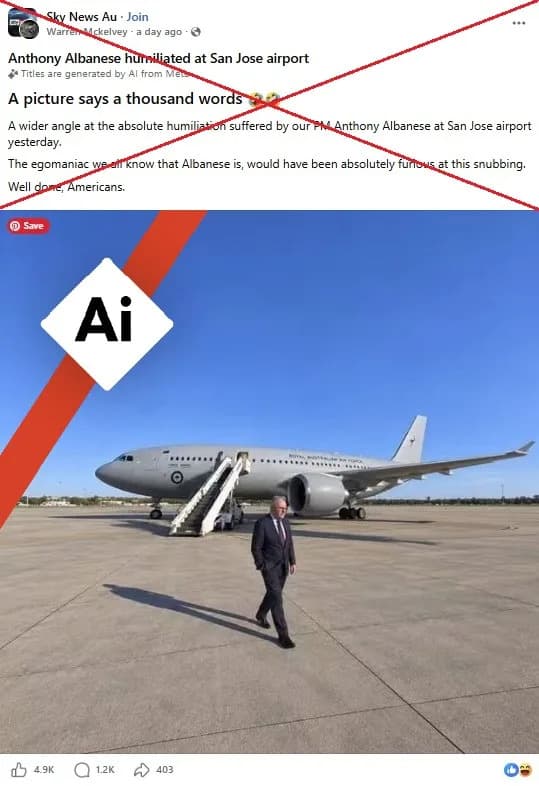
Similar misleading posts circulated on X and Facebook, prompting calls for boycotts and comments such as "Australia is cooked." AFP has previously debunked other claims driven by immigration‑fueled anger. This episode highlights how AI imagery can be combined with inflammatory text to create and amplify false narratives.
Practical Tip: Verify surprising images by checking for official statements from organisations shown, looking for visual inconsistencies, and using reliable image‑verification tools or fact‑checking resources before resharing.