Skytraders completed a daring midwinter medevac from McMurdo Station, landing its Airbus A319 (Snowbird 1) on an ice runway in total darkness at about -43°C. The aircraft was refitted for medevac duties within 24 hours and departed Hobart after a 12-hour weather delay. The patient was flown to Christchurch, New Zealand, for treatment and is reported to be recovering well. Skytraders says the mission may be the closest a civilian airliner has operated to the winter solstice (21 June).
Daring Midwinter Medevac: Australian A319 Lands at McMurdo in -43°C Darkness
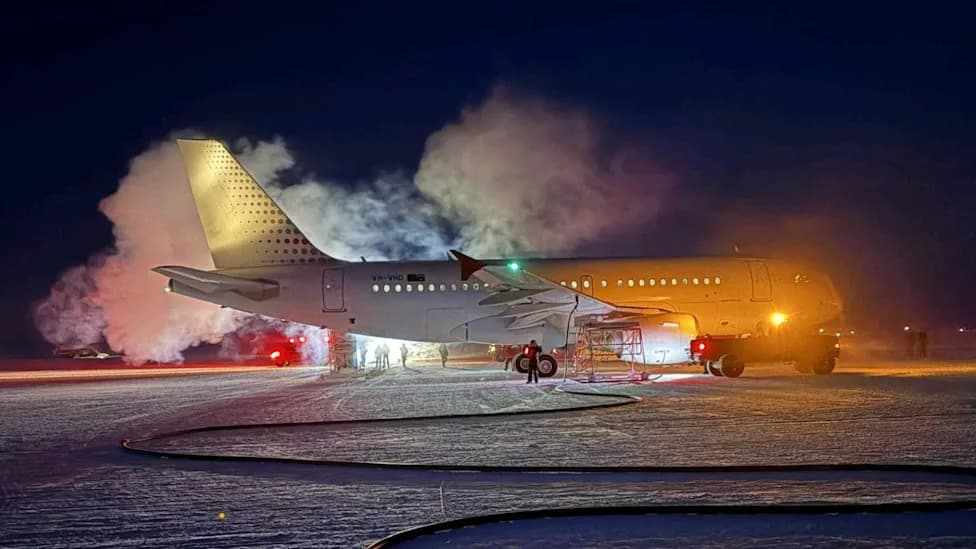
The Skytraders plane landed in Antarctica in total darkness and a temperature of -43°C [Supplied: Skytraders]
An Australian aviation team carried out a high-risk midwinter medical evacuation to remove a US expedition member from McMurdo Station, Antarctica, operating in total darkness and extreme cold. Skytraders described the mission as "extraordinary" and said it took place last Friday after an urgent medevac request from McMurdo.
The Mission
After an initial weather-related postponement, Skytraders refitted its Airbus A319 — known as Snowbird 1 — into a specialised medevac configuration within 24 hours of the call. The aircraft departed Hobart, Tasmania, in the early hours of Friday following a 12-hour delay while crews waited for a safe weather window.
Landing In Extreme Conditions
The A319 landed on the ice runway at the US research facility on Ross Island in "extremely challenging conditions," with temperatures around -43°C (-45.4°F) and complete darkness. The patient was safely transferred aboard Snowbird 1 and flown to Christchurch, New Zealand, for treatment; Skytraders reports the person is now recovering well. No further personal details about the patient or their condition were released.
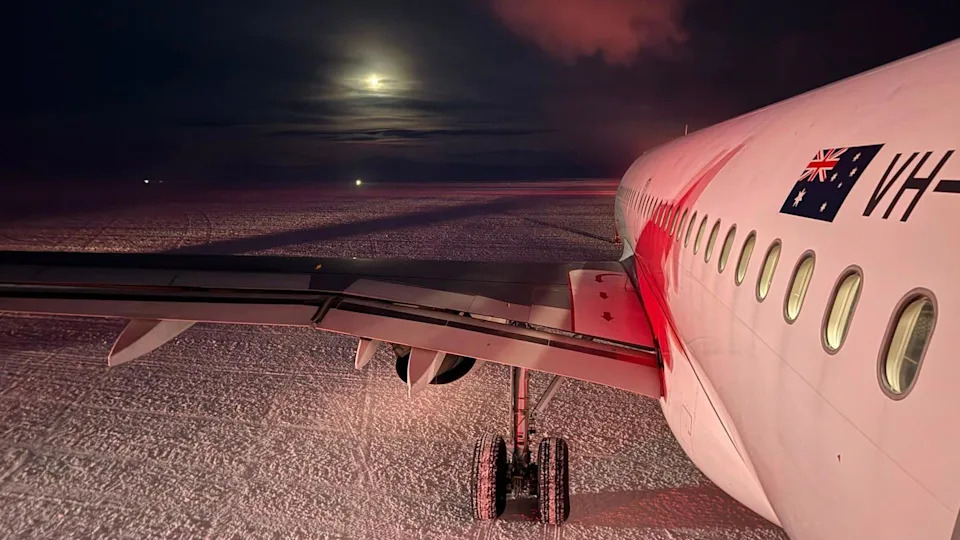
Pilot Al Wallach said conditions were 'right on the edge of even the most specialised aircraft capability' [Supplied: Skytraders]
Team, Planning And Capabilities
Skytraders deputy chief executive Duncan Mackay said the company believes this mission was likely the closest a civilian airliner has operated to the winter solstice (21 June). He added that landing a jet on an ice runway in total darkness at such low temperatures required "an enormous amount of experience and familiarity with the conditions."
Captain Al Wallach, the mission pilot, said: "Every Antarctic mission demands absolute precision, but winter operations raise the complexity significantly. The conditions we encountered were right on the edge of even the most specialised aircraft capability."
Context
Skytraders previously carried out a comparable evacuation in March 2020 after a US Antarctic Program request, when temperatures were around -30°C. Winter medevacs remain rare and technically demanding because of limited daylight, extreme cold, rapidly changing weather and the need to operate on ice runways.
Outcome: The patient was transported safely to Christchurch for treatment and is reported to be recovering well. The mission showcased coordinated planning by flight crews, meteorologists, operational planners, runway teams and medical personnel.
Help us improve.