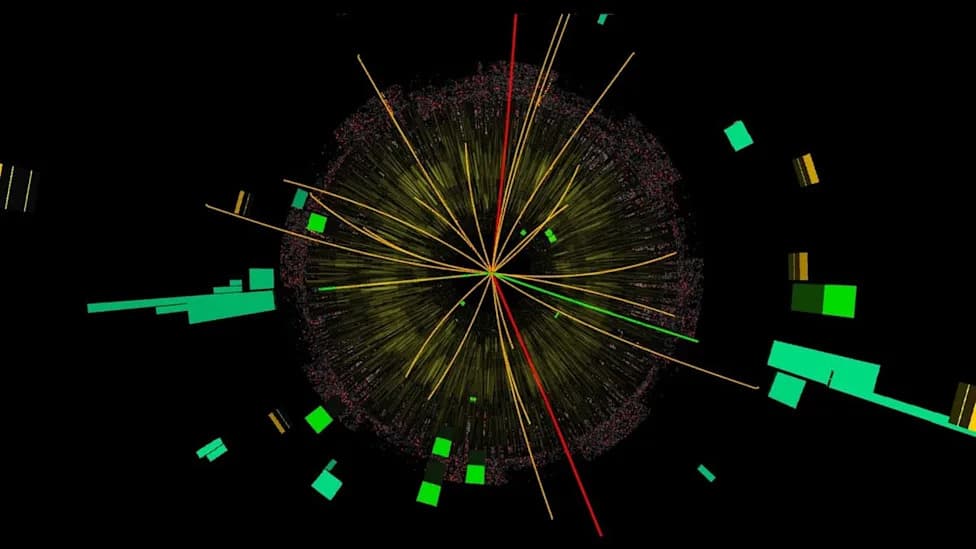
François Englert, the Belgian theoretical physicist and 2013 Nobel laureate, has died at 93. With Robert Brout in 1964 he proposed the mechanism (later extended by Peter Higgs) by which particles acquire mass; the Higgs boson discovery at CERN in 2012 confirmed the idea. Englert survived World War II in hiding, made key contributions to cosmology, and later focused on quantum–gravity tensions. He was made a baron in 2014 and is survived by his children and third wife.
François Englert, Nobel-Winning Physicist Who Predicted the 'God Particle', Dies Aged 93
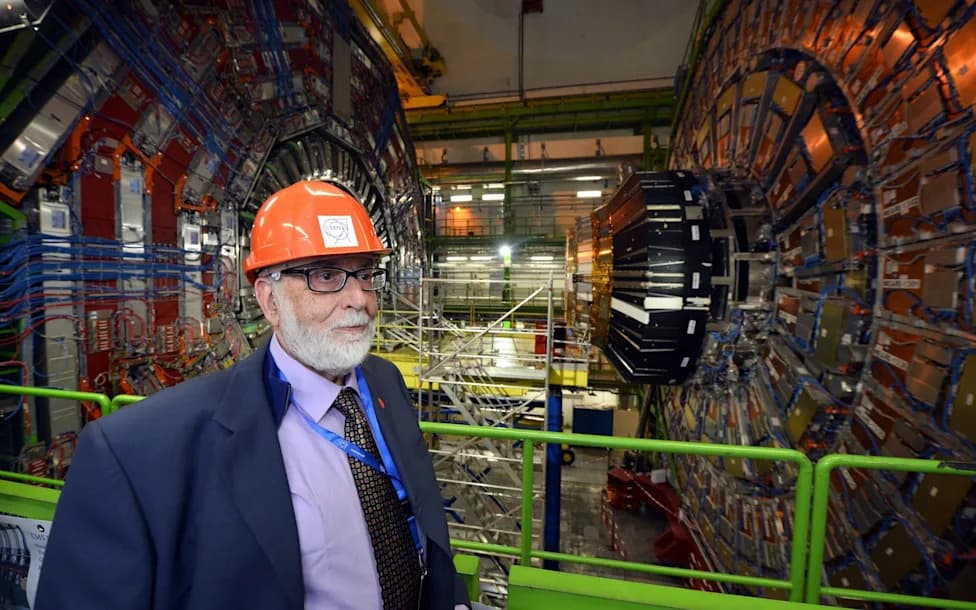
Englert during a visit to CERN in Geneva, 2013 - ERIC LALMAND/AFP via Getty Images
François Englert, the Belgian theoretical physicist who shared the 2013 Nobel Prize in Physics with Peter Higgs for explaining how fundamental particles acquire mass, has died aged 93. His 1964 work with Robert Brout — vindicated by the discovery of the Higgs boson at CERN in 2012 — remains foundational to the Standard Model of particle physics.
Science: The Brout–Englert–Higgs Mechanism
By the late 1950s the Standard Model described subatomic particles and three of nature's fundamental forces, but its equations implied particles would be massless unless a new mechanism were introduced. Englert and his collaborator Robert Brout proposed that an all-pervading field fills the universe: interactions with this field give particles their effective mass. Some particles couple strongly and become heavy; others couple weakly and remain light.
Peter Higgs independently reached a similar conclusion and emphasised that the field's existence could be confirmed by detecting an associated particle, now known as the Higgs boson. After decades of experimental work, the Higgs boson was observed in 2012 by experiments at CERN's Large Hadron Collider (LHC), providing strong evidence for the Brout–Englert–Higgs mechanism.
Early Life and War-Time Survival
Born on 6 November 1932 in Etterbeek, Brussels, Englert was the younger of two sons of Polish-Jewish immigrants who ran a textile shop. After Germany occupied Belgium in 1940, the family faced anti-Semitic persecution. François spent much of the war hidden under a false identity — first sheltered by a café owner in the Ardennes and later by a priest who baptised him so he could attend a Catholic school. The family was reunited after the war; many of their Polish relatives did not survive the Holocaust.
Academic Career and Contributions
Englert studied electromechanical engineering and then physics at the Université Libre de Bruxelles (ULB), earning his doctorate in 1959. He worked at Cornell University in 1959 as a research assistant with Robert Brout and returned to ULB in 1961, where the two developed their landmark theory.
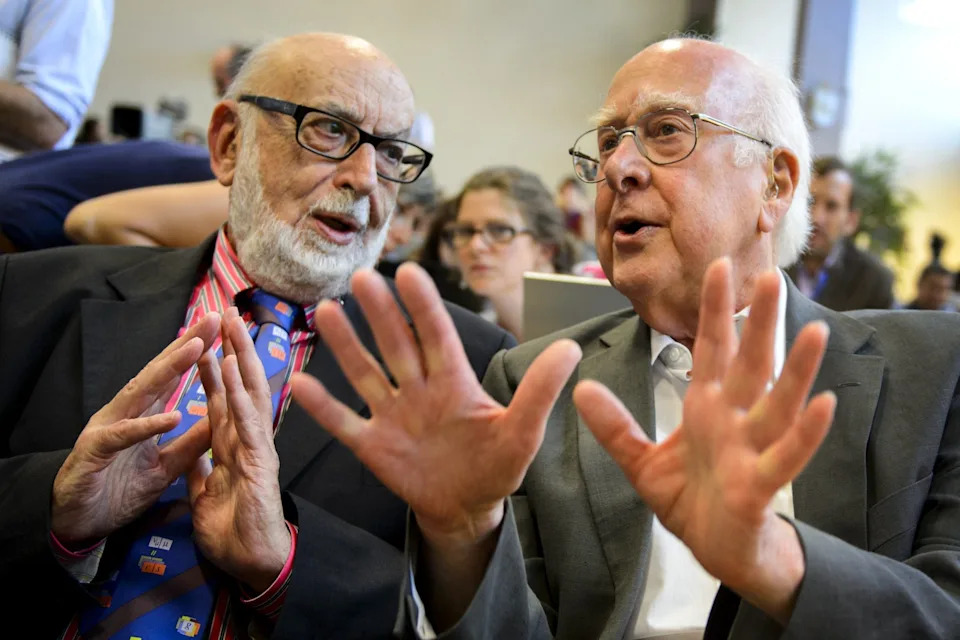
Englert with Peter Higgs, right, at a press conference at CERN in 2012 - FABRICE COFFRINI/AFP/GettyImages
"Most of my original research did not result from deductive thinking. It arose when I let my mind wander freely while lying on this mattress."
The anecdote refers to a second-hand mattress Englert kept in his office so he could work through long nights — a small window into the unconventional habits that shaped his creative thinking. In the 1970s Englert and Brout were also among the early contributors to ideas about cosmic inflation, an epoch of extremely rapid expansion in the early universe. In later decades Englert turned his attention to the tensions between quantum theory and general relativity.
Honours, Family and Legacy
Brout died in 2011, a year before the Higgs boson was found. When the Nobel Prize was awarded in 2013 it was shared between Englert and Peter Higgs; Englert paid warm tribute to his late collaborator. Englert recalled learning of the Nobel award while making banana toast with his grandchildren and downplayed the prize as "just a step in our understanding of the world."
Appointed emeritus professor at ULB in 1998, Englert was ennobled as a baron by Belgium's king in 2014. He chose for his coat of arms a phrase from François de La Rochefoucauld:
"No wisdom without folly."
Englert married three times. By his first wife, Esther Dujardin, he had a son and two daughters; he had two more daughters with his second wife, Danielle Vindal, and is survived by his children and his third wife, Mira Nikomarow.
Born: 6 November 1932. Died: 18 June 2026.
Why It Matters
Englert's work helped complete the Standard Model by explaining how particles acquire mass — a cornerstone of modern particle physics. The experimental confirmation of the Higgs boson affirmed decades of theoretical and experimental progress and shaped ongoing efforts to probe the limits of known physics.
Help us improve.