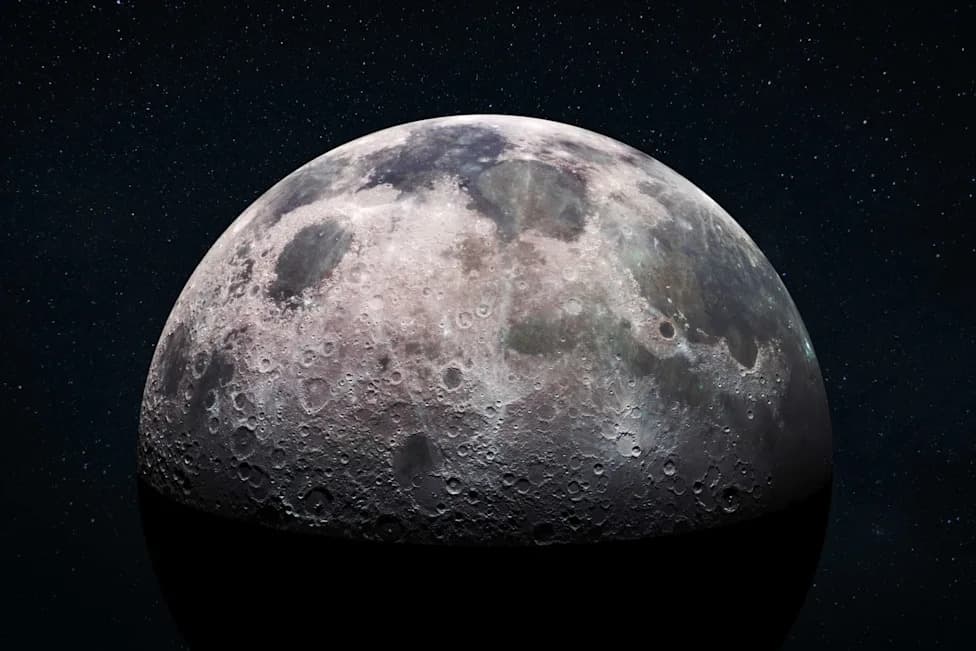
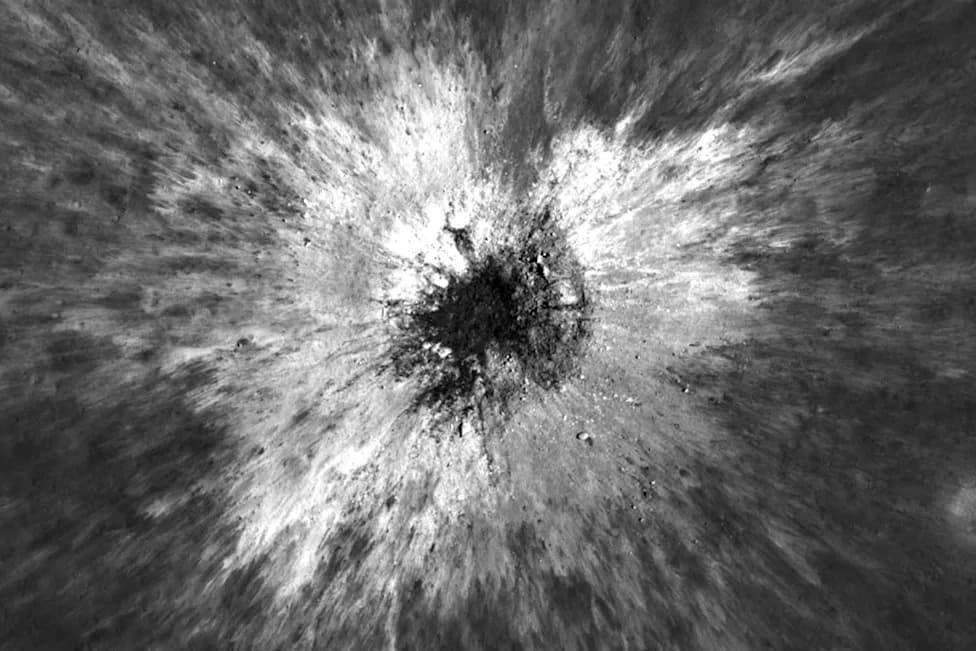
The Falcon 9 second stage—about 8,800 pounds—impacted the Moon at roughly 5,400 mph, producing energy equal to nearly 3 tons of TNT and likely creating a crater about 100 feet across and up to 16 feet deep. Ground‑based spectroscopy (including observations from the Very Large Telescope) detected sodium and lithium in a plume, confirming the strike. NASA's CNEOS confirmed the trajectory, and the Lunar Reconnaissance Orbiter will take before‑and‑after images in the coming days. Scientists hope analysis of the ejecta will reveal subsurface properties such as water ice and improve impact and tracking models.
SpaceX Falcon 9 Upper Stage Strikes Moon, Creates Possible 100‑Foot Crater and 16‑Foot Deep Pit
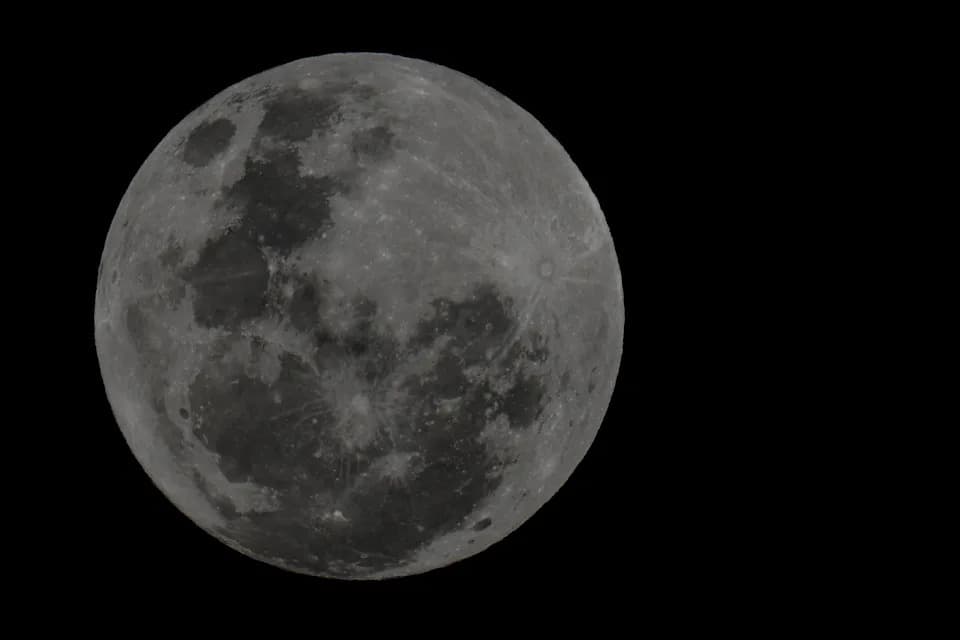
The full moon is seen over Sydney, Australia, on July 29, 2026. / Credit: Izhar Khan/Getty Images
An 8,800-pound second stage from a SpaceX Falcon 9 rocket struck the Moon early Wednesday in a rare man-made lunar impact, scientists confirmed. Traveling at roughly 5,400 miles per hour, the booster delivered an energy equivalent to nearly 3 tons of TNT and may have produced a crater about 100 feet across and up to 16 feet deep.
How the Impact Was Detected
Astronomers identified the strike using ground-based spectroscopy. The European Southern Observatory's Very Large Telescope in Chile recorded a plume containing sodium and lithium, and an independent observer in Sudbury, Massachusetts, reported a matching sodium emission. Those signals, combined with trajectory tracking, convinced researchers the event had occurred.
Where the Booster Came From
The object was the Falcon 9 upper stage that separated after launching two lunar landers in January last year. After releasing the landers—Firefly’s Blue Ghost‑1 (which landed successfully) and Japan’s ispace Hakuto‑R (which crashed)—the stage continued to drift. SpaceX said a combination of solar activity and gravitational perturbations altered its orbit over time, eventually steering it toward the Moon.
Agency Responses and Trajectory Confirmation
NASA said independent astronomers first used publicly available data to determine the stage's trajectory. The agency's Center for Near Earth Object Studies (CNEOS) at JPL later confirmed the object had a "100% chance" of impacting the Moon. SpaceX stated it had followed applicable rules and coordinated with NASA on disposal options.
Observations and Follow-Up
The collision was not visible to the naked eye, and even very large ground telescopes were not expected to capture a visible flash because the impact occurred on the Moon's sunlit side. NASA's Lunar Reconnaissance Orbiter (LRO) has planned before‑and‑after imaging of the site; those photos are likely to appear in a week or two. Scientists will analyze LRO imagery and ground‑based spectroscopy to study the ejecta plume and the composition of material lofted from the surface.
Carl Schmidt, a planetary scientist at Boston University's Center for Space Physics, said the event provides a rare opportunity to study how the Moon's extremely tenuous exosphere and surface react to impacts.
Scientific Value
Although the Moon is routinely struck by natural meteoroids, artificial impacts are uncommon. This upper stage was more massive than typical natural impactors but struck at a lower velocity. NASA notes that a meteoroid with comparable energy hits the Moon roughly once every six days, so impacts of similar force are not unprecedented. Still, deliberate or accidental human‑made impacts give researchers a chance to refine models of ejecta behavior, probe near‑surface geology, and search for subsurface volatiles such as water ice.
Context and History
Human‑caused lunar impacts date back decades: the Soviet Union’s intentional crash in 1959; Apollo mission hardware left on the surface between 1969 and 1972; a Japanese probe in 1993; an ESA satellite in 2006; and NASA's 2009 LCROSS impact, which helped confirm persistent water ice in permanently shadowed polar craters. Scientists hope data from this recent strike will similarly advance understanding of the Moon and improve techniques for tracking and safely disposing of objects in space.
Help us improve.