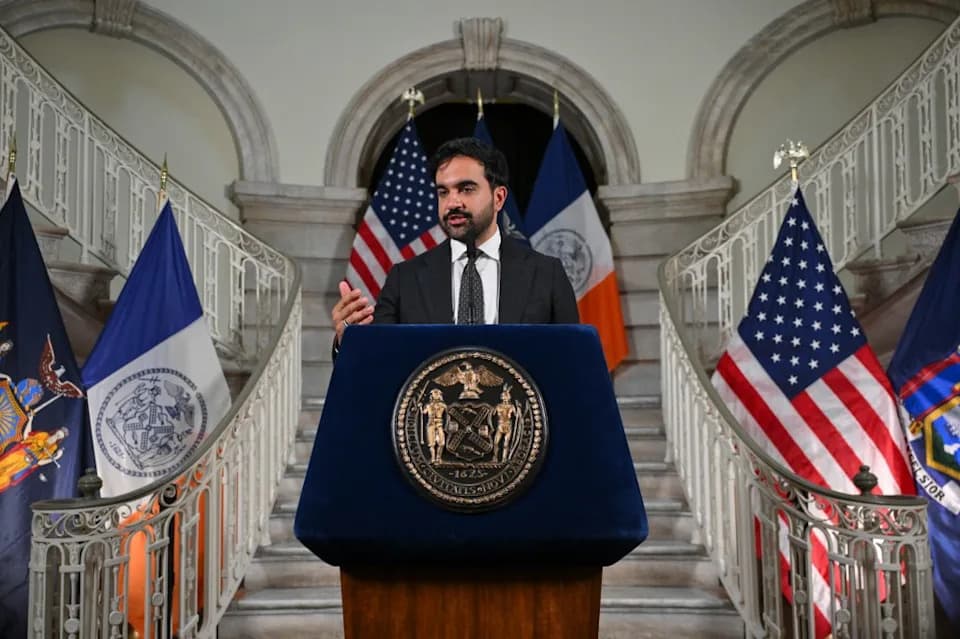
Venture capitalist David Friedberg cautioned that New York Mayor Zohran Mamdani’s plan to open five city-owned grocery stores could prove politically popular while hiding long-term fiscal risks. The proposal would offer staples at about 30% below retail, backed by $70 million in seed funding. Critics including Peter Schiff and Kevin O'Leary say the discounts are likely unsustainable and could shift losses to taxpayers; supporters argue the program would immediately lower grocery costs for many New Yorkers.
David Friedberg: NYC’s City-Owned Grocery Plan Could Outperform Chains — But Taxpayers May Pay The Long-Term Bill
David Friedberg Says Mamdani's City-Owned Grocery Stores Will Beat Whole Foods and Safeway— Then Comes the Part That Should Worry Everyone: 'Because the Bill Doesn't...'
Venture capitalist David Friedberg pushed back against critics who say New York City Mayor Zohran Mamdani’s proposal to open city-owned grocery stores is doomed. Speaking on a recent episode of "The All-In" podcast, Friedberg argued the program could win rapid public support while masking substantial fiscal risks that would emerge later.
What Mamdani Proposes
Mayor Mamdani's plan calls for five municipal grocery stores — one in each borough — selling staple items at roughly 30% below typical retail prices. The city has allocated $70 million in initial funding to launch the initiative.
Friedberg's Argument
"I think these things are going to create a radical spectacle… because at the end of the day, no one has to pay the bill, because the bill doesn't come due for some time,"
Friedberg told listeners he expects subsidized prices would attract heavy demand and could make the stores appear to outperform private chains such as Whole Foods, Safeway and Albertsons — at least in the short term. His core concern is political: early popularity could encourage expansion of subsidies and similar municipal programs elsewhere before the long-term costs are fully apparent.
Criticism And Counterarguments
Economists and business leaders have questioned the model's sustainability. Economist Peter Schiff warned that government-operated grocery stores are likely to be less efficient than private retailers, particularly because grocery margins are thin. Kevin O'Leary, chairman of O'Leary Ventures, warned a 30% discount would likely produce losses on every sale and asked, "Who will pay for those losses?" Mamdani has said he welcomes competition and that the stores aim to make food more affordable for New Yorkers.
Tesla CEO Elon Musk also weighed in, calling Mamdani a "thief" and a "liar," and arguing that automation and AI — not municipal stores — will ultimately drive the cost of goods down.
Potential Outcomes And Implications
If the pilot stores gain public approval, Friedberg warns, city leaders could be pressured to expand subsidies or open more locations — creating a cycle of increased public support and greater fiscal exposure. Supporters emphasize immediate affordability gains for low- and middle-income New Yorkers. Critics emphasize long-term sustainability, potential inefficiencies of public operation, and the risk of crowding out private retailers.
Bottom Line
The debate around Mamdani's grocery plan highlights a broader policy trade-off: delivering near-term relief on essential costs versus ensuring fiscal sustainability and competitive markets over the long term. Whether New York’s experiment will become a model other cities adopt — or a cautionary tale — will depend on both operational execution and political choices about ongoing subsidies.
Help us improve.