Eurostar will redesign its Celestia trains to operate reliably in temperatures up to 55°C (131°F), up from an original 45°C rating, as Europe's heat waves intensify. Airports and rail networks are already feeling the strain — from runway cooling operations at Oslo Airport to white-painted tracks in Stockholm — while wildfires in France and Spain have caused hundreds of thousands of evacuations. EU climate data and modeling predict many more extreme-heat days by 2050, underlining that adaptation must be paired with aggressive emissions cuts and coordinated resilience planning.
Europe's Scorching Heat Forces Eurostar To Design Trains That Withstand 55°C (131°F)
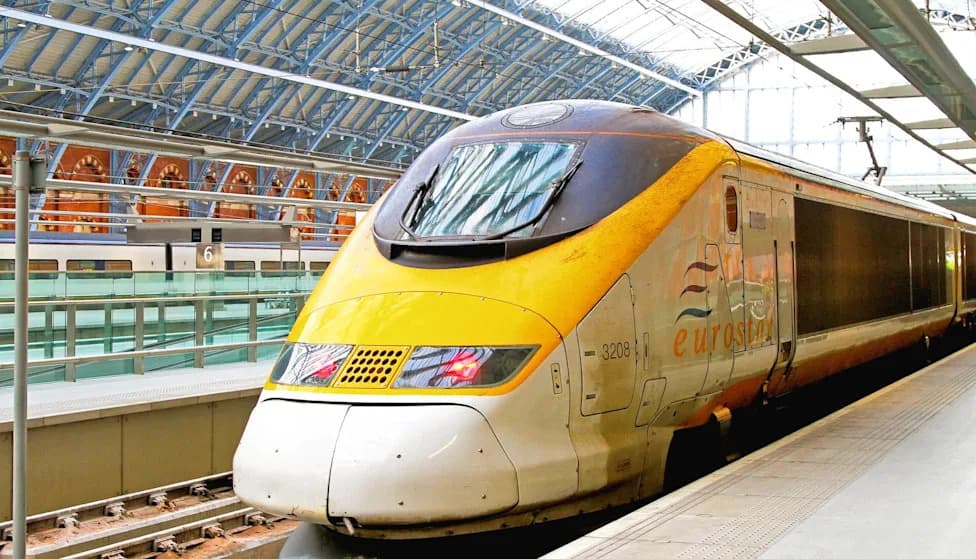
Photo Credit: iStock
Europe's intensifying heat waves are reshaping everyday infrastructure. Eurostar has announced plans to equip its upcoming Celestia fleet with air-conditioning and systems designed to operate reliably in temperatures up to 55°C (131°F), a specification raised from the original 45°C (113°F) rating as extreme heat events become more frequent.
What Eurostar Is Changing
Eurostar expects to introduce up to 50 Celestia trains from 2031. A company spokesperson told CNBC that a decision was made to upgrade the cooling and climate-control systems so the trains will remain operational in much hotter conditions than initially planned.
'These trains will enter service in 2031 and run into the 2060s, so it's essential to be prepared for the future,' the Eurostar spokesperson said.
Infrastructure Strain Across Europe
Rising temperatures are already affecting transport and airport infrastructure across the continent. At Norway's Oslo Airport, runway surface temperatures approached 52°C (126°F), and crews used roughly 13,000 liters (about 3,434 gallons) of water in each cooling round to reduce pavement heat. In Stockholm, the transit operator has begun painting tracks white to reduce heat absorption and help prevent warping and buckling.
France and Spain have experienced severe knock-on effects from heat and drought: wildfires forced more than 330,000 evacuations as authorities prepared for subsequent waves of extreme heat.
Climate Context And Projections
Data from the EU's Copernicus Climate Change Service show Europe has warmed at roughly twice the global average since the 1980s. Under a high-emissions scenario, modeling by Climate X suggests central Europe could see two to three times as many extreme-heat days by 2050 — meaning regions that now experience 5–10 extreme-heat days a year might face 20–30 within a generation. Southern Europe is projected to be hardest hit, with parts of the Iberian Peninsula, southern Italy and Greece potentially facing 40–55 extreme-heat days annually.
Jan Rosenow, professor of energy and climate policy at the University of Oxford: 'For decades climate scientists told us this would happen more frequently... Adaption alone is not a viable strategy.'
Policy, Insurance And Business Impacts
Extreme heat can deform rails, weaken airport pavements, disrupt supply chains, strain power systems and raise maintenance costs — effects that can ripple into higher fares, reduced reliability, increased insurance costs and safety concerns. The European Commission has signaled plans for a coordinated approach to climate resilience and risk management across infrastructure, transport, energy and health.
Insurers are urging faster adaptation. Lena Fuldauer of Allianz Risk Consulting described extreme heat as 'a quiet catastrophe' for businesses because it can cause equipment failures, lost operating time, supply-chain interruptions and worker stress without the visible drama of storms or earthquakes.
What This Means
- Infrastructure built today must be designed for decades of operation under hotter conditions.
- Adaptation measures (like stronger cooling systems and reflective track coatings) are necessary but not sufficient without deeper emission cuts.
- Transportation operators, policymakers and insurers are all adjusting plans and standards as climate risks increase.
Help us improve.