The flapper skate (Dipturus intermedius) is Critically Endangered, and a 31-month community science project has confirmed that a designated seabed site supports successful, repeated reproduction. Divers recorded 16 newly laid egg cases and used non-invasive sampling while BRUV cameras captured 13 other species across 10 deployments. Acoustic receivers detected two tagged adult males visiting the site, and viable eggs hatched across all four seasons, underscoring the conservation value of protecting breeding habitats and partnering with local communities.
Community Divers Reveal Active, Multi-Season Breeding Ground for Critically Endangered Flapper Skate
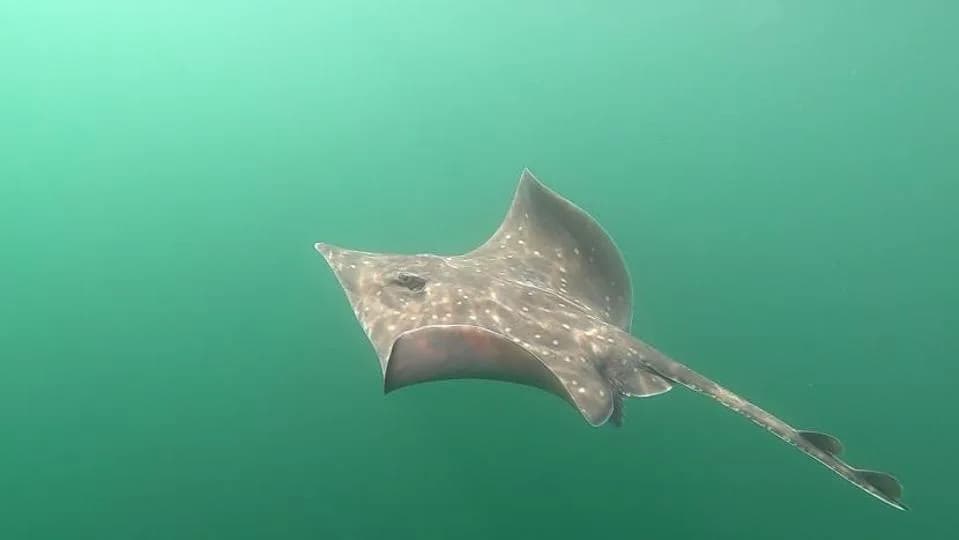
The common skate complex (which includes flapper skate and blue skate) is categorised as Critically Endangered by the IUCN and both species have been described as extinct in large parts of their range following a long period of overexploitation.© Fenella Wood, University of Aberdeen
Imagine returning beneath cold coastal waters month after month for nearly three years to the same patch of seabed, not to chase fast-moving animals but to look for something quiet and easily overlooked: the egg cases of the flapper skate (Dipturus intermedius). That persistent effort — led by volunteer divers working with researchers — has produced one of the most detailed long-term records of a known flapper skate reproductive site.
Why This Matters
The flapper skate is part of the common skate complex (which includes the blue skate) and is listed as Critically Endangered by the IUCN after decades of overexploitation. Like many large sharks, skates and rays, flapper skates grow slowly, mature late and produce relatively few offspring. These traits make protecting breeding and nursery habitats essential to any recovery plan.
Long-Term, Multi-Method Monitoring
Over 31 months, trained volunteer divers conducted monthly SCUBA surveys inside a defined area known to contain flapper skate egg cases. When divers found viable egg cases they measured them and collected genetic samples using non-invasive techniques, while also recording environmental observations to build a fuller picture of the surrounding ecosystem.
To fill observational gaps, the team used baited remote underwater video systems (BRUVs). Ten BRUV deployments recorded 13 different species, helping to characterize the wider community. Acoustic monitoring added another layer: an underwater receiver detected multiple visits by two adult male flapper skates that had been tagged elsewhere in the region, demonstrating adult return even when animals were not filmed.
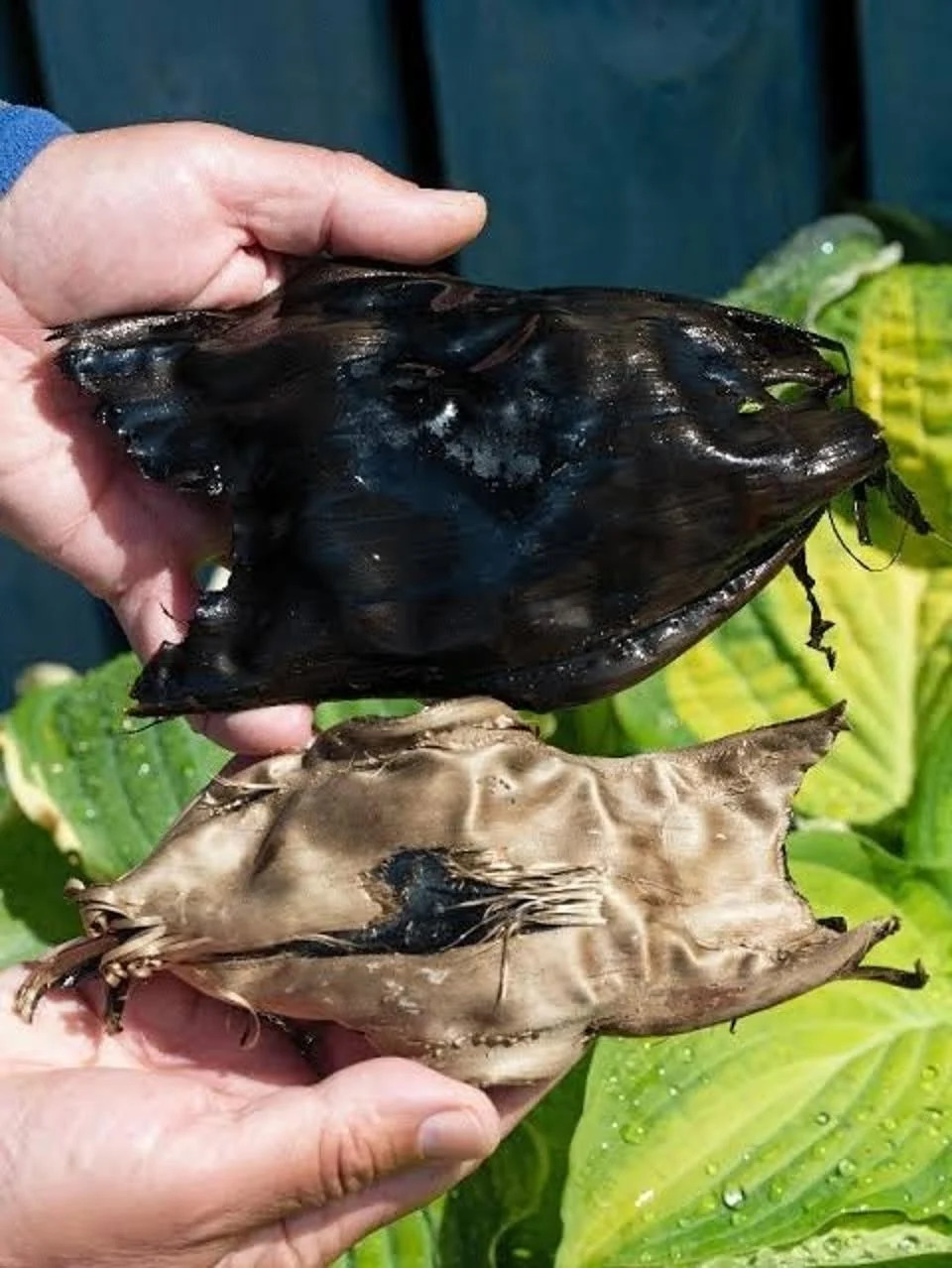
Empty egg cases can be found on the strandline, often tangled in amongst seaweed and difficult to see. They are large between 14-28cm long and 10-14cm wide. When dry they are smaller and have a golden 'bark' exterior making them look like plant material. Egg cases can be found along our coastline and reporting the finds can provide useful data about breeding. For all egg case finds contact the Shark Trust.
Key Findings
- Researchers documented 16 newly laid egg cases at the monitored site during the study.
- Egg deposition occurred across spring, autumn and winter in multiple years, indicating repeated seasonal use rather than a single short-term hotspot.
- Viable egg cases hatched successfully in all four seasons, showing the site supports embryo development through to emergence of juveniles.
- Although adults were not observed on BRUV footage, acoustic tags confirmed visits by two adult males, underscoring the value of combining methods.
Egg Case Identification And Public Involvement
Empty egg cases can wash ashore and are often tangled in seaweed, appearing plant-like when dry because of a golden, bark-like exterior. Fresh egg cases measure about 14–28 cm long and 10–14 cm wide. Reporting strandline finds helps build knowledge of breeding activity; the research team recommends contacting the Shark Trust with any discoveries.
Conservation Implications
The study provides compelling evidence that this site functions as an active, repeatedly used reproductive habitat for flapper skates. It also highlights the practical value of community science: long-term monitoring at sea is expensive and logistically challenging, but local divers and volunteers can contribute consistent, high-value observations over years.
“Finding a site is only the first step — understanding how it is used across seasons and whether it produces surviving offspring requires sustained, multi-method monitoring. Community collaborators make that work possible.”
For the flapper skate, the results are a reason for cautious optimism: although the species remains Critically Endangered, known reproductive habitats can and do support successful development and hatching across multiple years. Protecting these habitats — and partnering with people who know their local waters — is a practical, necessary part of enabling recovery.
Original publication: Forbes.com
Help us improve.