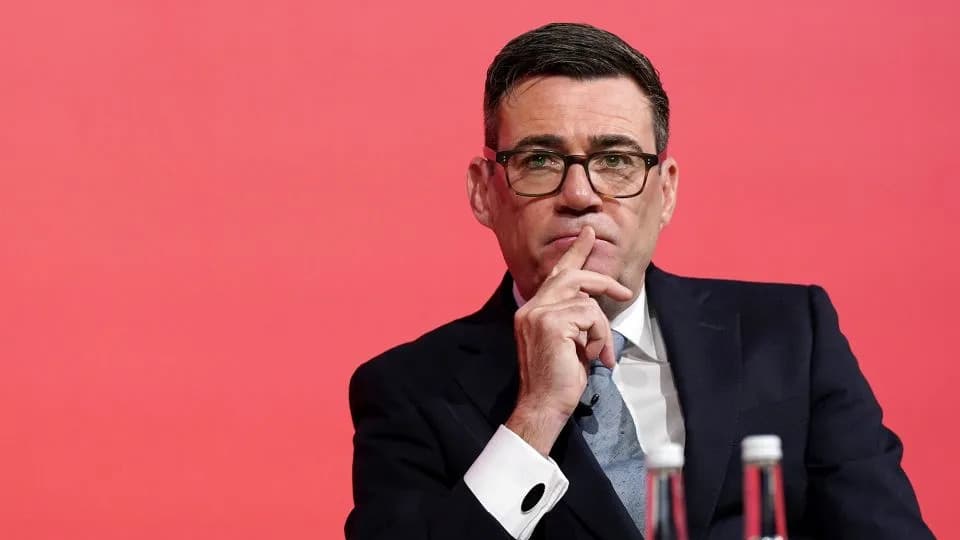
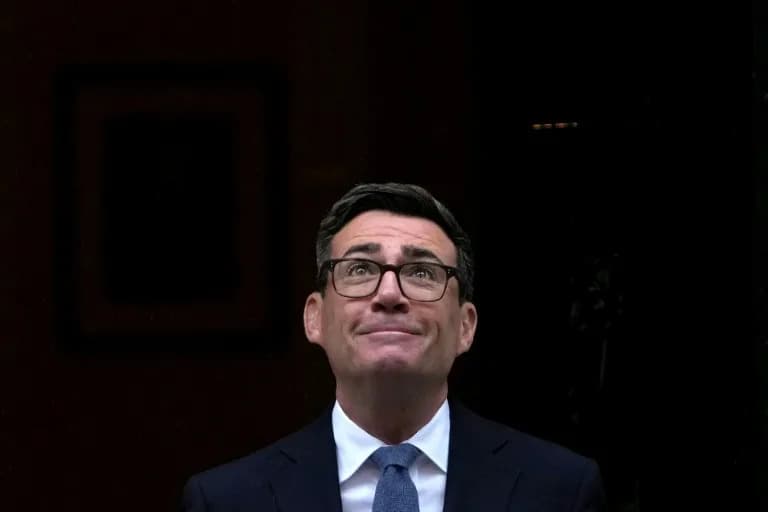
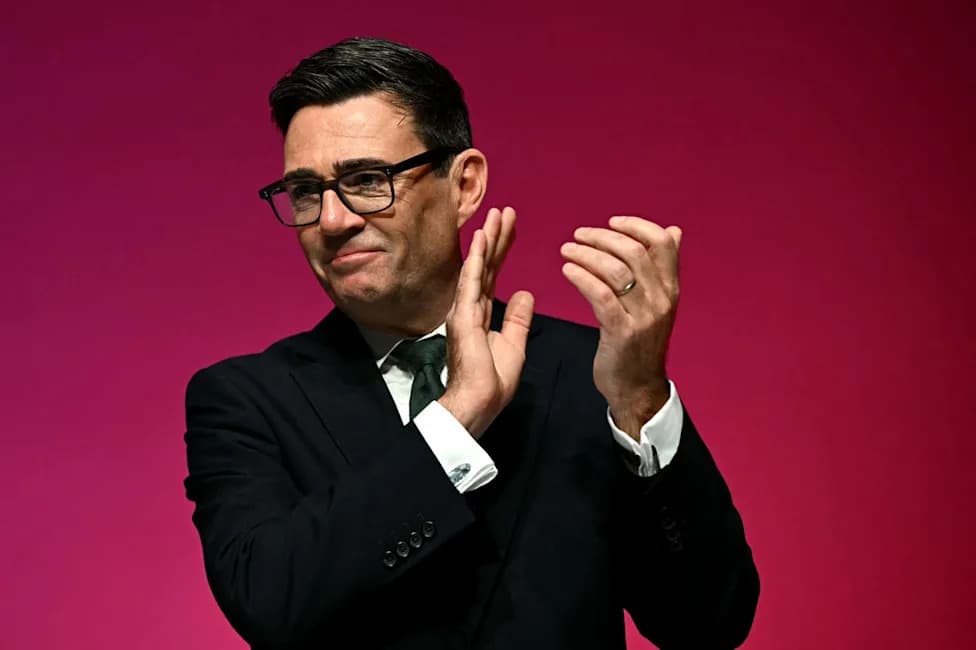
Britain's new prime minister Andy Burnham has adopted an informal, upbeat social media strategy to challenge populist rivals like Reform UK, drawing millions of views across TikTok, X and Instagram. His approachable clips — including a viral pub video with finance minister John Healey — aim to be inclusive rather than polarising and have helped boost engagement and media coverage. Experts say the strategy builds early political capital but note long-term success will depend on delivering results and handling setbacks. The government is expanding its digital team, advertising social roles paid between £40,000 and £80,000.
Andy Burnham's Social Media Makeover: How the New UK PM Is Taking On Populist Rivals Online
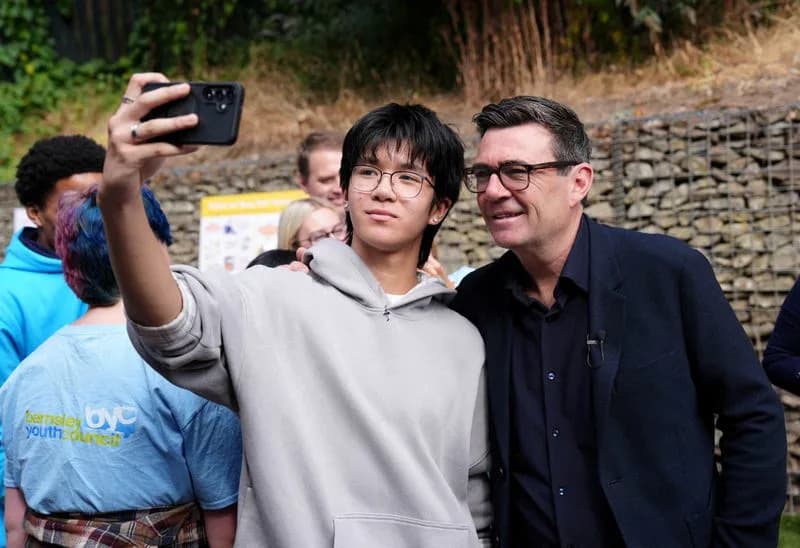
FILE PHOTO: Britain's Prime Minister Andy Burnham has a selfie taken during a visit to a family centre in Sheffield, South Yorkshire, for the launch of the biggest transfer of power from Westminster in a generation, which will allow English mayors to keep a share of the taxes collected in their area, giving communities greater control over the decisions that shape jobs, transport, housing and public services. July 31, 2026. Annabel Lee-Ellis/Pool via REUTERS/File Photo
LONDON, Aug 5 (Reuters) - Britain's new prime minister, Andy Burnham, has adopted a deliberately informal, upbeat tone on social media — from light debates about pub snacks to self-deprecating jokes about his appearance — as he seeks to blunt the online momentum of populist rivals such as Reform UK.
A New Tone From No.10
Burnham's relaxed, natural style of voter communication was a central reason Labour replaced its previous leader and prime minister, Keir Starmer, with the former mayor of Greater Manchester. After only two weeks in office, his offbeat clips are drawing millions of views across TikTok, X and Instagram.
Analysts say his content strategy aims to be inclusive rather than polarising: positive, approachable messaging that can engage audiences without descending into divisive click-bait. While strong social engagement does not solve deep policy problems — such as reviving a sluggish economy and raising living standards — it gives Burnham a platform to build a direct following early in his premiership.
Inclusive, Not Divisive
James Lyons, former director of strategic communications for Keir Starmer and now at Penta Group, says Burnham is intentionally different from both the Greens and right-wing populists.
"Instead of being polarising, he's just seeking to be popular and inclusive," Lyons said. "He's pulling off the very, very difficult trick of being very serious about what he's doing as prime minister, but not taking himself too seriously."
That approach is designed to compete with Reform UK and its leader Nigel Farage, who built large audiences with arresting videos on immigration, crime and social issues. Farage commands roughly 2.3 million followers on X, 1.5 million on TikTok and 1 million on Instagram.
Viral Moments
Burnham has shown he can use familiar social formats. A pub video with finance minister John Healey promoting a hospitality tax cut earned about 4.7 million views on X and millions more on other platforms. In a lighter segment the pair ranked pub snacks, with Burnham confessing a fondness for pickled-onion "Monster Munch" and joking about putting crisps in northern "butties" (sandwiches).
When Conservative leader Kemi Badenoch quipped that he was "a pair of eyelashes and a black T-shirt," Burnham posted a clip dramatically blinking and replying, "It's dark blue, actually." Those moments help humanise him and generate broad media coverage beyond social channels.
Building A Professional Operation
Burnham's social accounts are growing rapidly from a smaller base: roughly 730,000 followers on X, 450,000 on TikTok and 600,000 on Instagram, with reports he added about 50,000 followers on TikTok and Instagram in a single day last week. The government has advertised roles in social content creation, production and strategy with salaries between £40,000 and £80,000 ($55,000–$110,000), and Abby Tomlinson now oversees the digital operation — she first rose to prominence as a teenage organiser of a viral Labour meme in 2015.
Limits And The Road Ahead
Academics and pollsters caution that early social-media success must be matched by policy delivery and resilience when challenges arise. Keiran Pedley, UK director of politics at Ipsos, said: "He has set the agenda ... it's a pretty positive start. The question is, when there are bumps in the road, how does he manage those?"
For now, Burnham is using social media to shape public perception and close some of the communication gaps that hampered Labour previously — but the long-term political test remains governing effectively and meeting voters' priorities.
(Reporting by Alistair Smout and Sam Tabahriti; Editing by Kevin Liffey)
Help us improve.