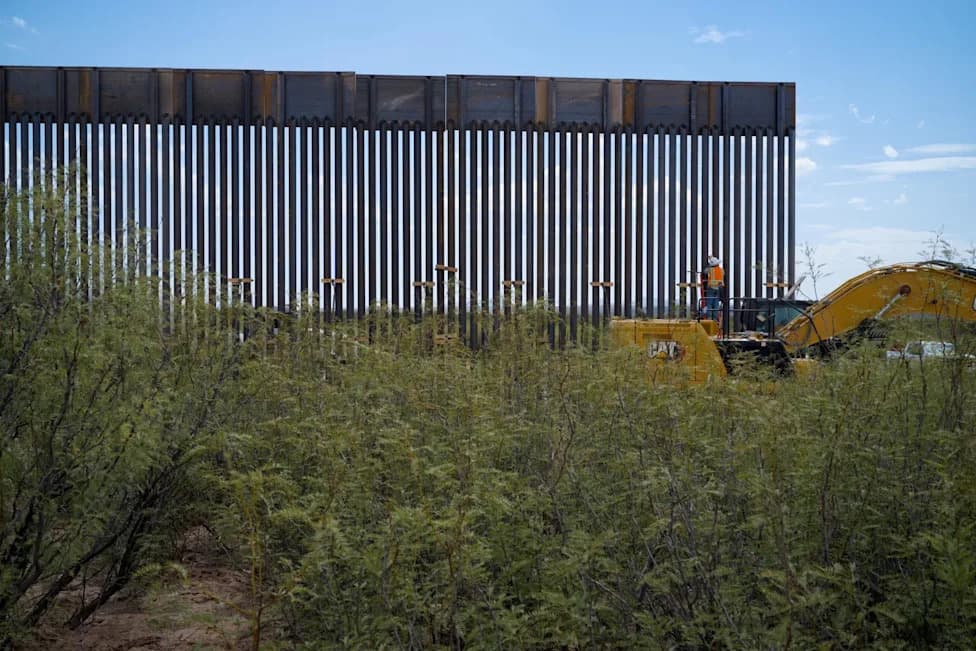
Activists in Lochiel, Arizona have staged a continuous tree sit around a 200-year-old cottonwood to block contractors who are building dual 30-foot border walls near Sonora, Mexico. Crews for Fisher Sand And Gravel felled three large cottonwoods on 27 July, leaving a single "grandmother" tree at the center of the protest. Organizers warn the second wall will sever vital wildlife corridors, threaten sites such as Quitobaquito Springs and jeopardize habitat for species including the threatened western yellow-billed cuckoo. Protesters say they will stay as long as necessary while critics point to Real ID Act waivers that limit environmental protections for border projects.
‘She’s Our Statue of Liberty’: Activists Occupy 200-Year-Old Cottonwood to Stop Border Wall
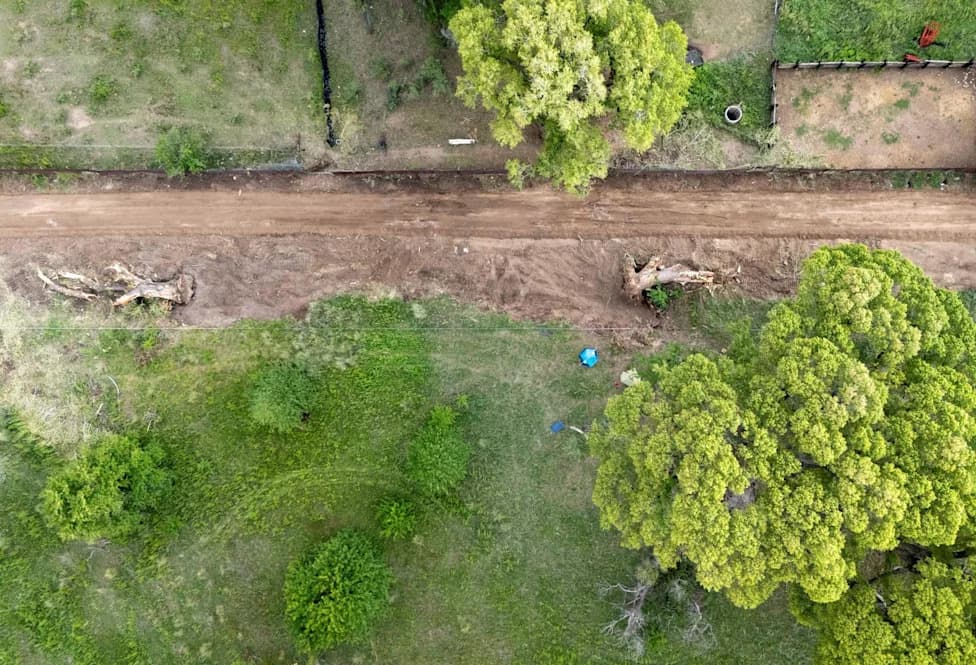
The remains of two of three ancient cottonwood trees already felled for the US-Mexico border fence construction in Lochiel, Arizona, on 27 July 2026.Photograph: Rebecca Noble/Reuters
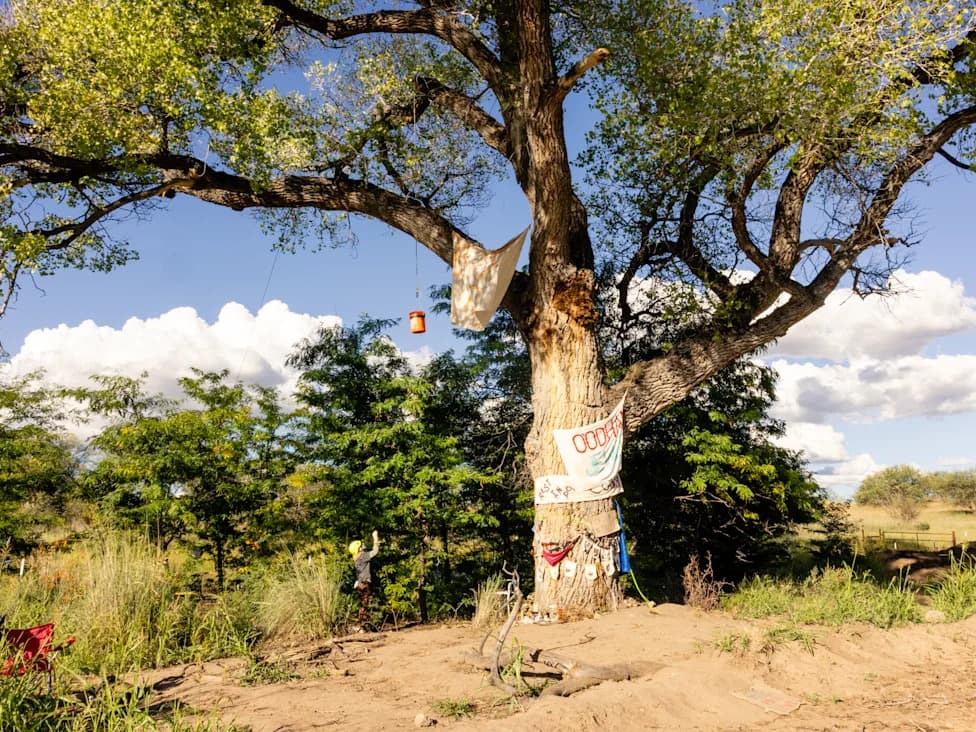
Protesters have mounted a sustained "tree sit" in Lochiel, a remote community in the San Rafael Valley of southeastern Arizona, to try to prevent the removal of a stand of ancient cottonwoods as federal contractors push to build dual 30-foot border walls along the line with Sonora, Mexico.
The action intensified after crews working for Fisher Sand And Gravel used excavators on 27 July to crush three of the valley's largest cottonwoods. Now activists are defending a single towering cottonwood estimated to be more than 200 years old — the last of the large old trees that locals call the "grandmothers." The tree's trunk sits on federal land within the 60-foot-wide Roosevelt Reservation, while part of the grove lies on adjacent private property.
Several dozen people have joined the encampment, many camping on private land with the owner's permission. The group supports a rotating person who remains continuously on a platform high in the tree to deter removal. Demonstrations have remained peaceful; one person was briefly detained by the Santa Cruz County sheriff's department on the day the other trees were felled and released the same day without charges.
Why Activists Say the Tree Matters
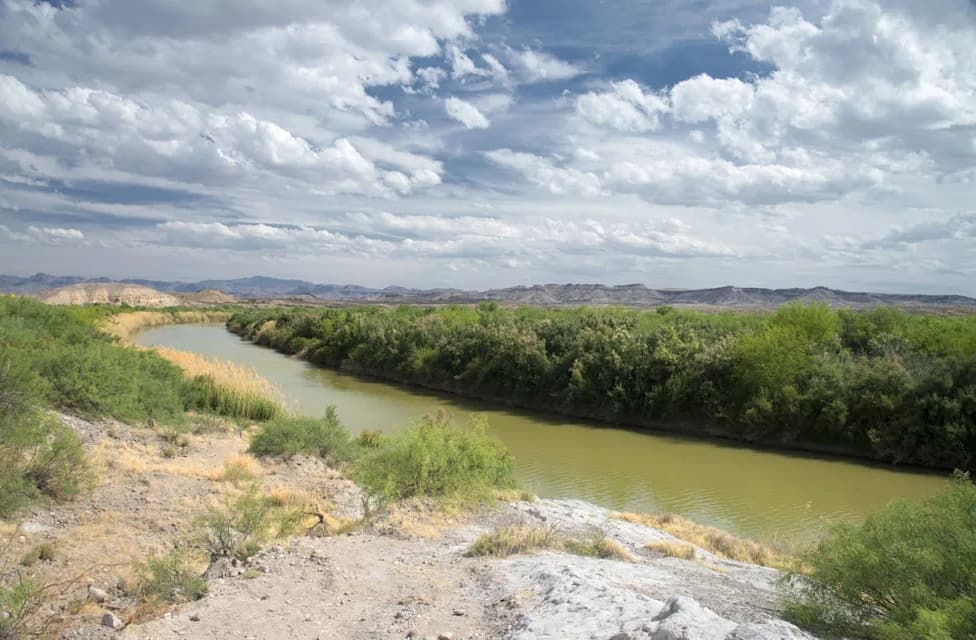
Organizers — including Kate Scott, founder of the Madrean Archipelago Wildlife Center, and Erick Meza of the Sierra Club — argue that the planned double barrier will sever critical wildlife corridors, damage riparian habitat, and threaten fragile sites such as Quitobaquito Springs. Cottonwoods are a keystone species in arid landscapes because they require groundwater and mark rare riparian corridors; conservationists say roughly 90% of Arizona's riparian forests have been lost to water extraction, development and mining.
Meza filmed a nesting bird shortly before crews removed several trees, and conservation advocates later reported seeing a western yellow-billed cuckoo — a threatened species — in the remaining cottonwood. In a letter dated 18 June, Customs and Border Protection (CBP) pledged not to cut cottonwoods if birds were nesting in them, but contractors nonetheless felled three large trees on 27 July.
"The tree itself has become a symbol," Meza said, representing both the area's ecological importance and "how much violence and destruction has happened on the border." Kate Scott called the tree, "She's our Statue of Liberty."
Construction, Legal Issues and Local Opposition
CBP says 384 miles of secondary barriers are in development; in the San Rafael Valley a secondary wall is planned roughly 60 feet north of the international line, with another barrier nearby. Contractors are already blasting in the mountains and drilling wells to produce cement for foundations.
Federal contractors building border infrastructure can be exempted from compliance with many federal statutes, including the Endangered Species Act, under waivers authorized by the Real ID Act. That legal latitude has frustrated conservationists who say routine environmental safeguards are being sidelined.
David Hathaway, sheriff of Santa Cruz County, has publicly opposed construction in parts of the valley and said illegal immigration there is effectively nonexistent. The protest has also drawn attention from high-profile activists: Julia Butterfly Hill — who lived in a California redwood for two years to protect it — has reached out to organizers and expressed support.
Organizers say they intend to stay with the tree for as long as necessary to try to save it. How a standoff might be resolved remains uncertain: protesters on private land have legal protections to remain there, while CBP's authority to detain U.S. citizens on U.S. soil is limited without cause.
Key actors and facts: Fisher Sand And Gravel (contractor); CBP (agency planning secondary barriers); Madrean Archipelago Wildlife Center and Sierra Club (organizers); western yellow-billed cuckoo (threatened species); Real ID Act waivers (legal issue); Roosevelt Reservation (federal strip adjacent to the border).
Help us improve.