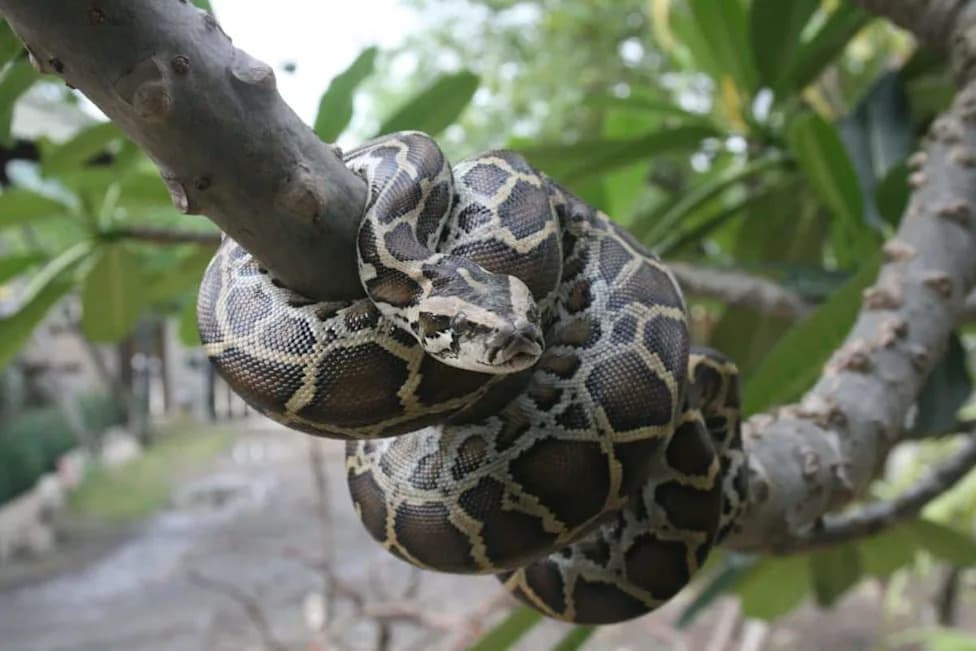
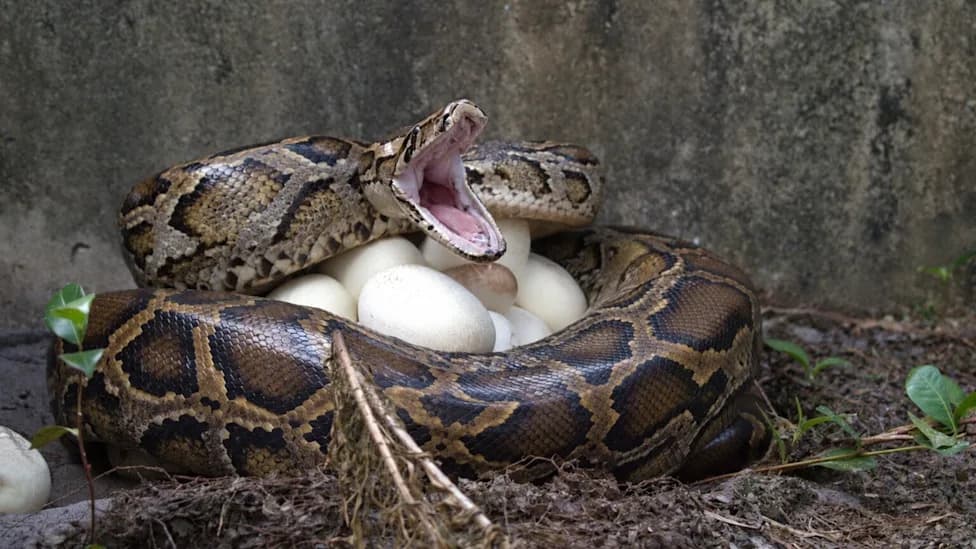
Official counts show very few Burmese python sightings in Lee County despite heavy infestations in neighboring counties, but experts say the snakes are likely present and simply difficult to detect. Pythons often hide in agricultural lands, large private green spaces, canal systems and urban edges, making monitoring challenging. Targeted removal tactics include radio‑tagged male "scout" snakes that lead researchers to reproductive females; programs have removed thousands of pounds of pythons. The FWC asks the public to document sightings and report them to 888-483-4681 or via the IveGot1 app.
Lee County's 'Python Gap' Likely an Illusion — Experts Say Snakes Are Hiding
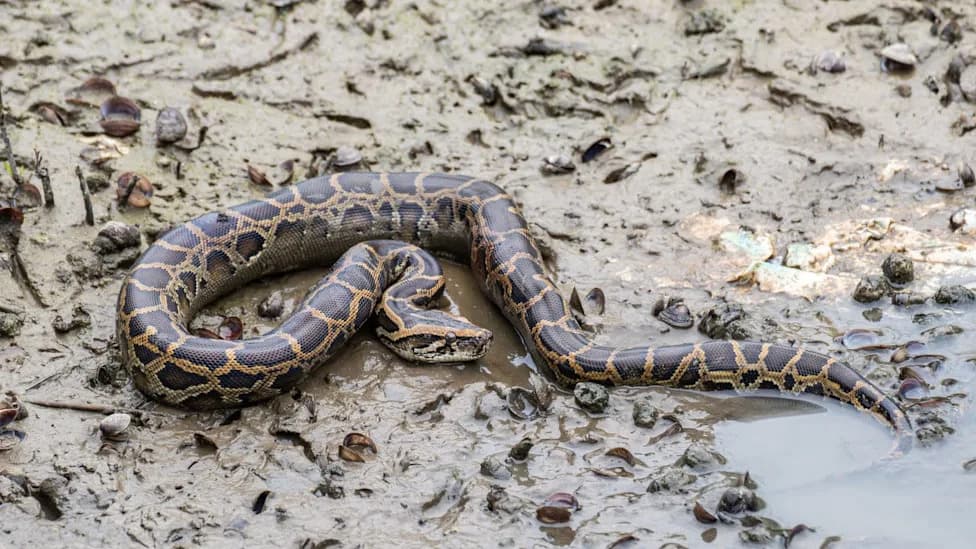
Photo Credit: iStock
Official records make one part of Southwest Florida look unusually quiet for Burmese pythons, but wildlife experts say that appearance is likely misleading. Although Lee County sits between heavily infested Collier and Charlotte counties, its official sighting counts remain low — a pattern specialists attribute to the snakes' secretive behavior and habitat choices, not to their absence.
Why Sightings Are Low
Detecting Burmese pythons is notoriously difficult. According to The News-Press, citing Florida Fish and Wildlife Conservation Commission (FWC) spokesperson Lisa Thompson, Lee County logged only two python sightings in 2026, and Cape Coral has had no credible reports since 2024. Experts say those numbers likely reflect underreporting rather than a true population gap.
Ian Bartoszek, an environmental science project manager at the Conservancy of Southwest Florida, warned that sparse reports shouldn't be taken as proof the snakes are absent. "Just because multiple reports haven't come in more recently doesn't mean there isn't an expanding population in parts of Lee County," he said.
Dr. Andrew Durso, a wildlife biology professor at Florida Gulf Coast University, added that the species is exceptionally cryptic. "It's impossible to overstate how cryptic they are and how easy it would be for even a person that's looking for them to walk right by one," Durso said.
Where Pythons Are Likely Hiding
Experts believe pythons are blending into agricultural lands, large private green spaces, canal systems, and the fringes of urban development. Cape Coral's roughly 400 miles of canals, for example, provide continuous aquatic corridors that may facilitate snake movement between areas.
Ecological Consequences
Burmese pythons are native to Southeast Asia and were introduced to Florida decades ago. In South Florida's warm, wet climate they have established breeding populations with major ecological impacts. Over roughly 25 years, pythons have been linked to sharp declines in medium-sized mammals — raccoons, opossums, skunks, foxes, bobcats and rabbits — and the largest individuals can consume deer and adult alligators. The FWC has also reported that pythons introduced a parasitic lungworm that can infect native snakes, creating an additional conservation concern.
Control and Removal Efforts
Florida's removal efforts include public reporting initiatives and organized events. The Florida Python Challenge, which concluded on July 19, and approved competition sites such as Big Cypress Wildlife Management Area in nearby Collier County are part of those efforts.
Researchers are also using targeted tactics. Bartoszek's team deploys about 40 male "scout" pythons fitted with radio transmitters. During the November–April breeding season, tagged males lead researchers to reproductive females, which are then removed. Removing breeding females can meaningfully slow population growth: Bartoszek said the program removed upward of 8,000 pounds of pythons during a breeding season and that the average clutch size is about 46 eggs.
How the Public Can Help
The FWC asks people to photograph any suspected python if it is safe to do so, note the location, and report the sighting. To report a sighting, call the Exotic Species Hotline at 888-483-4681, submit it online through the FWC reporting portal, or use the free IveGot1 app. Accurate public reports help biologists prioritize removal and better understand distribution.
Help us improve.