Concordia Station on the East Antarctic plateau logged −119.4°F (≈ −84.1°C) twice on July 18, marking the coldest official ground temperature recorded worldwide in 14 years. The readings, taken nine minutes apart, are notable but do not surpass Concordia’s 2010 low of −120.5°F or Vostok Station’s all-time record of −128.6°F from 1983. Experts say long polar nights, dry stable air and clear skies allow heat to radiate to space and drive extreme lows, even as coastal Antarctic regions show warming trends.
Concordia Station Records −119.4°F — Coldest Official Ground Temperature In 14 Years
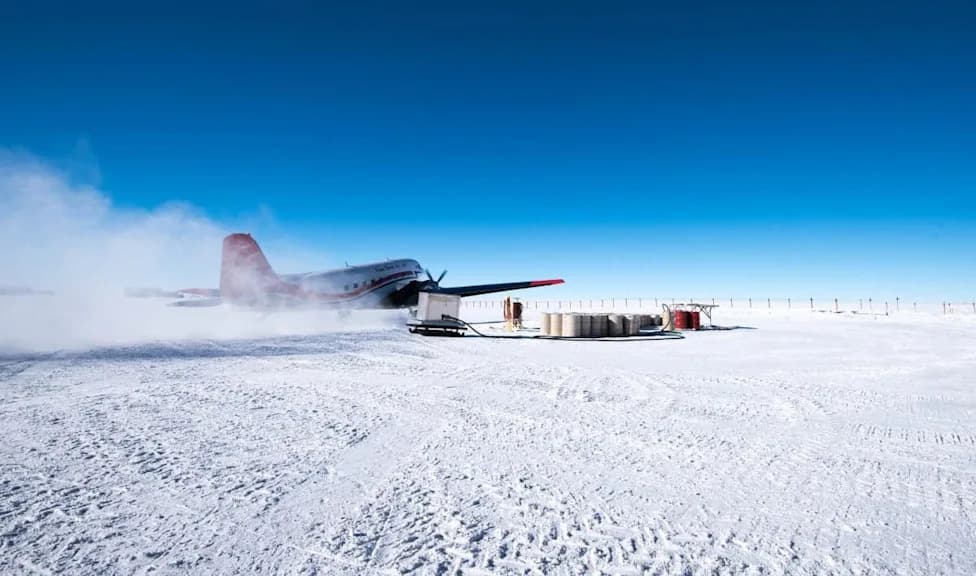
A Twin Otter takes off from Concordia Station on the East Antarctic Plateau, one of the most remote and extreme environments on Earth | ©Image Credit: ESA/IPEV/PNRA – B. Healey
On July 18, Concordia Station on the East Antarctic plateau registered a temperature of −119.4°F (≈ −84.1°C) twice in the early morning — first at 6:25 a.m. and again nine minutes later. That reading is the coldest official ground temperature recorded anywhere on Earth in 14 years.
Where Concordia Sits
Concordia is a remote French–Italian research outpost located roughly 600 miles inland atop the Antarctic ice sheet at about 10,800 feet (≈ 3,300 m) above sea level. The station is built to withstand extreme conditions, and winter temperatures commonly fall below −112°F (≈ −80°C).
Why Temperatures Get So Low
"During winter, there is no sunlight for months, the atmosphere is extremely dry and stable, and under clear skies, heat continuously escapes to space because there are no clouds, allowing temperatures to fall to extraordinary levels," said Gabriele Carugati, station leader for Italy’s National Antarctic Research Program (PNRA), in remarks to Live Science.
Conditions that favor these extremes include long polar nights, very dry and stable air, and clear skies that allow outgoing longwave radiation to escape to space. Local topography and high elevation also contribute to intense radiative cooling.
Records, Context, And Limits
Although notable, the July readings did not break Concordia’s own low of −120.5°F (≈ −84.7°C) recorded in 2010. The all-time official ground record remains Vostok Station’s −128.6°F (≈ −89.2°C) from July 1983. Satellite analyses indicate that the coldest pools in surface depressions near the ice-sheet summit can reach about −144°F (≈ −97.8°C), colder than any station measurement.
Isolation And Human Factors
Concordia is extremely isolated during the Antarctic winter: no aircraft operate to or from the base, and the nearest human outpost, Vostok Station, lies more than 370 miles away. That distance can make the crew technically farther from immediate rescue than astronauts aboard the International Space Station, which orbits roughly 250 miles above Earth.
Regional Contrasts: Cold Interior, Warming Coasts
While the high-elevation interior can still record historic lows, other parts of Antarctica are warming. For example, Argentina’s Esperanza base on the milder Trinity Peninsula registered an unusually warm winter high of 59.7°F (≈ 15.4°C) last month. Concordia itself also experienced an unusually warm reading of 15.1°F (≈ −9.4°C) in March of the previous year — about 32°F above the same period the year before.
Scientists emphasize that these regional contrasts are expected: coastal ice shelves are thinning due to warming ocean waters, while the high, interior plateau remains a distinct environment where extreme cold can persist.
Sources: IAMCO, Institut Polaire Français, PNRA, Live Science, New York Post.
Help us improve.