Researchers have shown that Saxifraga candelabrum, a plant from the Hengduan Mountains of southwest China, traps, digests and absorbs nutrients from insects—confirming true carnivory. The team combined field and herbarium observations, enzyme fluorescence, stable-nitrogen feeding experiments and genetic analysis to reach the conclusion. The discovery validates an 1875 suggestion by Charles Darwin and suggests carnivory may be more widespread among flowering plants than previously thought.
Darwin’s 150-Year-Old Hunch Confirmed: Mountain Saxifrage Is Truly Carnivorous
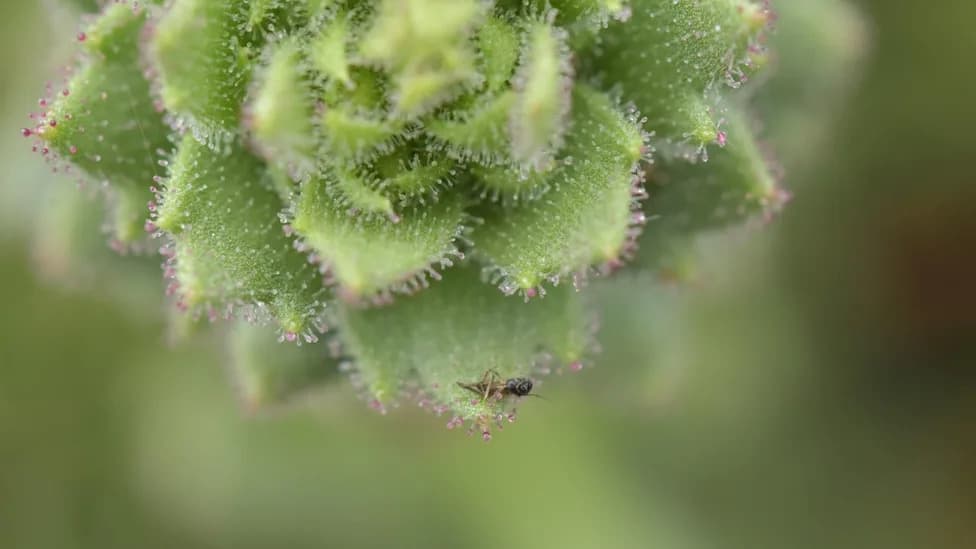
Close-up of a carnivorous plant with hairs. An insect is stuck on some of the hairs.
Researchers have confirmed that a high-altitude flowering plant from southwest China digests and absorbs nutrients from trapped insects, validating a prediction Charles Darwin made more than 150 years ago. The species Saxifraga candelabrum grows above about 8,200 feet (2,500 meters) in the Hengduan Mountains and uses sticky glandular hairs on stems and branches to trap small flying insects such as nonbiting midges.
Field and Herbarium Evidence
Field observations and herbarium surveys show that insect-trapping is widespread in this species. Mature plants with more and longer branches often carried dozens of trapped insects—on average about 71 per mature individual—and 43 of 45 herbarium specimens examined contained prey, indicating the behavior is typical rather than occasional.
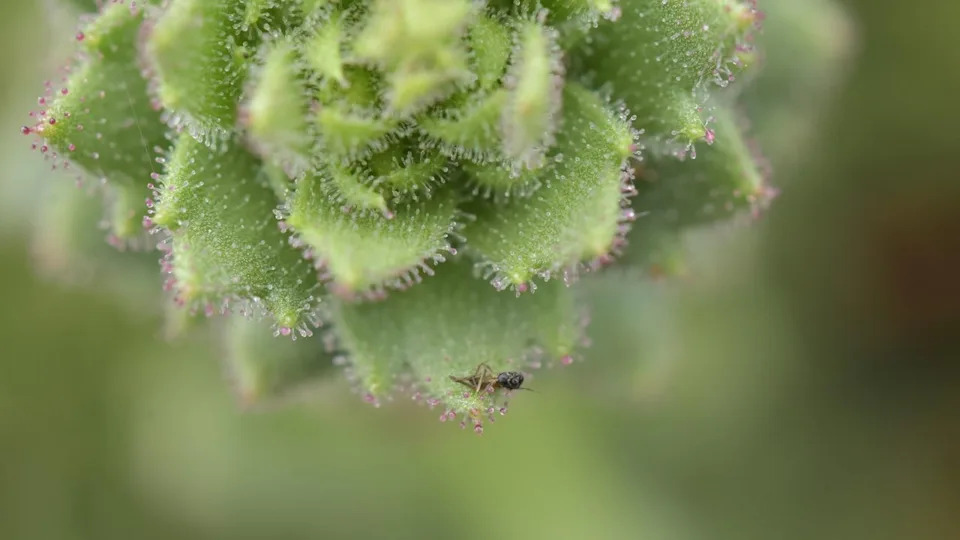
Scientists discovered that a plant growing on mountains in southwest China is carnivorous. | Credit: Xin-Jian Zhang
Biochemistry and Nutrient Uptake
The research team visualized active digestive enzymes by fluorescently tagging phosphatase molecules, an enzyme commonly associated with carnivorous digestion. To demonstrate nutrient uptake, they fed fruit flies labeled with a heavy, stable form of nitrogen to the plants. Plants that received the labeled prey showed a measurable increase in the stable nitrogen signal, matching results from a known carnivorous species used as a positive control; a non-carnivorous control plant showed no nitrogen enrichment.
Genetics and Evolutionary Context
Genetic analyses found that S. candelabrum shares gene sequences with established carnivorous plants that relate to prey attraction, digestion and nutrient absorption. The authors conclude that hairs originally evolved for herbivore defense were repurposed as effective traps, allowing the species to supplement scarce soil nutrients in its dry, nitrate-poor alpine habitat.
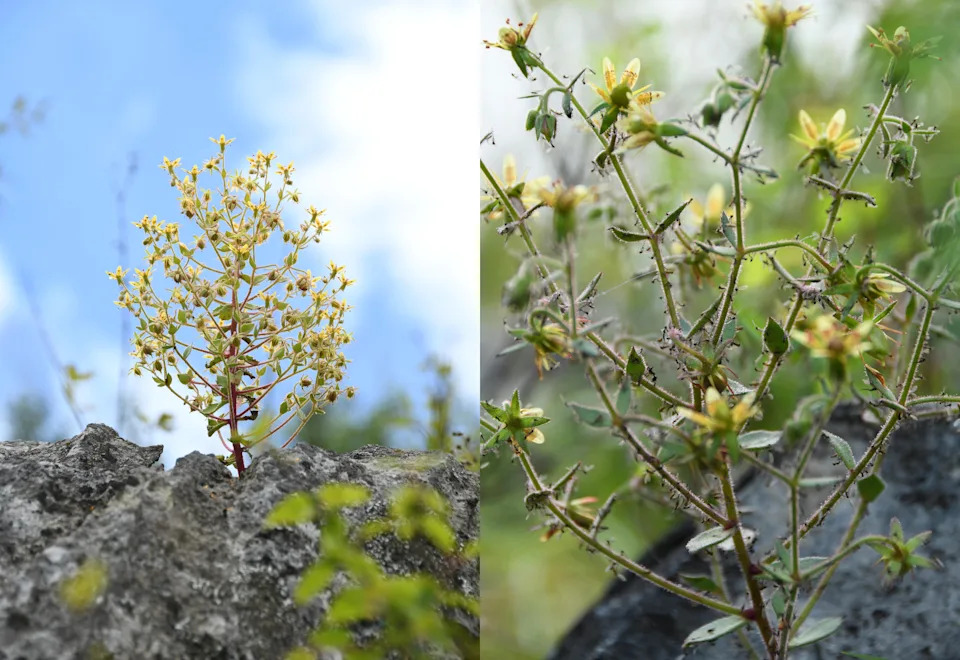
S. candelabrumsecretes a viscous substance that coats its hairs, meaning insects get stuck on the stem and branches if they fly too close. | Credit: Xin-Jian Zhang
'Although untested at the time, Darwin's hypothesis provided an important inspiration for our study,' said co-author Hang Sun of the Kunming Institute of Botany.
Ecological Balance and Broader Implications
The researchers note an evolutionary balance: larger insects that serve as pollinators rarely become trapped, suggesting the plant's traits favor both successful reproduction and nutrient acquisition. This is the first demonstrated case of carnivory in the saxifrage group (Saxifragaceae), and the finding raises the possibility that carnivory may be more widespread among flowering plants than previously recognized.
Study: Published Aug. 4 in Nature Communications. Location: Hengduan Mountains, southwest China. Lead Methods: Field counts, herbarium surveys, fluorescent enzyme tagging, stable-nitrogen feeding trials, and genetic analysis.
Image credit: Xin-Jian Zhang
Help us improve.