Maine has adopted a targeted, early-intervention strategy to stop spruce budworm outbreaks by treating small, heavily infested pockets with biological insecticides when caterpillars are most vulnerable. In year one about 240,000 acres were treated with monitoring showing roughly 95% fewer pests in treated areas; another ~70,000 acres were sprayed in June. The program is opt-in for landowners and backed by public and private funding, but experts warn the threat could persist for about a decade while moths continue arriving from Quebec.
Maine’s Targeted Response Aims to Stop a New Spruce Budworm Crisis
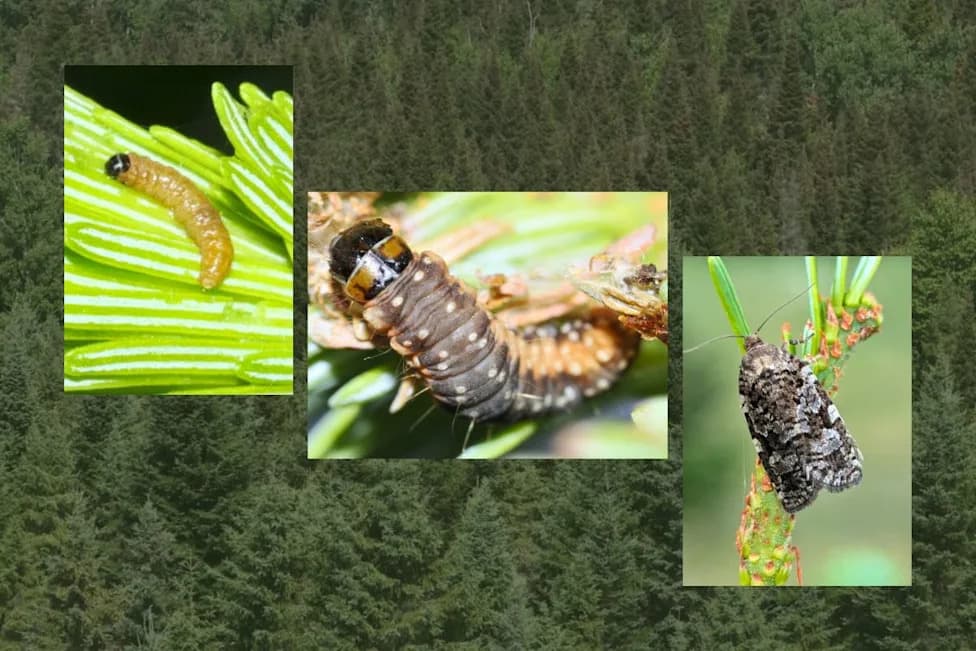
Populations of spruce bud worms have exploded northern Maine, and it has disastrous implications for the North Maine Woods if the outbreak is not contained or eradicated. Composite by Leela Stockley of the Bangor Daily News; Images courtesy Neil Thompson.
Maine has shifted tactics to head off a potential spruce budworm catastrophe in the North Woods, using targeted, early interventions instead of broad aerial pesticide campaigns. The strategy focuses treatments on densely infested pockets when caterpillars are most vulnerable and prioritizes biological insecticides that spare beneficial species.
Early Signs and Local Impacts
Christmas tree growers in Aroostook County first noticed swarms of spruce budworm moths arriving from Quebec in 2019. Within a few years some farms reported severe defoliation. "There were too many holes and gaps in them to be salable as Christmas trees," said Ben Voisine, manager of Allagash View Farms in New Canada. Voisine estimates he lost about $600,000 worth of trees that would otherwise have been ready for harvest within a year or two.
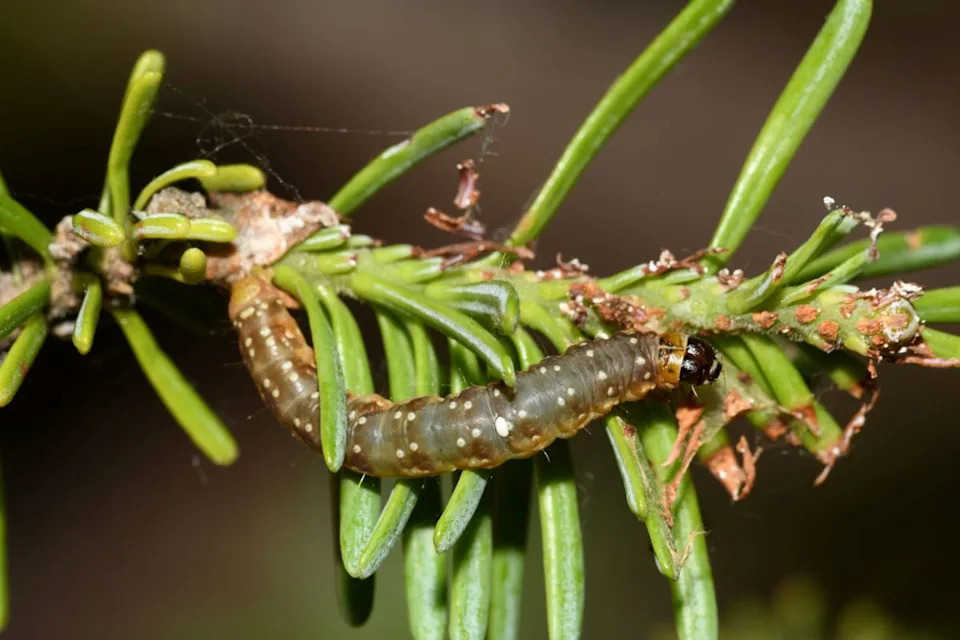
A spruce budworm eating a branch on a fir tree. Photo courtesy Neil Thompson, University of Maine at Fort Kent, Bugwoods.org
Why The Change In Strategy
Scientists and state officials redesigned the response after studying a prolonged outbreak that began in 1967 and lasted 26 years, damaging more than 667,000 acres in northern Maine. That earlier effort relied on broad-spectrum synthetic insecticides sprayed over large areas; despite the spraying, more than 84% of balsam fir trees in affected areas died, and many beneficial insects were harmed.
What The New Program Does
The early-intervention program targets only heavily infested pockets and applies treatments when spruce budworms are breaking diapause and most susceptible. Treatments are applied only where landowners opt in. The state now uses biological insecticides that specifically target budworm caterpillars and are much less toxic to non-target species such as pollinators.
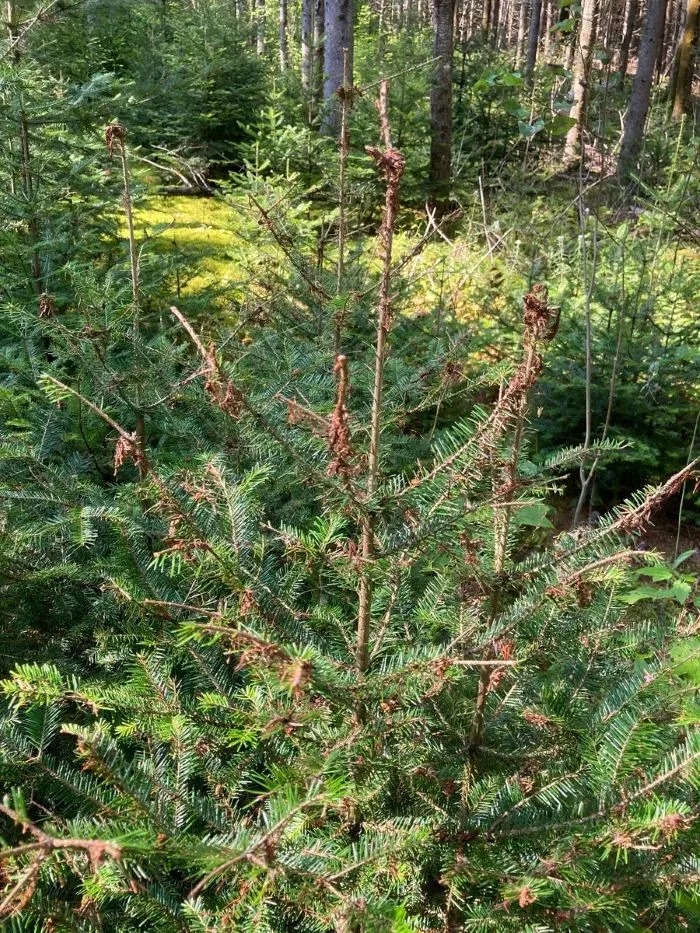
Spruce budworm damage to a young balsam fir tree left, and a 45-year-old balsam fir tree, right, at the Labbe Tree Farm in Frenchville. Photos courtesy Vernon Labbe.
"These smaller pockets are getting sprayed before they expand, so there's a lot less spraying than before," said Angela Mech, a University of Maine forest entomologist working on the effort.
Results So Far
In the program's first year, about 240,000 acres in northern Maine were treated. University of Maine monitoring reported roughly 95% fewer budworms in treated areas. An additional roughly 70,000 acres were sprayed in June, covering commercial timberlands, state lands and 127 private woodlots; researchers expect to assess the effects of that spraying in late winter.
Landowners who enrolled in the program reported limited damage on their properties. Vernon Labbe of Labbe Tree Farm in Frenchville said the aerial spraying kept damage at his farm to a minimum, while denser infestations to the west—including at Allagash View Farms—suffered greater losses.
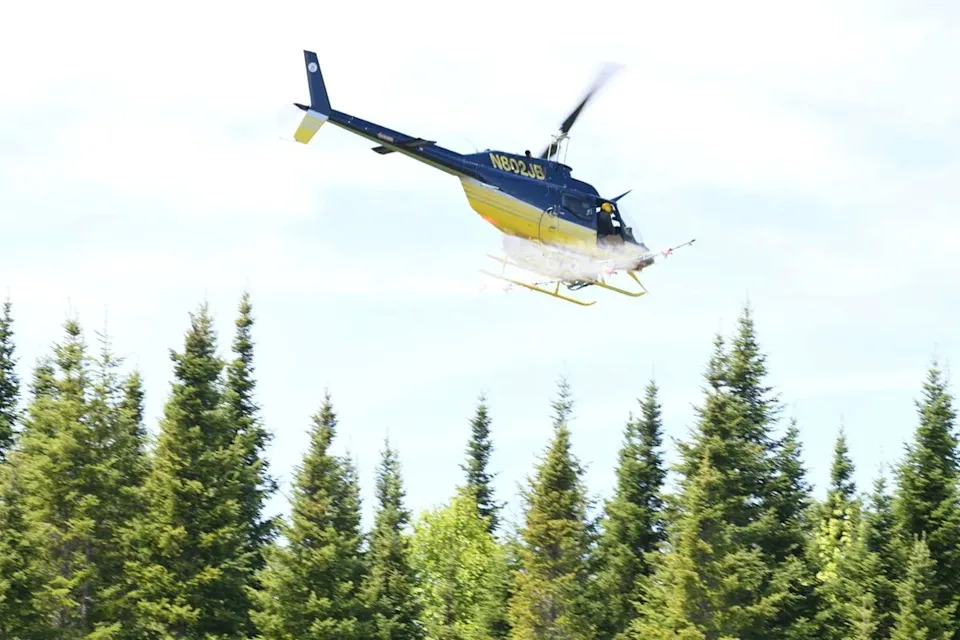
Aerial pesticide spraying to keep the spruce budworm at bay. Photo courtesy Neil Thompson, University of Maine at Fort Kent, Bugwoods.org
Costs, Risks and Outlook
Experts warn the outbreak, if unchecked, could continue for about a decade and cost Maine's timber industry roughly $800 million per year; the Forest Resources Association also estimates a large drop in firewood harvests. The state, private and federal partners initially committed about $14 million to the program; the federal government added $10 million in May, and the state approved another $2 million last year. A cost-share program for small woodlot owners is planned to begin next year.
Spruce budworm moths can travel roughly 200 miles, so Maine remains at risk as long as a source population persists in Quebec. "Ten years is a very reasonable expectation of how long this will continue to be an issue, until the source population in Quebec is concluded," said Neil Thompson of the University of Maine at Fort Kent.
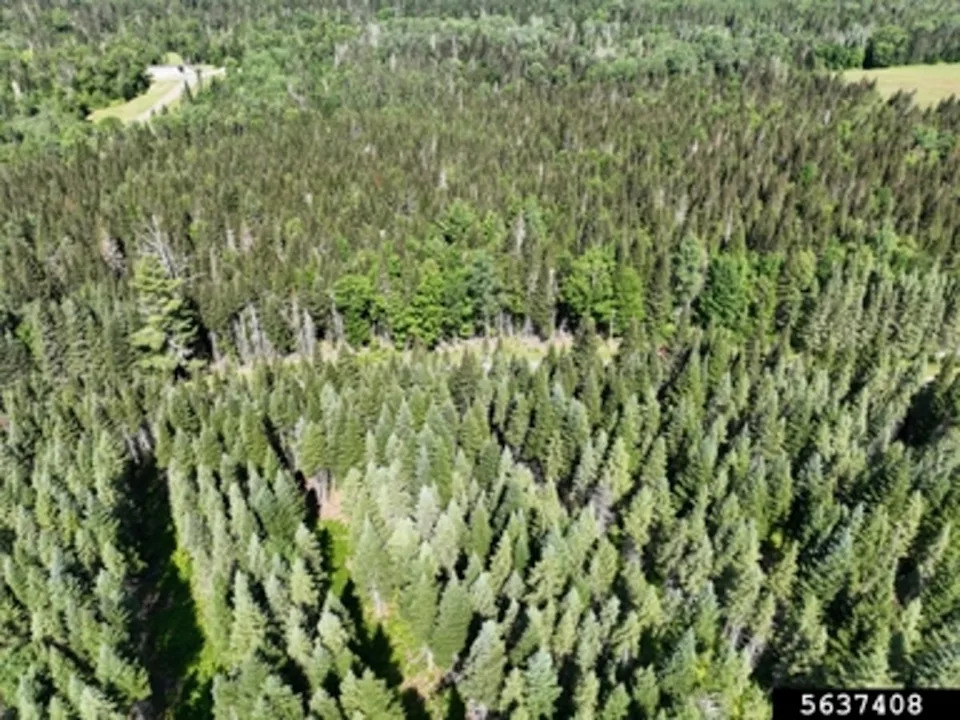
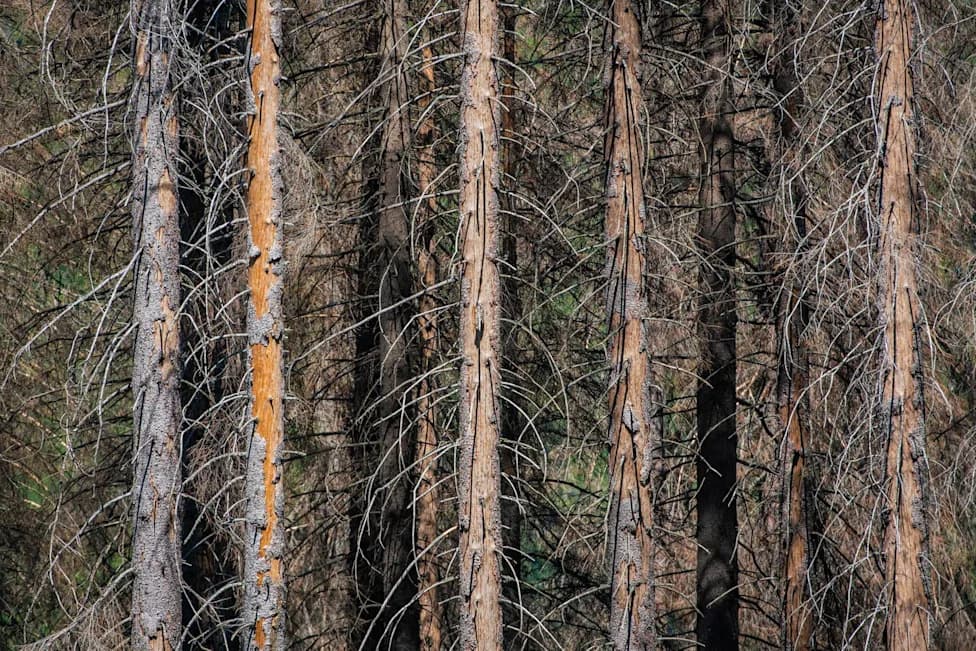
A wide swath of discolored and damaged fir trees from a spruce budworm infestation. Photo courtesy Neil Thompson, University of Maine at Fort Kent, Bugwoods.org
How The Budworm Damages Trees
The spruce budworm begins life as a dark brown caterpillar with pale spots and a glossy head, later maturing into a half-inch moth. The caterpillars feed on the buds and newly emerging needles of balsam fir and white spruce; when they strip these, trees cannot photosynthesize properly and may die.
The early-intervention approach emphasizes monitoring, targeted treatment, and landowner participation to reduce impacts while limiting harm to other species and the broader forest ecosystem.
Help us improve.