Trinity College Dublin researchers recovered the first ancient smallpox genomes from the Americas, extracted from two individuals buried in present-day Chile and dated to the late 15th–early 17th centuries. The genomes belong to an extinct variola lineage positioned between medieval European and later strains, providing direct molecular evidence that smallpox arrived with European colonisation. The study shows the virus's evolutionary rate slowed during major colonial epidemics in the 17th–18th centuries and increased again in the 19th century as vaccination spread, highlighting how human movement, immunity and public health shape pathogen evolution.
Ancient Genomes Reveal Europeans Brought Smallpox To The Americas
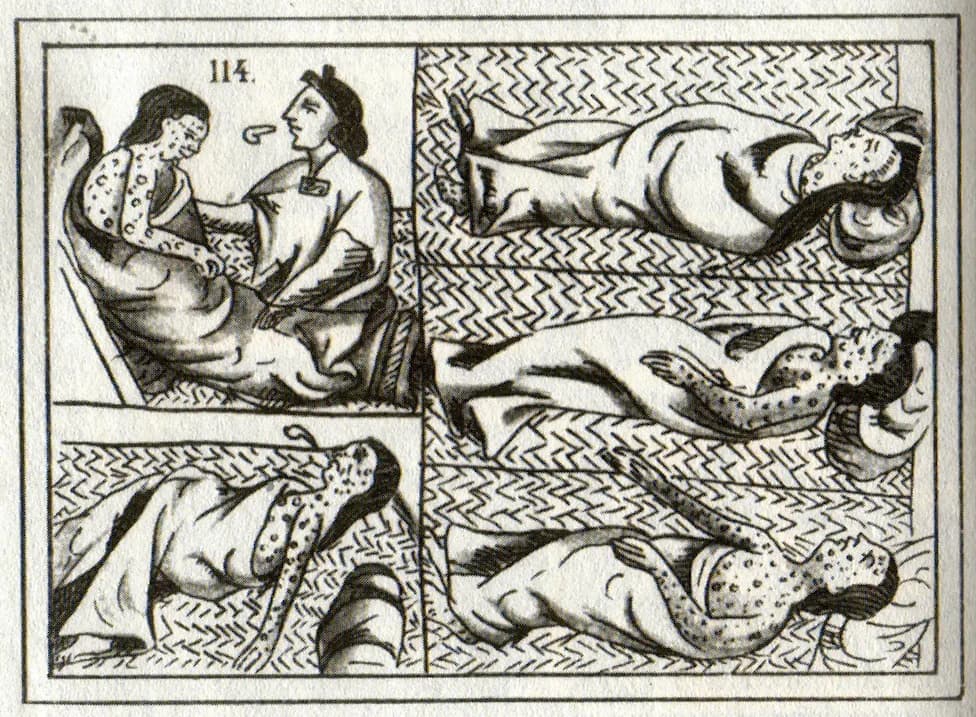
Nahua people suffering from smallpox during the conquest of central Mexico, drawn in the Florentine Codex between 1540 and 1585. (Florentine Codex via Wikimedia Commons)
Researchers at Trinity College Dublin have recovered and analysed the first ancient smallpox (variola virus) genomes identified in the Americas, offering the strongest direct molecular evidence yet that European colonisation introduced the disease to Indigenous communities.
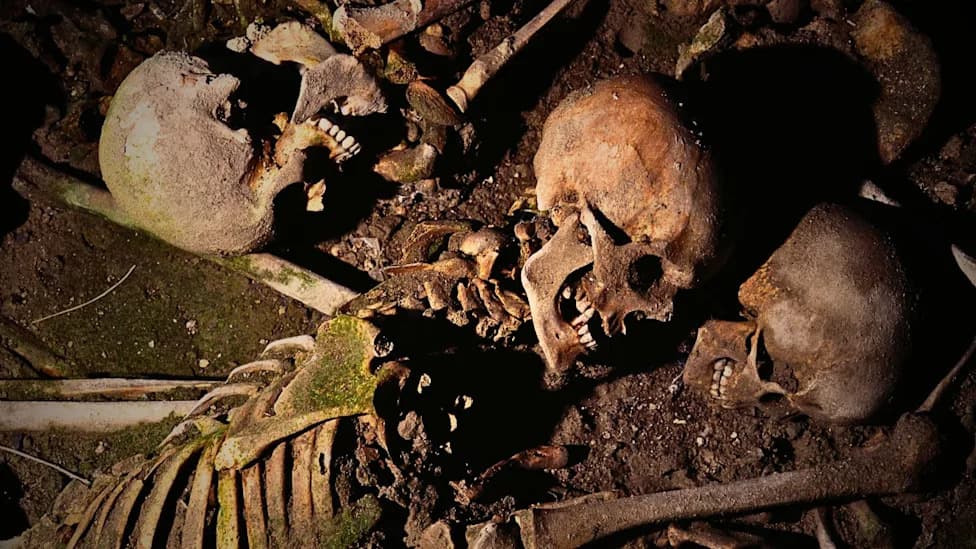
The team extracted viral DNA from two individuals buried in what is now Chile. Radiocarbon dating and archaeological context place the burials between the late 15th and early 17th centuries. The genomes, published in the journal Science, belong to an extinct variola lineage that sits evolutionarily between medieval European strains and those recorded in later centuries.

Bruno Romero González and Dr. Shigeki Nakagome in Trinity College Dublin. (Thomas Deane via SWNS)
Direct Genetic Link To Colonial Contact
According to Dr Shigeki Nakagome of Trinity's School of Medicine, the genomes provide “the first molecular confirmation that smallpox was carried to the Americas during the colonial period.” This genetic evidence links historic accounts of colonial-era outbreaks directly to Old World strains for the first time.
How The Virus Evolved
Lara Cassidy from Trinity's School of Genetics and Microbiology explains that the team observed a period of sustained genetic change in smallpox up to the 16th century, followed by a marked slowdown in evolutionary rate during the 17th and 18th centuries — the era of major colonial expansion and devastating smallpox epidemics. The authors suggest this pattern could reflect the virus reaching an evolutionary optimum that enabled widespread transmission without substantial further adaptation, a process likely aided by the low immunity of newly exposed Indigenous populations.
An Andean burial drawn around 1615 by the Quechua chronicler Felipe Guaman Poma de Ayala. (Felipe Guaman Poma de Ayala via Wikimedia Commons)
The researchers also detected signs that this period of relative evolutionary stability ended in the 19th century as vaccination became more common. As population immunity rose, the pace of viral evolution appears to have increased again, consistent with shifting selective pressures on the pathogen.
Historical Context And Broader Implications
Bruno Romero González, a PhD student at Trinity's School of Medicine, says the findings illustrate how large historical events — colonisation, shifts in population immunity and the introduction of vaccines — shaped the evolution of one of humanity's deadliest infectious agents. The study also demonstrates the power of ancient DNA to resolve long-standing historical questions about disease spread and evolution.

Dr. Shigeki Nakagome and Dr. Lara Cassidy in Trinity College Dublin's Front Square. (Trinity College Dublin via SWNS)
The study highlights how population movement, immunity and public-health measures can influence pathogen evolution — lessons that remain relevant for modern threats such as influenza, COVID-19 and mpox.
For historical context: Edward Jenner developed the first smallpox vaccine in 1796. Nineteenth- and twentieth-century vaccination campaigns drastically reduced transmission, although smallpox is estimated to have caused hundreds of millions of deaths during the 20th century. A coordinated global eradication campaign led by the World Health Organization succeeded in eliminating naturally occurring smallpox: the last naturally occurring case was recorded in Somalia in 1977, and the disease was declared eradicated in 1980.
Study Source: Trinity College Dublin research team; paper published in Science.
Help us improve.