During a 1990s spruce budworm outbreak researchers found a fungus living inside needles of unusually healthy firs and cultured it at the University of New Brunswick. In partnership with Irving Woodlands, they developed a program to inoculate seedlings with that endophyte, which reduces budworm survival and defoliation by roughly 30 percent and may enhance drought tolerance. Since 2017 about 30 million inoculated trees have been planted in Maine, and the company plans 8 million more this year. The inoculated seedlings are used alongside targeted pesticide spraying as part of an integrated pest-management strategy.
The Fungus That Could Protect Maine’s Fir Trees — One Seedling at a Time

Large-scale production of endophytic fungi to inoculate fir tree seedlings. Photo courtesy Irving Woodlands.
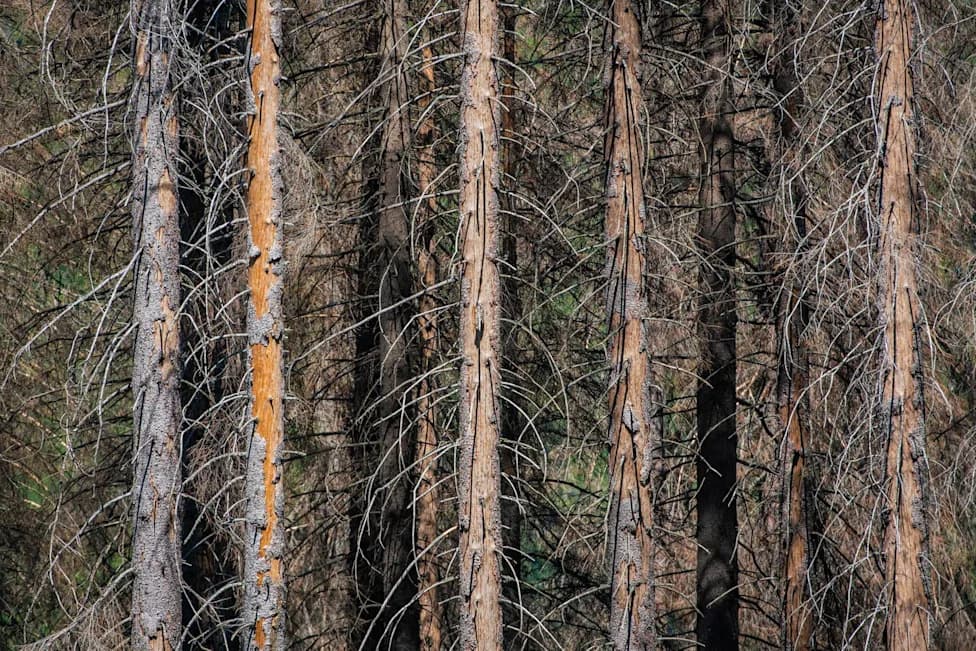
Researchers investigating a severe spruce budworm outbreak noticed in the 1990s that some fir trees stayed healthy while nearby trees were heavily damaged. Needles from those healthy trees were taken to a University of New Brunswick laboratory, where scientists identified and cultured a naturally occurring endophytic fungus living inside the needles.
From Discovery To Deployment
The 1999 discovery led to a long-term partnership with Irving Woodlands, a division of the J.D. Irving forestry group and the largest private forest owner in Maine. Working with researchers, the company developed a program to inoculate seedlings with the endophyte so the trees carry a biological defense against spruce budworm before they are planted.

Irrigation systems spraying fungi treatment to innoculate seedlings in the Irving Woodlands greenhouse in Canada. Photo courtesy Irving Woodlands.
How The Program Works
Scientists first isolated and cultured the fungus and confirmed it produces compounds that are toxic to spruce budworm. They then inoculated seedlings in controlled nursery conditions, monitored the young trees for several years to ensure the fungus persisted, and only then planted them in the field. Since 2007, every seedling Irving Woodlands grows in New Brunswick has been inoculated, according to company officials.
Scale And Results
Irving Woodlands reports it has planted roughly 30 million inoculated, insect-resistant trees in Maine since 2017 and marked its 100 millionth tree planted in Maine this year. The company plans to plant about 8 million more inoculated seedlings this year. Field testing shows these trees reduce spruce budworm survival and defoliation by about 30 percent and may also improve drought tolerance and general tree vigor.

Anti-budworm fungi production in the Irving Woodlands lab. Photo courtesy Irving Woodlands.
The inoculated seedlings are one tool in a broader integrated pest-management approach. Maine also runs an early-intervention pesticide program that targets high-infestation areas; in its first year treated areas recorded about 95 percent fewer pests than untreated sites. Irving Woodlands says it uses inoculated stock primarily on its own holdings and still relies on targeted spraying when necessary.
Context And Limits
Researchers caution the fungal inoculation is not a silver bullet. The Canadian spruce budworm outbreak that began in 2006 defoliated or killed an estimated 25 million fir trees in Canada before expanding into Maine roughly five years ago. Most trees naturally host endophytic fungi, but only a small fraction — about 5 percent — produce anti-insect chemicals. The inoculated trees provide added tolerance and resilience, but they are intended to complement, not replace, other control measures.
These trees give forests an extra layer of protection, said Andrew McCartney, science director at Irving Woodlands. State entomologist Allison Kanoti added that tree improvement and inoculation programs are an important part of integrated pest-management strategies.
As researchers and foresters monitor budworm populations and tree health, the program offers a promising, more natural tool to reduce insect damage and strengthen forest resilience over the long term.
Help us improve.