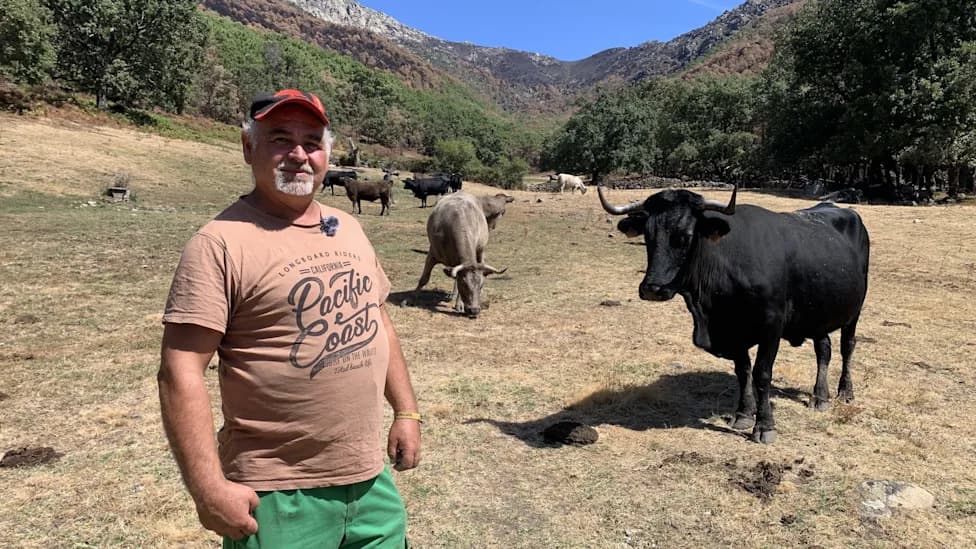
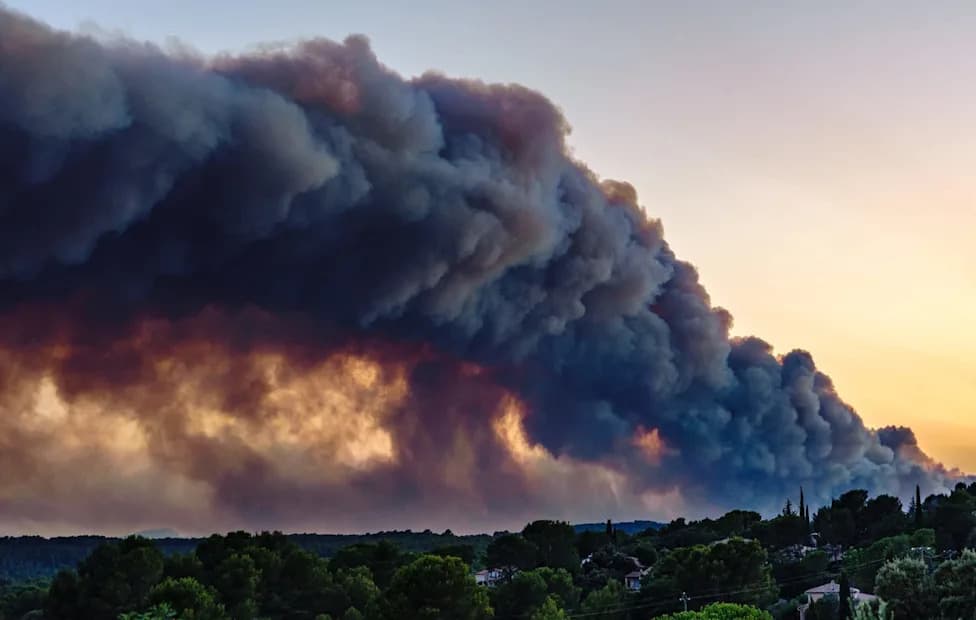
This summer's wildfires across France and Spain have caused major human displacement and fatalities and devastated wildlife habitats. Around 42,000 hectares near Bordeaux were scorched and experts warn millions of animals may have died. Reptiles and amphibians — including the Vulnerable Western Spadefoot Toad — face acute risk, while ash and chemical residues threaten long-term ecosystem health. Vegetation may regrow with rain, but animal populations will take much longer to recover.
French Wildfires Turn Animal Habitats Into a 'Desert of Ashes' — Millions of Wildlife at Risk
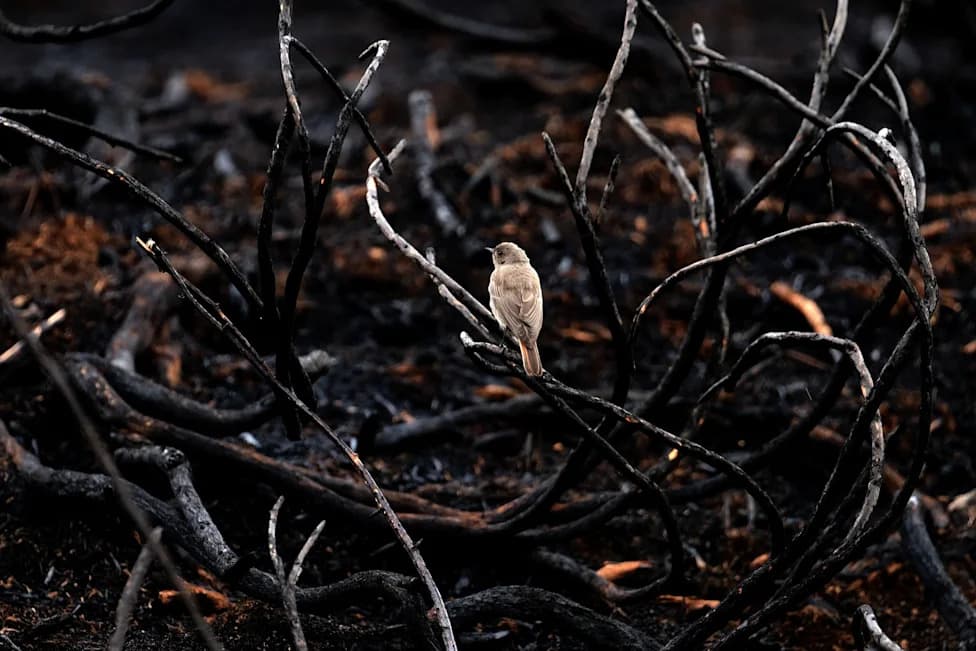
A black redstart returned to the Pilat Regional Natural Park in France two days after wildfires destroyed several acres.Romain Doucelin, Sipa, AP Images
This summer's wildfires across Europe have left a devastating human and ecological toll. In France more than 200,000 people were forced to evacuate, four firefighters lost their lives, and Spain reported at least 13 fatalities. The blazes have also annihilated vast swathes of habitat, leaving experts warning of an "ecological disaster" and estimating that millions of animals may have perished.
Climate, Drought and a Landscape Primed to Burn
Scientists point to climate change as a major driver of the fires in France and Spain. Higher temperatures increase the atmosphere's capacity to hold moisture, drying out soils and vegetation and turning once-green cover into highly flammable fuel. As Stefan Rahmstorf of the Potsdam Institute for Climate Impact Research explains, hotter air becomes "thirsty," drawing moisture from plants and the ground and leaving landscapes primed to ignite.
Scenes of Destruction and Immediate Wildlife Impacts
Near Bordeaux, roughly 42,000 hectares (more than 100,000 acres) have been scorched, turning forests and scrub into a blackened wasteland. "It's like Pompeii," says Grégoire Loïs, a naturalist at France's National Museum of Natural History. "It's a desert of ashes." With trees, shrubs and leaf litter gone, small mammals, reptiles and ground-dwelling birds lose shelter and camouflage and become far more exposed to predators.
Céline Sissler-Bienvenu, founder of Planimalia, warns that "millions of animals are likely dead" and calls the situation an "ecological disaster." She also notes that survivors often move into towns in search of food and water, increasing risks such as vehicle collisions.
Species of Special Concern
While mobile animals like deer and adult birds can often escape, slower species — especially reptiles and amphibians — are particularly vulnerable. Conservationists are especially worried about the Western Spadefoot Toad (Pelobates cultripes), listed as Vulnerable by the IUCN. This nocturnal, burrowing toad already faced habitat loss, invasive predators (such as Louisiana crayfish), road mortality and an estimated population decline of more than one third over the past two decades. The recent fires risk further severe population losses.
Because Western spadefoot toads live in burrows that can be nearly one metre deep, some individuals may have found protection underground, particularly where fires moved quickly due to sparse surface vegetation. Still, scientists are racing to assess the full scale of losses.
Longer-Term Consequences
Ashfall and chemical residues from flame retardants contaminate soil and water, complicating recovery for surviving wildlife and potentially causing long-term health problems such as reproductive issues. While plant communities may begin to regenerate with the rains, Sissler-Bienvenu cautions that animal populations — especially those already small or isolated — will take a long time to recover.
What Comes Next: Rapid assessments, targeted rescue and rehabilitation efforts, and habitat restoration will be critical. Monitoring vulnerable species like the Western Spadefoot Toad and protecting remaining wetlands and refuges should be conservation priorities as the region moves from emergency response into recovery.
Help us improve.