Multiple national polls taken ahead of the November midterms show Democrats leading Republicans on the generic congressional ballot and, for the first time in nearly a decade of tracking, seen by voters as having a better plan for the economy. Reuters/Ipsos found Democrats at 42% versus 37% for Republicans among registered voters; Decision Desk HQ's average showed a 6.7-point Democratic edge as of Aug. 3. Other surveys from CNN/SSRS, Emerson College, and Economist/YouGov report similar Democratic advantages. President Trump dismissed those results on Truth Social as "fake."
Multiple Polls Put Democrats Ahead Three Months Before U.S. Midterms
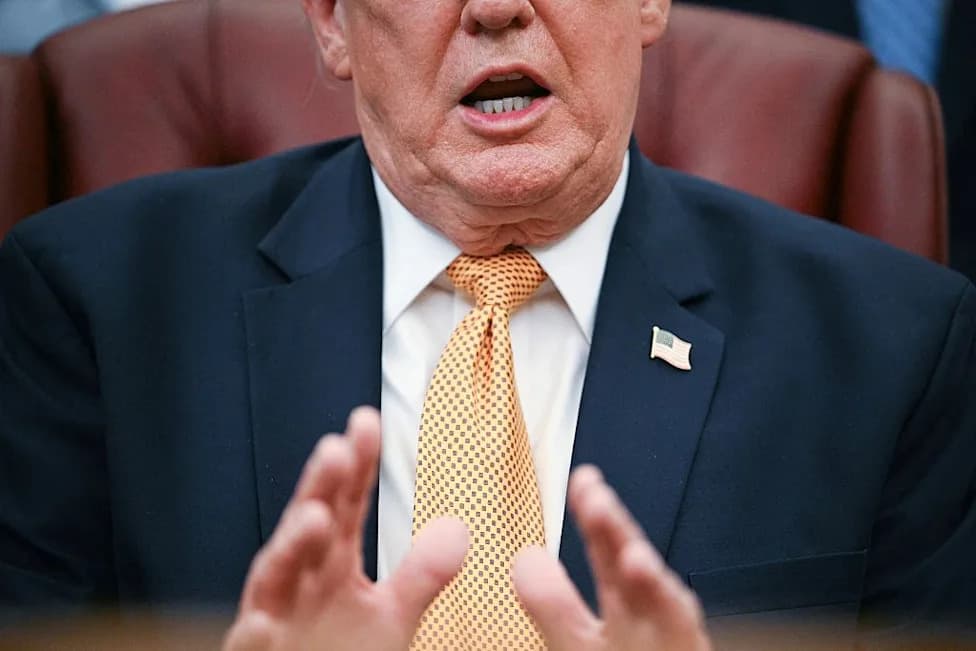
U.S. President Donald Trump speaks at the White House in Washington, D.C., on Aug.3, 2026. —Jim Watson—AFP/Getty Images
With roughly three months to go until the U.S. midterm elections in November, a string of national surveys shows Democratic candidates with an edge over Republicans on the generic congressional ballot — and, notably, in voters' assessments of which party has the better economic plan.
Recent Poll Findings
A Reuters/Ipsos poll released Monday found 42% of registered voters would currently back a Democratic congressional candidate, versus 37% for a Republican. The same survey reported that, for the first time in nearly a decade of tracking, voters now view the Democratic Party as having a better plan for the economy than the Republican Party.
Other polls show a similar trend. As of Aug. 3, the polling average compiled by Decision Desk HQ shows the Democratic Party leading the GOP by 6.7 percentage points on a generic congressional ballot. A CNN/SSRS survey released in late July put Democrats ahead by 8 points on a generic ballot, up from a 5-point advantage in January.
Emerson College Polling, which surveys likely midterm voters, also shows growing support for Democrats: in March, 49% of respondents said they planned to support the Democratic candidate while 42% planned to vote Republican. That margin widened to 51% in May and to 53% in July for Democrats, with Republicans remaining near 42%.
An Economist/YouGov poll conducted in late July found Democrats ahead by 4 points, up from a 3-point advantage in March.
What Analysts Say
Analysts point to several factors that may be eroding the GOP's historical advantage on economic competence, including the inflationary effects of tariffs and broader economic consequences related to tensions involving the U.S. and Iran. Some Republican lawmakers have expressed concern that the president's priorities could hurt their electoral prospects.
President Donald Trump, whose approval ratings have declined during his second term, dismissed the recent polls on Truth Social, calling them "fake" and asserting his internal numbers are "the best they have ever been." He wrote: "Don't believe the Radical Left's Fake Poll numbers. They are Crooked and Corrupt."
With the midterms still months away, these poll leads could change as campaigns intensify, but current data suggest Democrats hold a narrow but meaningful advantage on the generic ballot and on the issue of economic competence.
Help us improve.