The Pentagon is enforcing the ban on transgender service through closed-door separation boards that often remove decorated troops despite exemplary records. Lawyers report widespread losses, and some service members have been excluded from their own hearings. Legal challenges are moving forward — a class was certified by Judge Ana Reyes and a trial scheduled — while Congress recently blocked an effort to enshrine the ban into law.
Pentagon's Closed‑Door Boards Push Out Decorated Transgender Troops Despite Exemplary Records
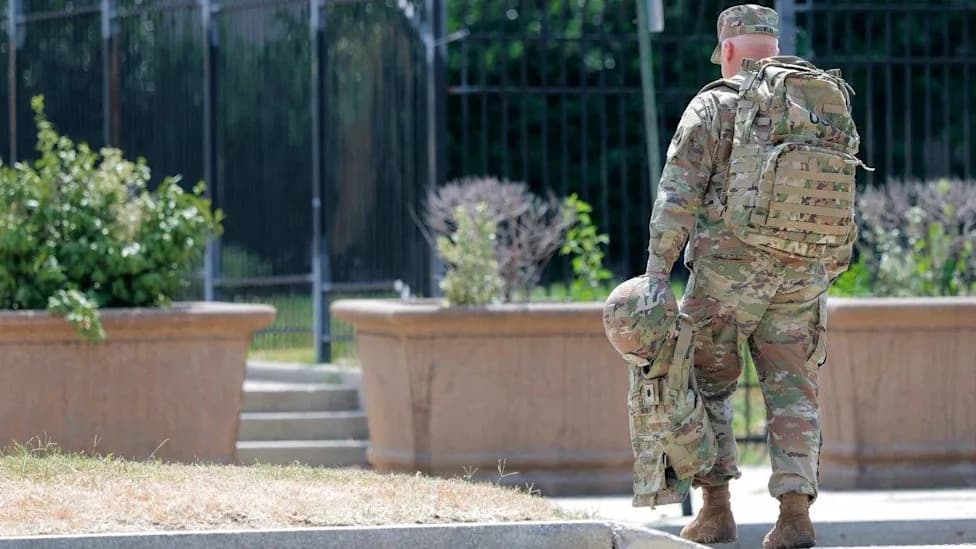
soldier walking in uniform
The Trump administration's directive to exclude transgender people from military service is being enforced through closed-door separation boards that have removed highly decorated service members despite years of exemplary performance. Proceedings are held without cameras or public transcripts, and in some cases service members — and even spouses or witnesses — have been excluded from the rooms that decide their careers.
How the Boards Work
These separation boards operate like administrative trials: attorneys introduce evidence, witnesses testify, and three officers vote on whether a service member may remain in uniform. But rather than weighing deployability or leadership, many boards focus on whether a service member's record includes a diagnosis of gender dysphoria or evidence of transition-related care — factors targeted by the Pentagon policy.
Illustrative Cases
Capt. Kai Proce served 11 years, deployed to South Korea and the Middle East, and mentored 125 cadets at West Point. His final evaluation described him as one of the best officers his commander had seen in nearly three decades, and his attorney submitted hundreds of pages documenting his service. The Army's case hinged on a gender dysphoria diagnosis and gender-affirming care, and a three-officer panel voted to remove him.
Maj. Kara Corcoran led an infantry platoon in Afghanistan and was five days short of 18 years' service — a milestone that affects retirement and health benefits for her and her daughters — when a separation board voted to remove her. The board acknowledged her competence and even recommended the Army consider preserving her retirement, but still concluded removal was appropriate because of the medical diagnosis at issue.
“People need to know that this whole thing is cruelty. It was intentionally designed to hurt us.” — Maj. Kara Corcoran
Legal, Administrative, and Policy Contradictions
Army Reserve lawyer Priya Rashid, who has represented many transgender troops, told reporters she lost 27 of 28 cases and described the hearings as a "public humiliation ritual." Reports say at least six service members were barred from attending their own hearings for refusing to cut hair or wear uniforms aligned with their sex assigned at birth; one master sergeant with 17 years of service testified only with her camera off.
The administration argues the policy protects military readiness, but a review of 58 studies found no evidence that transgender service harmed cohesion, deployability, or effectiveness; in many cases, service members who transitioned experienced improved health and performance. The policy also raises stark contradictions: the Pentagon has touted testosterone replacement therapy as readiness-enhancing for some service members while using hormone treatment as evidence against transgender troops.
Ongoing Legal Challenges
U.S. District Judge Ana Reyes certified a class of transgender service members and prospective recruits challenging the ban and scheduled a trial for January. The Justice Department has signaled it may seek Supreme Court review. Separately, Congress recently rejected an attempt to codify the ban into federal law when four Republicans joined Democrats to defeat the amendment, leaving the policy vulnerable to judicial rulings or actions by a future administration.
What This Means
While the courts and Congress consider challenges to the policy, separation boards continue to convene, summoning service members into closed rooms, acknowledging honorable service, and then removing them for receiving care that was previously authorized. For many troops and their families, the process has produced uncertainty, administrative limbo, and loss of career and benefits.
Help us improve.