Researchers examined fossilized volcanic plumbing at Carlingford Mountain on Ireland's Cooley Peninsula and found evidence that subsurface magma repeatedly cycled between melt-rich phases and crystal-rich "mush" about 60 million years ago. Using crystal chemistry and rock-texture analysis, the team concluded that volcanic systems may pulse rather than remain as long-lived liquid chambers. The findings, published in the Journal of Petrology, could improve how scientists interpret seismic, gas and ground-deformation signals and refine eruption forecasts.
Ancient Irish Rocks Reveal Magma Pulses Between 'Mush' and Melt — Rethinking Volcano Plumbing
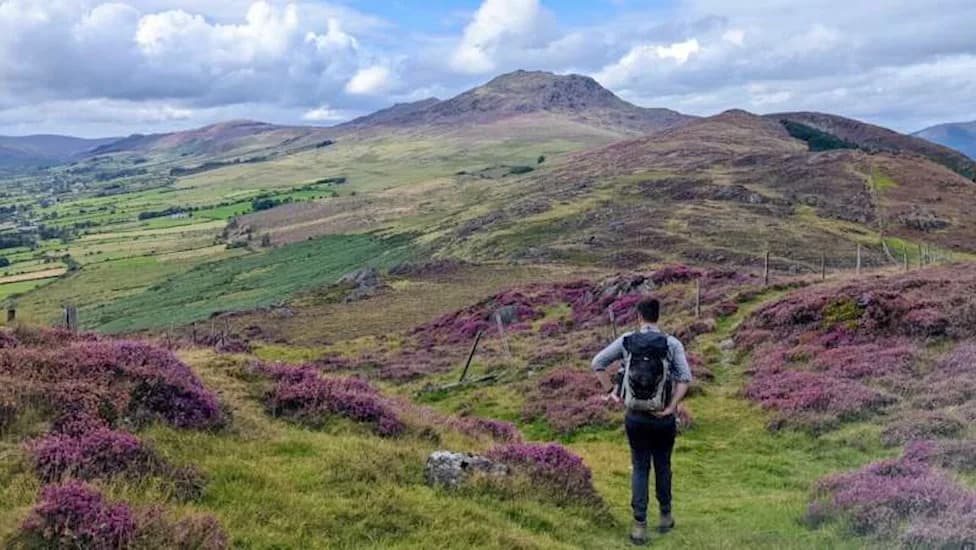
Photo Credit: Jack Beckwith, Trinity College Dublin
New research from Trinity College Dublin shows that the classic textbook picture of a single, long-lived molten magma chamber is too simple. Exposed plumbing at Carlingford Mountain on Ireland's Cooley Peninsula preserves fossilized sections of a volcanic system active about 60 million years ago. Those rocks reveal that magma repeatedly cycled between melt-rich episodes and longer intervals dominated by crystal-rich "mush."
What the Scientists Did
An international team of volcanologists analyzed crystal chemistry and rock textures sampled across Carlingford Mountain, reconstructing the subterranean history of the ancient volcanoes. Glacial erosion removed overlying rock and exposed deep parts of the system that are normally hidden beneath active volcanoes, giving researchers a rare window into volcanic plumbing.
Key Findings
The study, published in the Journal of Petrology, finds that the subsurface did not exist as a single, continuous pool of liquid magma. Instead, the underground system pulsed between short-lived, melt-rich states and longer periods when the reservoir was a crystal-laden slurry or "mush." Those transitions create windows when more mobile magma can ascend and potentially trigger eruptions.
"At Carlingford, we see that magmas can actually switch between these two states over short periods in geological terms, creating opportunities for more fluid magmas to ascend and fuel eruptions," said Jack Beckwith, lead author and doctoral student at Trinity College Dublin.
Dr. Mike Stock, principal investigator on the study, added: "Volcanoes are a major natural hazard but geologists struggle to understand them because we can't take rock samples from several kilometers beneath Earth's surface in active settings."
Why It Matters
This pulsing behavior challenges the simple magma-chamber model and has practical implications for eruption forecasting. If many volcanic systems spend long periods as crystal-rich mushes, monitoring teams must refine how they interpret seismic tremors, gas emissions and ground deformation to distinguish harmless reworking from precursors to eruption.
The researchers also note that the Carlingford system likely formed above a mantle hotspot related to the same source that fuels modern Icelandic volcanism. Because Ireland has been carried away from the hotspot and the volcanoes are long extinct, the eroded and exposed plumbing acts as an accessible analog to better understand active systems today.
Publication: Journal of Petrology. Lead institution: Trinity College Dublin.
Help us improve.