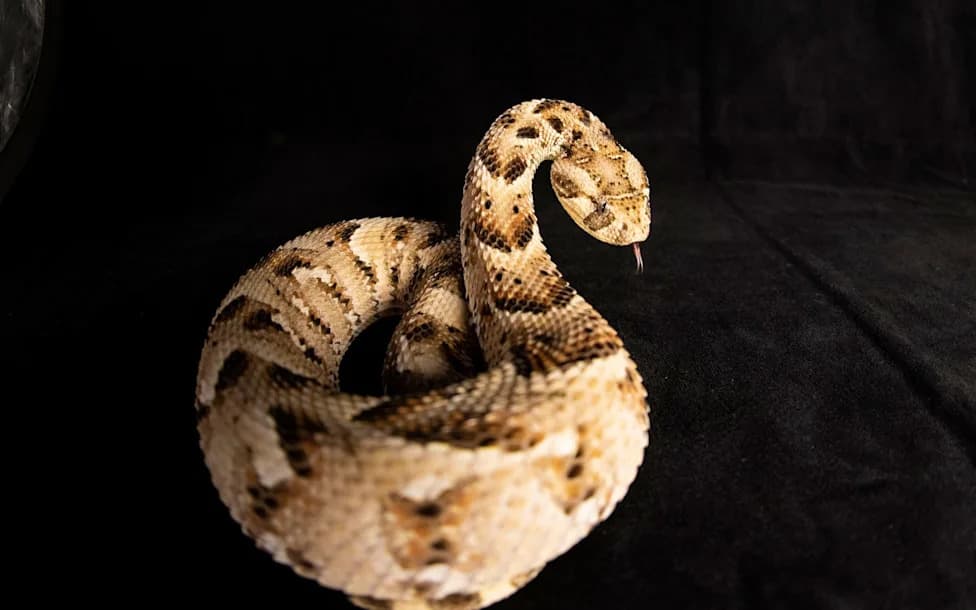
University of Maryland researchers found that combining proteins from western diamondback rattlesnake blood can neutralize rattlesnake venom about ten times more effectively than a current sheep-derived antivenom in laboratory tests. The study, published in PNAS and led by Sean B. Carroll, expands earlier work on the protective protein FETUA-3 to examine the full FETUA family. Top protein cocktails fully blocked lethality in lab models and protected against several other viper venoms, but the team stresses more research and safety testing is needed before human treatments are available.
Rattlesnake Blood Proteins Could Enable Antivenom 10x More Potent Than Current Treatment
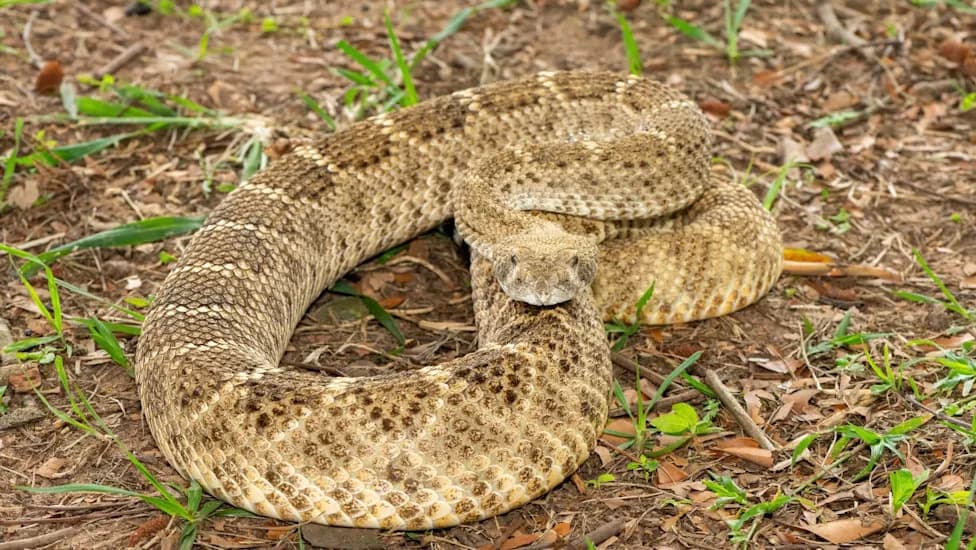
Photo Credit: iStock
Researchers at the University of Maryland report a promising new approach to treating venomous snakebites: harvesting and combining proteins that naturally protect rattlesnakes from their own venom. In lab experiments, mixtures of these snake-derived proteins neutralized rattlesnake venom with roughly ten times the potency of a commercially available sheep-derived antivenom and protected against venoms from several other viper species.
The study, published July 29 in the Proceedings of the National Academy of Sciences (PNAS), was led by UMD biology professor Sean B. Carroll, who holds the Andrew and Mary Balo and Nicholas and Susan Simon endowed chair. Collaborators include Elda Sánchez, director of Texas A&M University–Kingsville's National Natural Toxins Research Center.
What the Study Found
Prior work from Carroll's lab identified a protective protein called FETUA-3. In this follow-up study the team examined the entire FETUA family of proteins found in the blood plasma of western diamondback rattlesnakes. Individually, some FETUA proteins reduced specific venom effects—such as bleeding or enzyme activity—but none alone fully prevented death in laboratory models. When multiple FETUA proteins were combined, however, efficacy rose sharply.
According to the researchers, selected protein cocktails can “fully neutralize rattlesnake venom lethality with approximately 10 times greater potency than commercial antivenom.”
Why This Matters
Snakebite remains an underrecognized global health problem. The World Health Organization estimates venomous snakebites kill between 80,000 and 140,000 people each year and leave hundreds of thousands more with permanent disabilities—risks that are greatest in rural areas with limited access to care. Current antivenoms are typically produced by immunizing large animals (horses or sheep) and harvesting antibodies, a process that can be costly, vary in cross-species effectiveness and sometimes provoke severe immune reactions in human patients.
A lab-produced antivenom based on snake-derived inhibitors could offer several advantages: greater potency, broader protection across related viper species, a steadier manufactured supply and potentially fewer immune side effects. In laboratory tests reported in the paper, the best-performing protein combinations completely blocked the lethal effects of western diamondback venom and also protected against venoms from other vipers whose lineages diverged millions of years ago.
Next Steps and Cautions
The authors emphasize that this is an early-stage finding. Venoms are chemically complex—a single venom may contain on the order of 100 distinct toxin proteins from multiple families—so identifying an optimal, broadly protective formulation will require further work. The Maryland team is systematically testing combinations of natural inhibitors to counter a wider range of toxins. Carroll and colleagues expect the first commercial applications may appear in veterinary medicine, with human therapies following after extensive safety and efficacy testing.
In short: the components for a potentially stronger antivenom appear to exist in snakes themselves, but substantial development and clinical validation remain before this approach could replace or augment current human antivenoms.
Help us improve.