Researchers used genetic and molecular techniques on 167 water, sediment and air samples from Blood Falls and the McMurdo Dry Valleys to trace the brine’s origin. The study found a stronger marine eukaryotic signature at Blood Falls (just over 9% overlap with nearby ocean samples) than at other Dry Valleys sites (~1%), while air samples contained few marine microbes. The authors conclude the brine most likely represents ancient seawater trapped when Taylor Glacier advanced, though precise timing requires further genetic and geochemical work.
Genetic Clues Suggest Blood Falls’ Brine Is Ancient Seawater Trapped Beneath Taylor Glacier
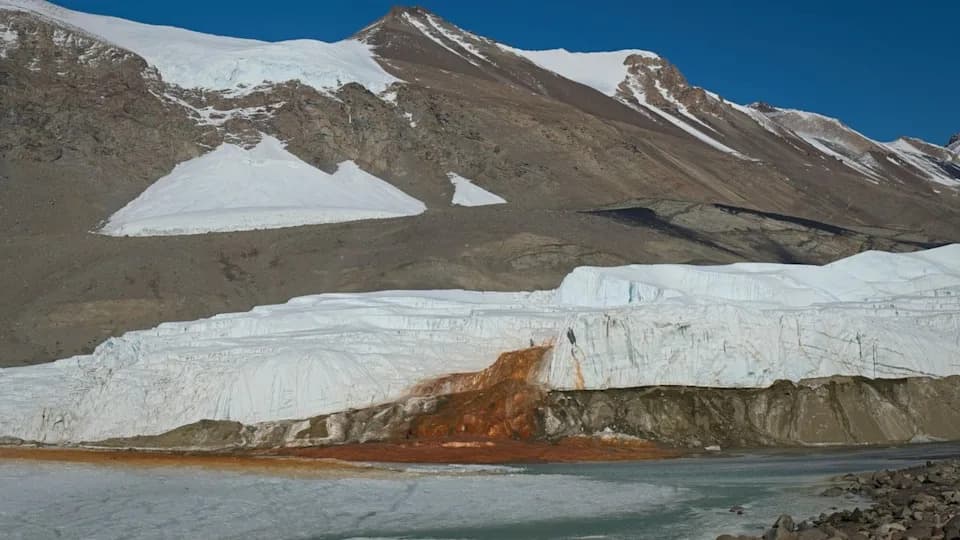
Blood Falls is red because iron in the water reacts with oxygen in the air when the water emerges from Taylor Glacier. | Credit: Bryan Minnea
At the terminus of Taylor Glacier in East Antarctica’s Taylor Valley, a striking red seep known as Blood Falls has long captivated scientists and visitors. The vivid color comes from iron-rich subglacial water that oxidizes when it meets the air, but the origin of that salty, iron-laden brine has remained debated.
A new study published Aug. 3 in Nature Geoscience strengthens the case that the brine is remnant seawater trapped beneath the glacier when sea levels fell and the ice advanced. The research team used molecular and genetic analyses to profile microorganisms in 167 samples of water, sediment and air collected at Blood Falls and across the wider McMurdo Dry Valleys.
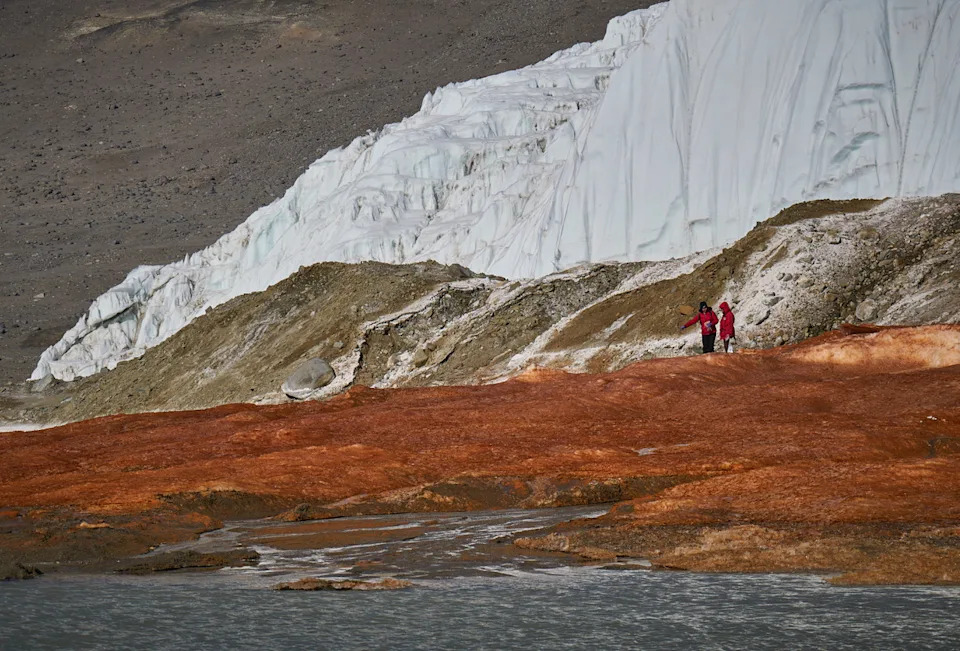
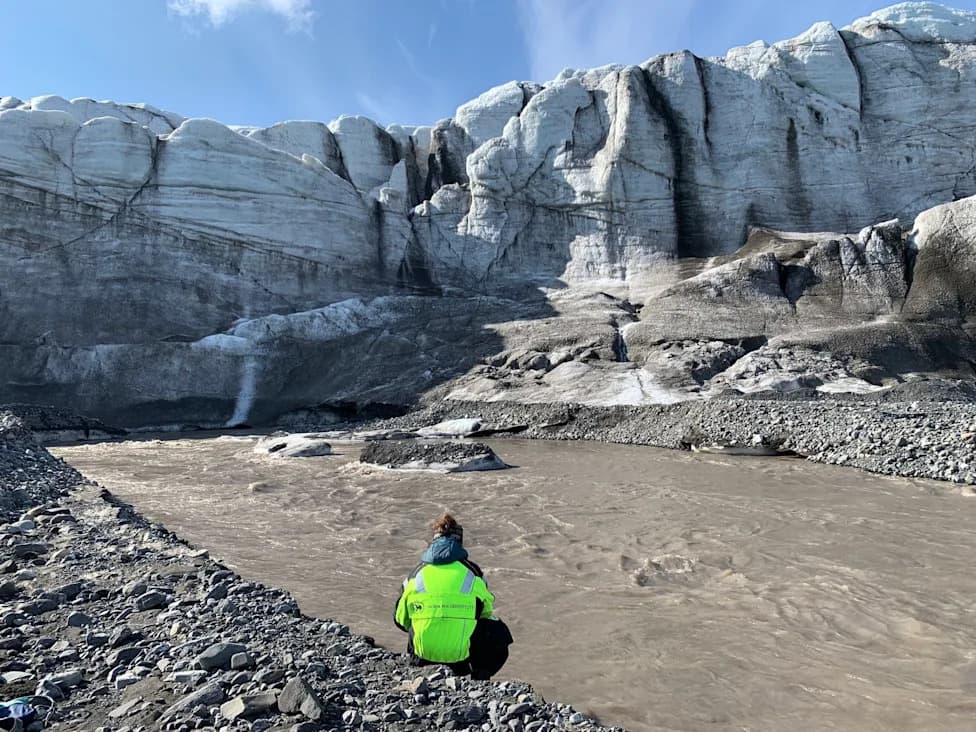
Researchers tried to determine if microbes at Blood Falls are distinct community from the surrounding region's assemblages. | Credit: Bryan Minnea
The authors report a notably stronger marine signal among eukaryotic microorganisms at Blood Falls than elsewhere in the Dry Valleys. Blood Falls shared just over 9% of its eukaryotic lineages with nearby ocean samples, while other Dry Valleys sites showed only about 1% overlap. Most remaining eukaryotes and the majority of prokaryotes had freshwater or terrestrial affinities.
To test whether contemporary winds might have delivered marine microbes to the site, the team also sampled air near Blood Falls. They found only a very small proportion of marine microorganisms in the air, indicating that present-day wind transport cannot fully explain the distinct microbial composition of the brine.
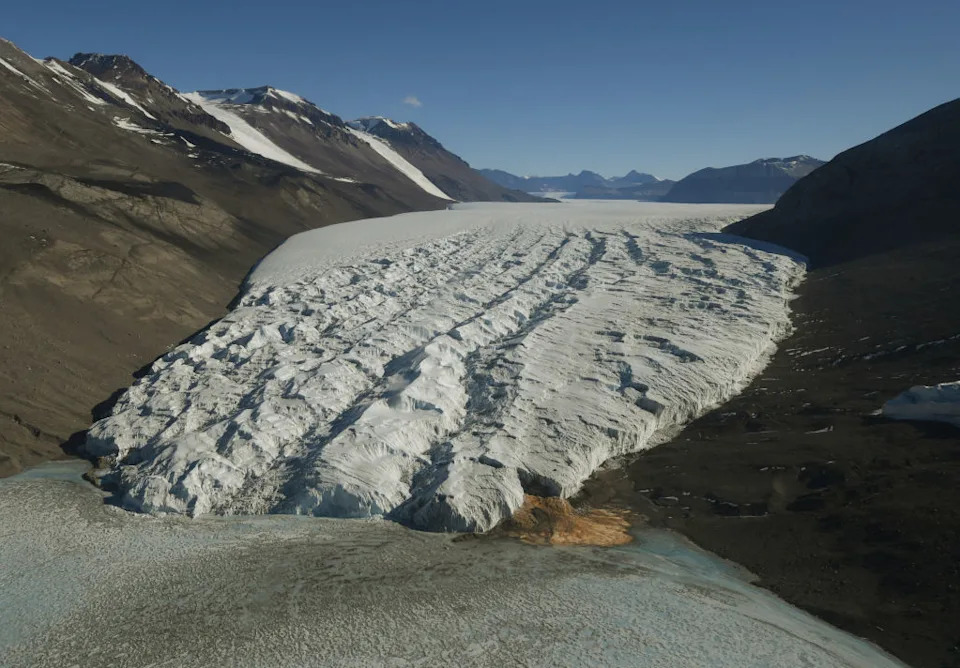
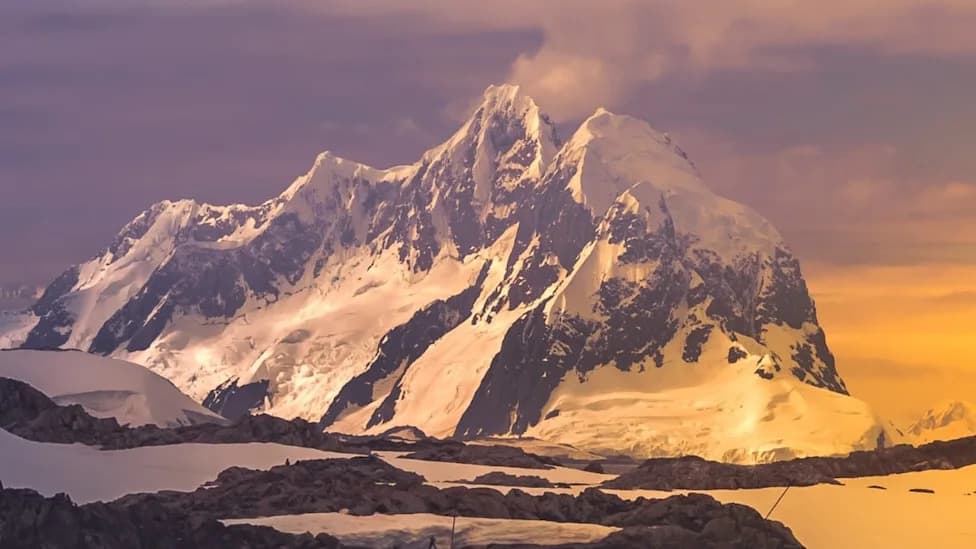
The most likely origin for the brine that feeds Blood Falls is ancient seawater that was trapped when sea levels dropped and the Taylor Glacier advanced, the study found. | Credit: MARK RALSTON/POOL/AFP via Getty Images
"Findings in this study reveal a dominance of marine eukaryotic lineages in the Blood Falls area," the authors write, adding that a marine signal is still detectable, though weaker, among prokaryotes.
Combined with earlier chemical and bacterial evidence, these molecular results make an entrapped ancient-seawater origin the most likely explanation for the microbe community observed at Blood Falls. Earlier estimates based on geochemical data suggested the seawater might have been trapped more than 1 million years ago during a warmer interval with higher sea level and reduced ice cover, but the new study’s authors caution that pinpointing the timing will require additional work.
Future research the authors recommend includes more comprehensive genetic profiling, finer-scale mapping of microbial distributions in and around the brine reservoir, and geochemical dating to better constrain when the pool became isolated beneath the glacier. Understanding Blood Falls provides a window into long-term ecosystem persistence under extreme isolation and into ice-sheet and sea-level dynamics in Antarctica’s past.
Help us improve.