About 20–23 young volunteers from across Europe spent two weeks at Magdeburg West Cemetery cleaning WWII graves and taking part in educational visits. Organised by the German War Graves Commission, the camp combines manual upkeep at a 62.5-hectare site with discussions and excursions — including the Feldscheune Isenschnibbe memorial. The initiative promotes the commission’s long-standing principle of "Reconciliation over the graves" and counters revisionist narratives in a region where the far-right is gaining influence.
Young Europeans Restore WWII Graves in Magdeburg to Strengthen Remembrance and Reconciliation
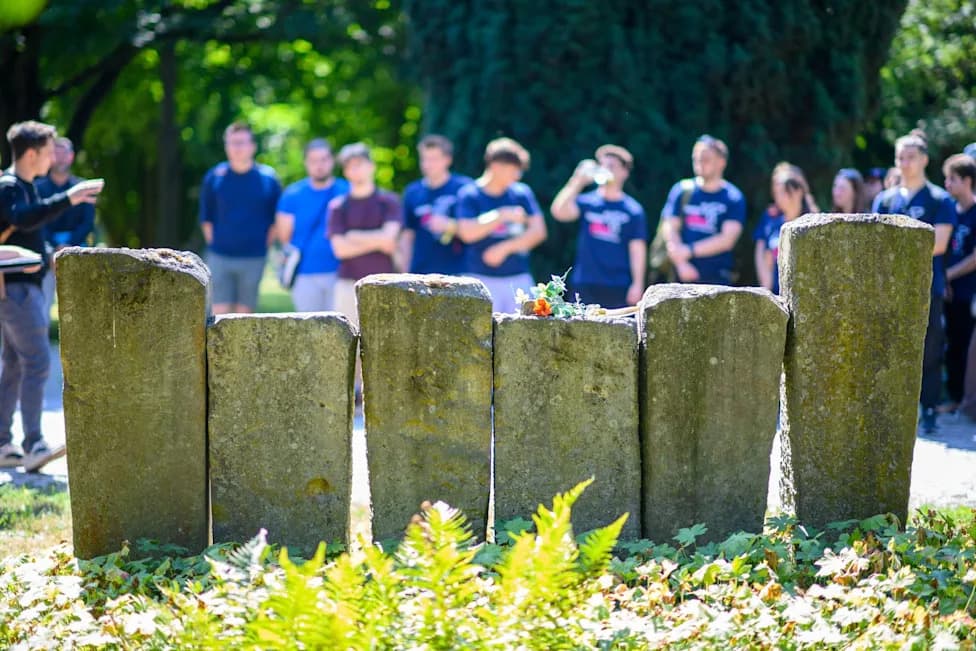
Participants in the Magdeburg International work camp visit Grave Plot 60 at the Magdeburg West Cemetery, where the remains of 60 unidentified people were found during construction work. Klaus-Dietmar Gabbert/dpa
The wheelbarrows are piled high with buckets, sponges, brushes and cloths, balanced atop rakes, spades, gloves, water bottles and snacks. After a final check, roughly 20–23 teenagers and young adults set off across Magdeburg’s West Cemetery until they reach a grassy avenue marked by more than 130 stone crosses.
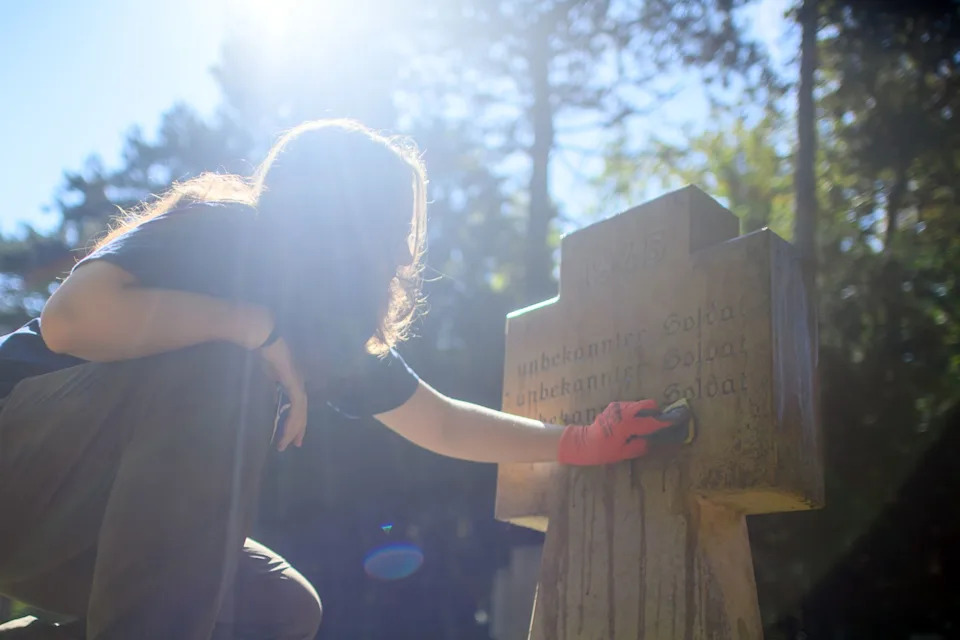
Valentina Corsetti from Italy scrubs a gravestone at the Magdeburg West Cemetery dedicated to unknown soldiers who died during World War II. Klaus-Dietmar Gabbert/dpa
Cleaning Graves, Revealing Stories
Each cross carries one or more engraved names. There are no flowers, photographs or personal mementos — only an ageing marker beside the path that reads "Soldiers 1939/1945." Following a short introduction in English, the volunteers spread out with their tools. Some kneel to pull weeds from the turf; others scrub away years of moss and grime to reveal weathered inscriptions. The work is physically demanding, but the atmosphere is focused and upbeat: participants concentrate on the task or work in small teams, and phones are largely unused.
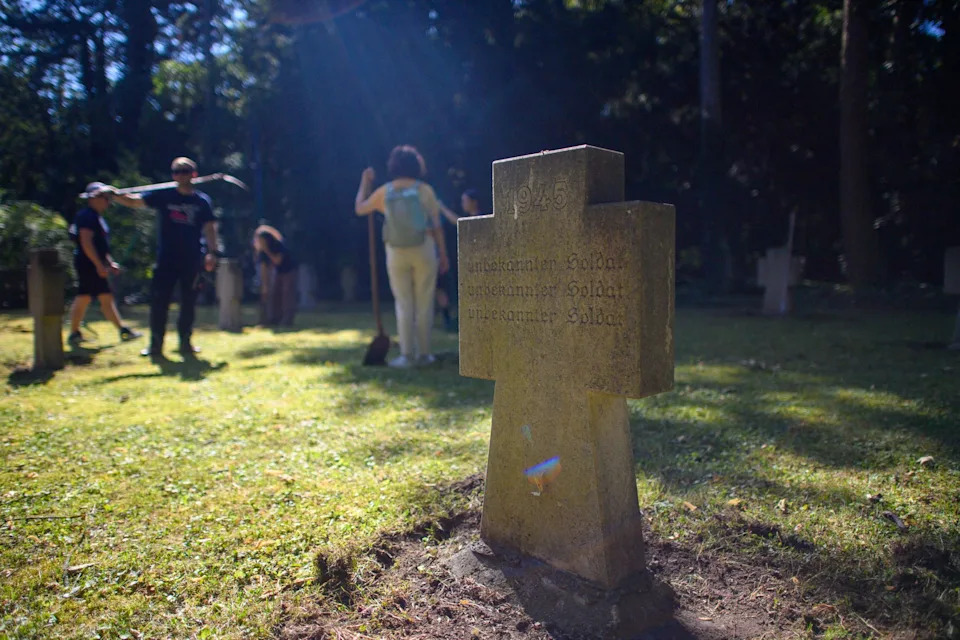
Participants of the work camp organized by the German War Graves Commission clean gravestones at a cemetery in Magdeburg. Klaus-Dietmar Gabbert/dpa
Not Just Manual Labour
What unites the group is curiosity about the lives behind the graves. Guillaume Krezdorn, a 19-year-old political science student from Tours, says he came to learn more about the world wars and to see how different communities remember them. Valentina Corsetti from Venice — one of the oldest participants at 25 and with German family roots — describes the experience as close to researching family history, removing moss and dirt until carved letters become legible. Some stones bear no names at all, only the words "Unknown Soldier."
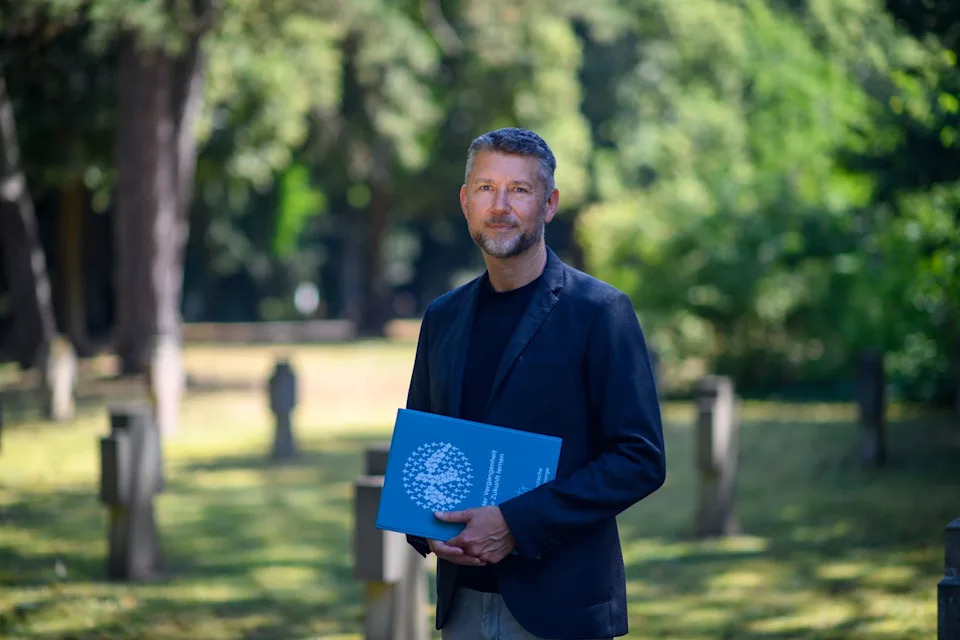
Andreas Arnsfeld serves as the chairman of the German War Graves Commission's regional branch in the eastern state of Saxony-Anhalt. Klaus-Dietmar Gabbert/dpa
Educational Programme And Memorial Visits
The Magdeburg International work camp, organised by the German War Graves Commission (Volksbund Deutsche Kriegsgräberfürsorge), pairs practical upkeep with education. Beyond cleaning graves at the 62.5-hectare West Cemetery, participants take part in discussions and excursions, including a visit to the Feldscheune Isenschnibbe memorial, which commemorates more than 1,000 concentration camp inmates who were killed on a death march on 13 April 1945.
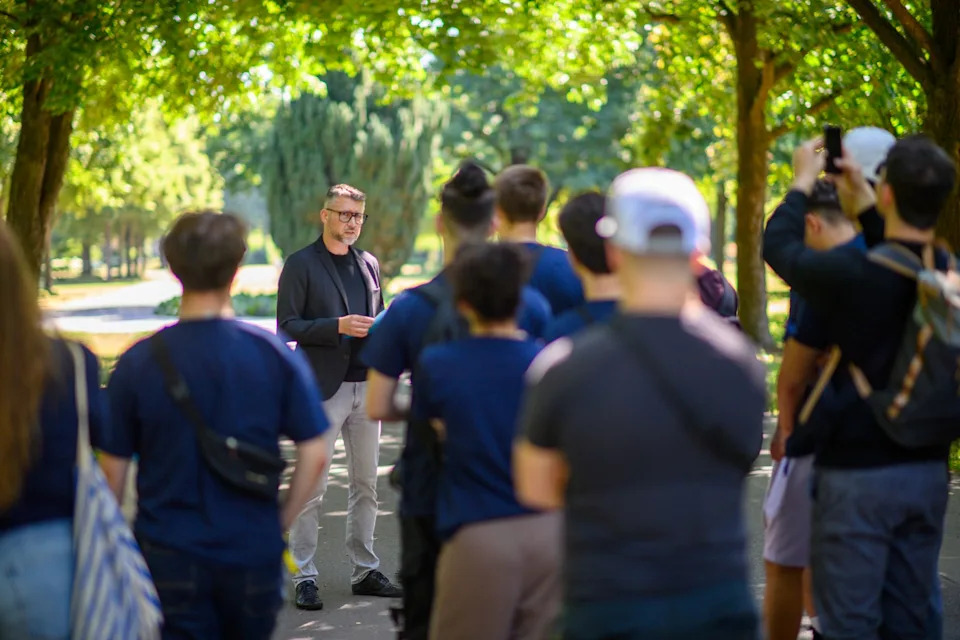
Andreas Arnsfeld, chairman of the German War Graves Commission in Saxony-Anhalt, welcomes participants at the Magdeburg International work camp. Klaus-Dietmar Gabbert/dpa
Organisation And Purpose
The non-profit commission cares for more than 830 war grave sites across 45 countries, maintaining the resting places of roughly 2.8 million war dead while running youth programmes and educational activities. International youth exchanges and work camps have been part of the commission's approach since the early 1950s, beginning with work at the Lommel military cemetery in Belgium. The guiding principle is summed up as "Reconciliation over the graves."
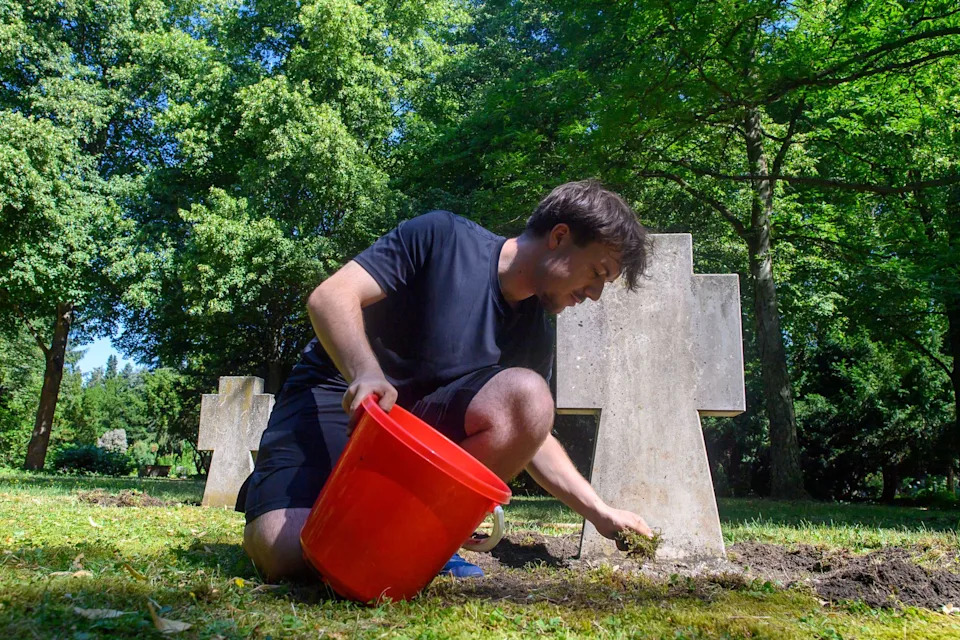
Guillaume Krezdorn, from Tours in France, cleans the ground around a gravestone at the Magdeburg West Cemetery dedicated to soldiers who died during World War II. Klaus-Dietmar Gabbert/dpa
"Young people in particular need to send a clear message," says Dieter Steinecke, who led the commission's regional branch until 2023, calling the initiative "peace work."
Practical Details
In Magdeburg, applicants aged 16 to 25 were eligible to join; participants paid a fee of €150–€200 depending on country of residence. In return, the commission provided two weeks' accommodation in a hostel run by the European Education Center for Vocational Training and Society; participants arranged their own travel. In 2026 the commission planned about 30 work camps and youth events across Europe in cooperation with partners.
Political Context
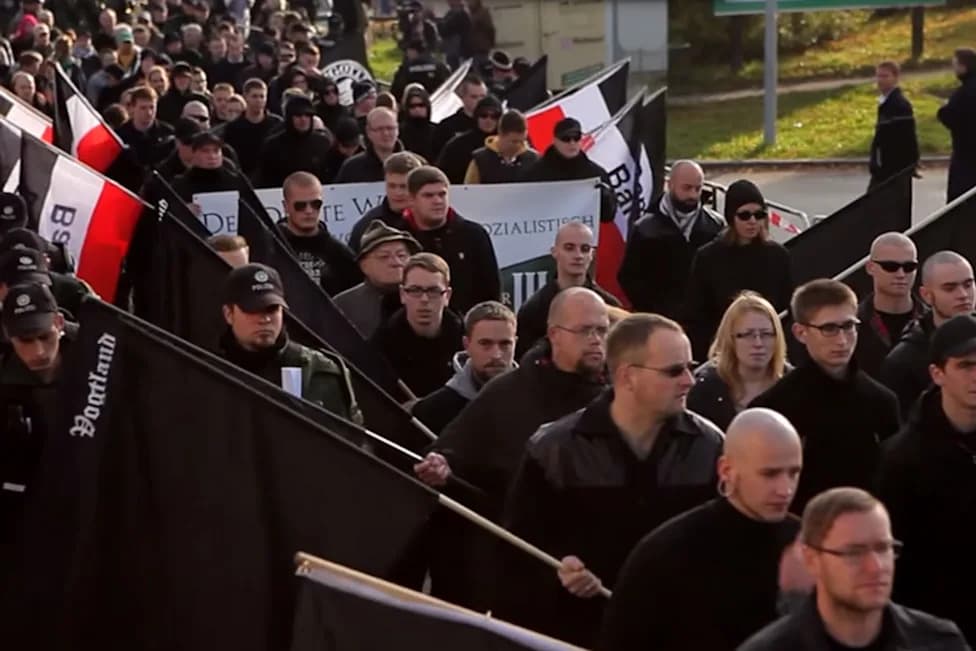
The camp takes place in Saxony-Anhalt, where the far-right Alternative for Germany (AfD) has been gaining ground in regional politics. Some AfD figures have sought to shift public commemoration toward fallen German soldiers and downplay other aspects of the Nazi era. Against this backdrop, the camp’s motto — "Remembering brings us together" — and the volunteers’ matching "Together for peace" T-shirts assume heightened significance.
"Cemeteries are not just places of remembrance; they are also places of learning," says Andreas Arnsfeld, regional chairman. "Ask questions, listen to one another and learn from different perspectives."
The programme aims to give young Europeans hands-on experience of caring for graves while encouraging critical reflection about history, memory and responsibility for the future.
Help us improve.