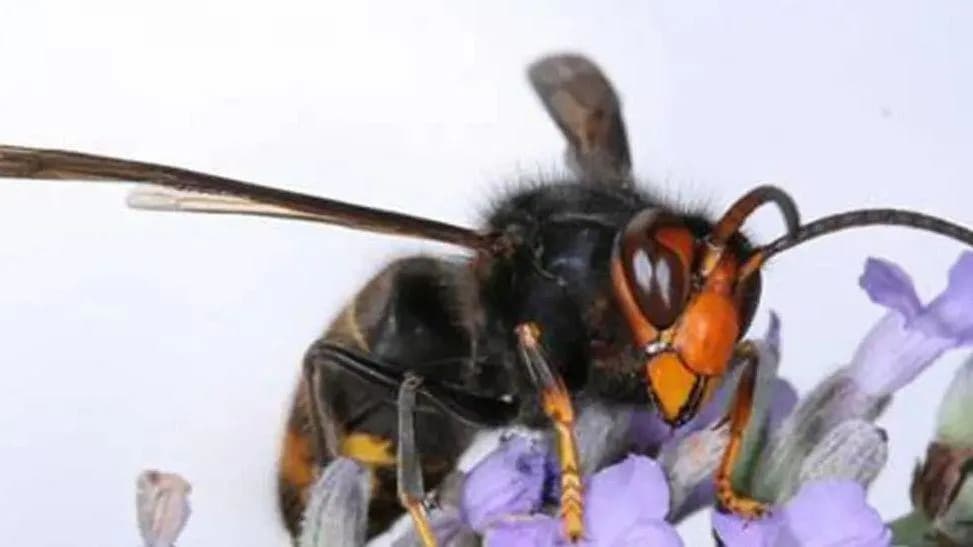
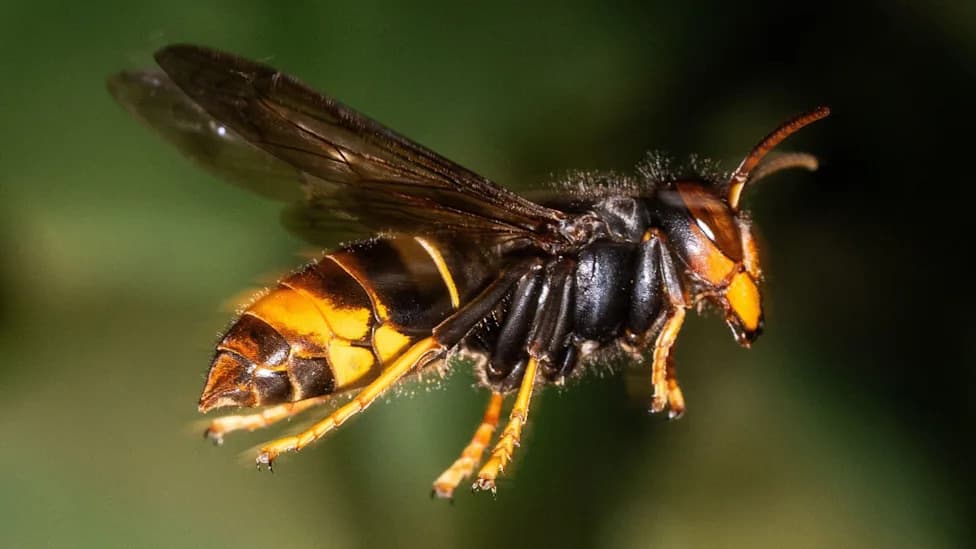
The Asian giant hornet (nicknamed the “murder hornet”) is native to East Asia but has prompted monitoring in North America after nests were found in the Pacific Northwest. Adults are about 1.6 in (4 cm) long, with a ~2.8 in (7 cm) wingspan and a 6 mm stinger. The hornet can kill adult honeybees and eat brood, posing a serious threat to pollinators. Report sightings to local agriculture or wildlife agencies and do not attempt nest removal yourself.
Asian Giant ‘Murder Hornet’: Credit-Card Wingspan, 6 mm Stinger, and Bee-Ripping Jaws
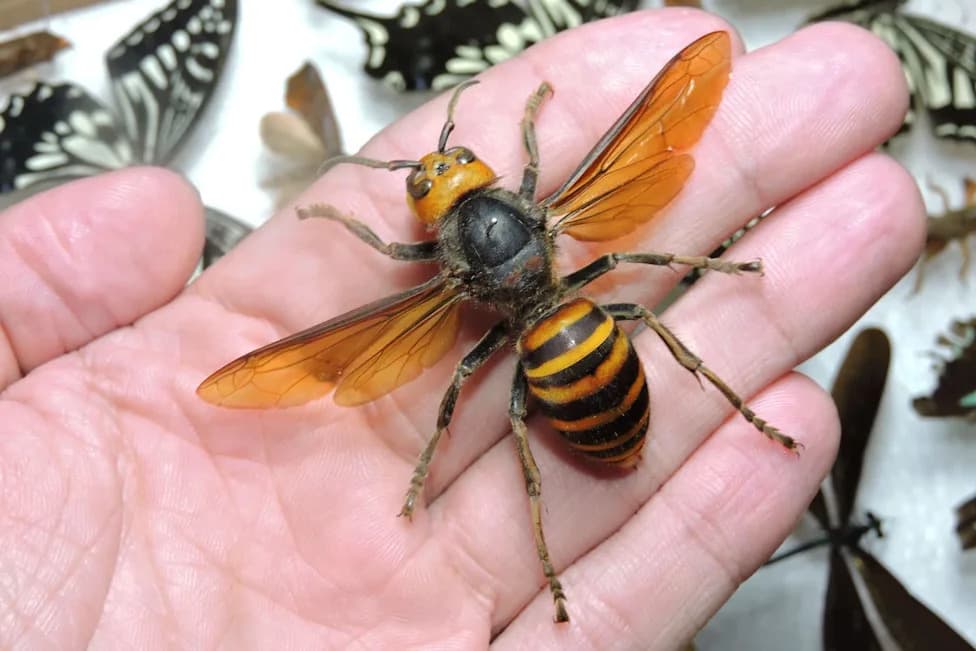
Photo Credit: iStock
The Asian giant hornet (Vespa mandarinia), widely nicknamed the “murder hornet,” is native to East Asia and has drawn close monitoring in North America after nests were discovered and destroyed in the Pacific Northwest. Its size and predatory behavior toward honeybee colonies are the main reasons scientists remain vigilant.
What It Looks Like
Adults measure roughly 1.6 inches (4 cm) in body length with a wingspan near 2.8 inches (7 cm)—about the width of a credit card—and carry a stinger about 0.24 inches (6 mm) long. The species has large mandibles capable of slicing through prey and tearing open bee brood.
Behavior And Risk To Bees
These hornets attack honeybee hives: they can kill adult workers and feed on the exposed brood, which can devastate colonies if the hornet becomes established in a new area. Because honeybees are essential pollinators for wild plants and many food crops, any major decline in bee populations can ripple through ecosystems and agriculture, affecting yields, prices, and biodiversity.
Human Risk And Safety
People describe the sting pain as similar to being "stabbed by a hot needle." Most healthy adults suffer only painful but non-lethal stings; however, multiple stings or allergic reactions can be dangerous. Do not attempt to approach or remove a suspected nest yourself.
What To Do If You See One
Report unusual hornet sightings or nests to local agriculture, invasive-species, or wildlife agencies so trained professionals can respond. Avoid approaching the insect or disturbing nests.
How You Can Help Pollinators
Individuals can support bees by avoiding unnecessary pesticide use, planting native flowers, and protecting local bee habitats. Switching to gentler household and lawn products and choosing less-toxic cleaners and treatments can reduce chemical stress on pollinators.
Researchers continue to monitor reports because rapid detection and response are critical if the Asian giant hornet establishes in new regions. While the insect’s size attracts headlines, the greater concern is the harm it can do to honeybee colonies.
Help us improve.