Overview: The article examines the rising influence of Christian nationalism on U.S. policy, personnel and law, noting recent moves by a presidential commission and DOJ guidance to expand religious expression in public institutions. It cites a 2025 PRRI survey showing 11% identify as Christian nationalists and 21% sympathize, and highlights key officials and policy proposals aligned with the movement. The authors warn that framing national identity in explicitly Christian terms risks marginalizing minorities and undermining liberal-democratic norms.
How Christian Nationalism Is Reshaping Religious Freedom and U.S. Policy

Earlier this year, a presidential commission composed largely of conservative Christians urged Americans to rethink the separation of church and state and to "build bridges" between religion and government. Last week, the Department of Justice issued guidance directing federal agencies to broaden protections for religious expression across public employment, the military, schools, health care and federal contracting.
What Is Driving the Shift
These policy moves reflect the growing influence of Christian nationalism — an ideology that holds the United States to be divinely chosen, argues that the New Testament should inform public policy, and often envisions a dominant cultural role for white Christians. In No Prophets: The Fight to Save Democracy From Christian Nationalism, Representative Jared Huffman (D-Calif.), the only self-identified Humanist in Congress, traces the movement’s rise and documents how it is reshaping American politics.
Networks, Institutions and Political Influence
Beginning in the 1990s, as many mainline denominations declined, independent charismatic ministries and new networks expanded. The New Apostolic Reformation, a network of evangelical leaders, framed America as a Christian nation under siege by secular elites. Alongside them, radical traditionalist Catholic groups and the Communion of Reformed Evangelical Churches emerged as influential strands, each arguing that Christians are called to govern.
Survey data underscore the movement’s reach: the Public Religion Research Institute’s 2025 national survey found roughly 11% of Americans identify as Christian nationalists and another 21% express sympathy for the movement. Large shares of Republicans express support for related ideas — including 'dominion' theology and making America officially a Christian nation.
Key Government Figures and Policies
The movement’s influence is visible in personnel and policy. Russell Vought, a principal architect of Project 2025, has proposed measures such as criminalizing pornography, using biblical definitions of gender and family in law, and making the Christian Sabbath a legally enforced day of rest. As Director of the Office of Management and Budget, he has promoted an expansive view of presidential authority aligned with a distinctly Christian vision of national renewal.
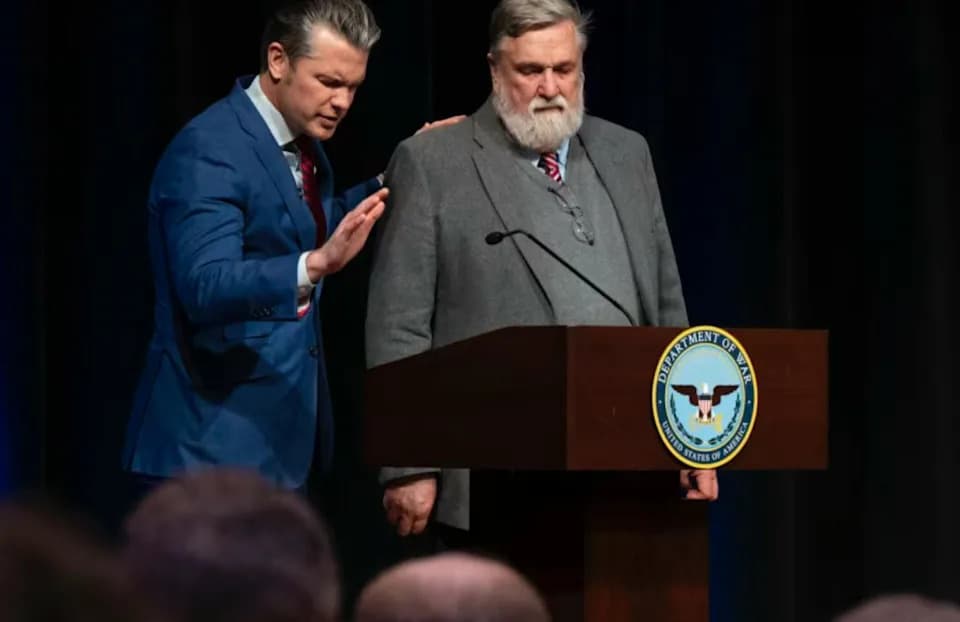
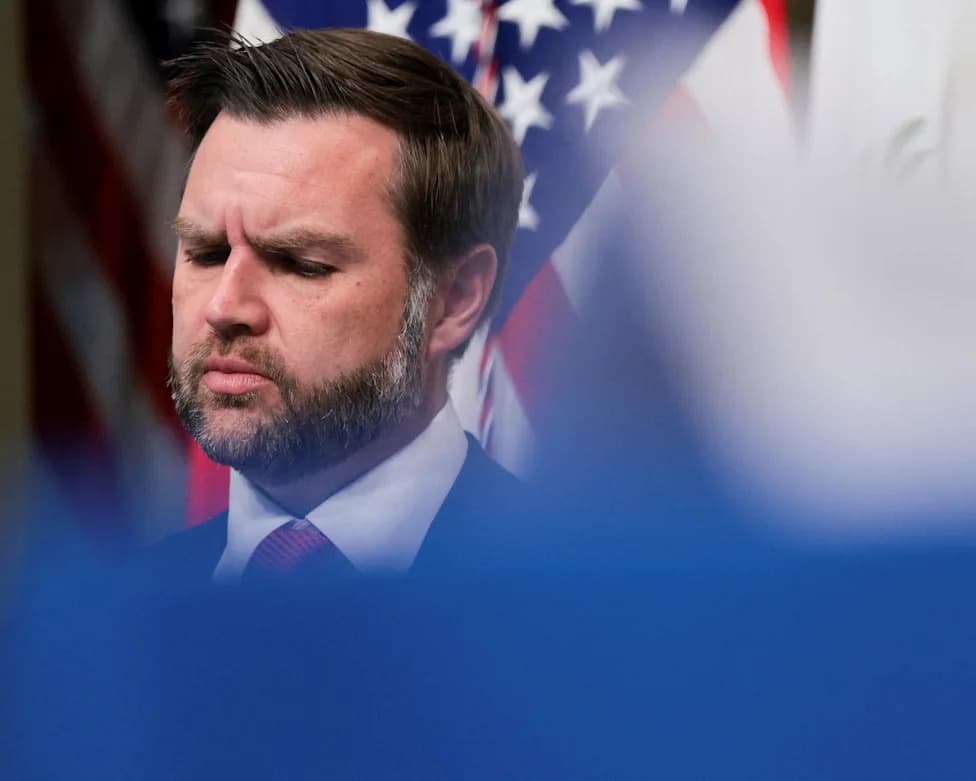
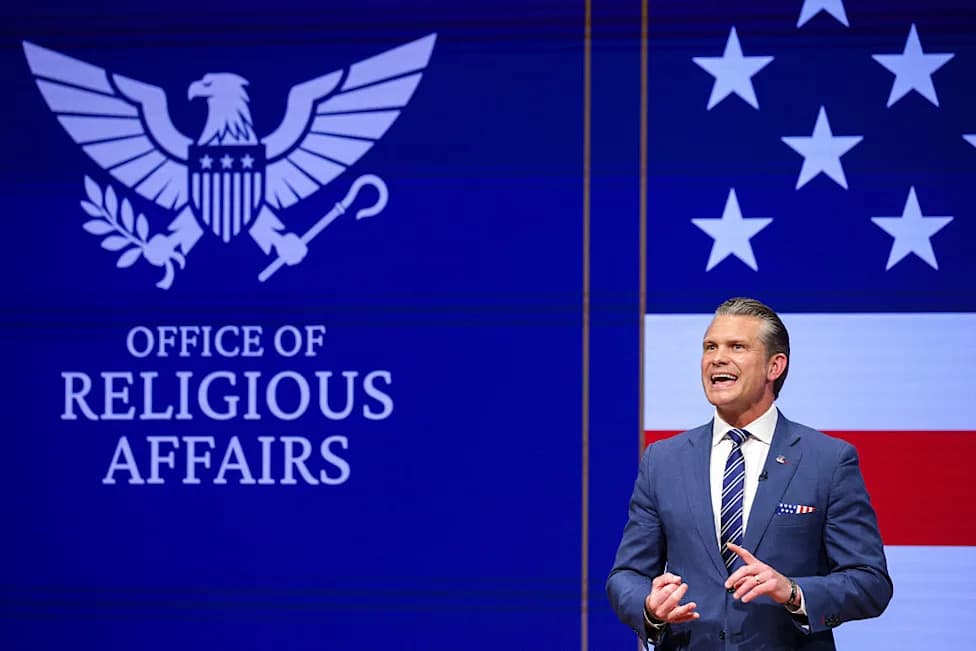
At the Pentagon, Secretary of Defense Pete Hegseth has hosted regular Christian prayer services; public reports note religious symbols and rhetoric associated with him. Vice President J.D. Vance presents a postliberal Catholic stance that emphasizes the nation’s Christian character and urges a larger public role for faith. On Capitol Hill, House Speaker Mike Johnson has dismissed the separation of church and state as a "misnomer," supported Bible study in public schools, and advocated for what he calls biblically sanctioned government.
Huffman documents how religious networks and faith-based advocacy organizations — what he calls a "ministry-industrial complex" — work to embed conservative Christian influence throughout government. State legislatures controlled by Republicans have also passed laws expanding religious displays in schools, authorizing school chaplains, introducing religion-infused curricula and increasing public funding for religious schools.
Consequences for Pluralism and Democracy
The authors warn that redefining national identity in explicitly Christian terms threatens the equal standing of citizens of all faiths and of the roughly 28% of adults who identify as atheist, agnostic or "nothing in particular." Such a shift could marginalize religious minorities, weaken constitutional protections for dissent, and transform political disagreement into moral or theological condemnation.
As Justice Sandra Day O'Connor observed more than two decades ago: "Those who would renegotiate the boundaries between church and state must … answer a difficult question: Why would we trade a system that has served us so well for one that has served others so poorly?"
The piece concludes with a cautionary note about the stakes for liberal democracy: when government seeks to define national identity in sectarian terms, the foundational principle that all citizens are equal before the law comes under strain.
Authors: David Wippman is emeritus president of Hamilton College. Glenn C. Altschuler is The Thomas and Dorothy Litwin Emeritus Professor of American Studies at Cornell University.
Copyright 2026 Nexstar Media, Inc. All rights reserved.
Help us improve.