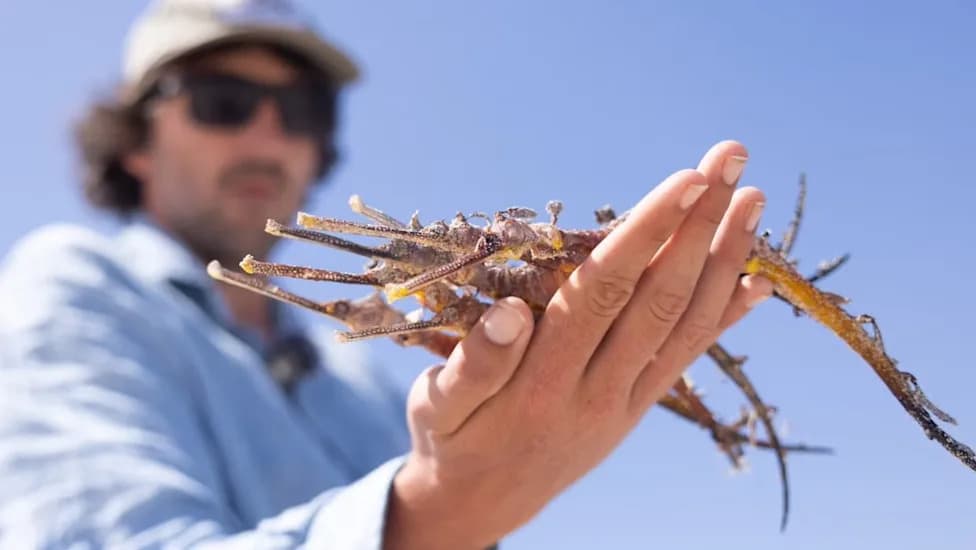
Massive sargassum blooms are inundating Caribbean and Gulf coastlines, with about 27 million metric tons recorded in July and June 2026 measuring ~34 million metric tons. The crisis ties back to a record 2025 bloom that seeded local reproduction this year. The algae smothers coastal ecosystems, releases health-harming gases as it decays, and is disrupting tourism and local economies. Governments are investing in cleanup and processing, but removal capacity remains far below worst-case daily landings.
Massive Sargassum Bloom Smothers Caribbean and Gulf Coasts, Threatening Wildlife and Tourism
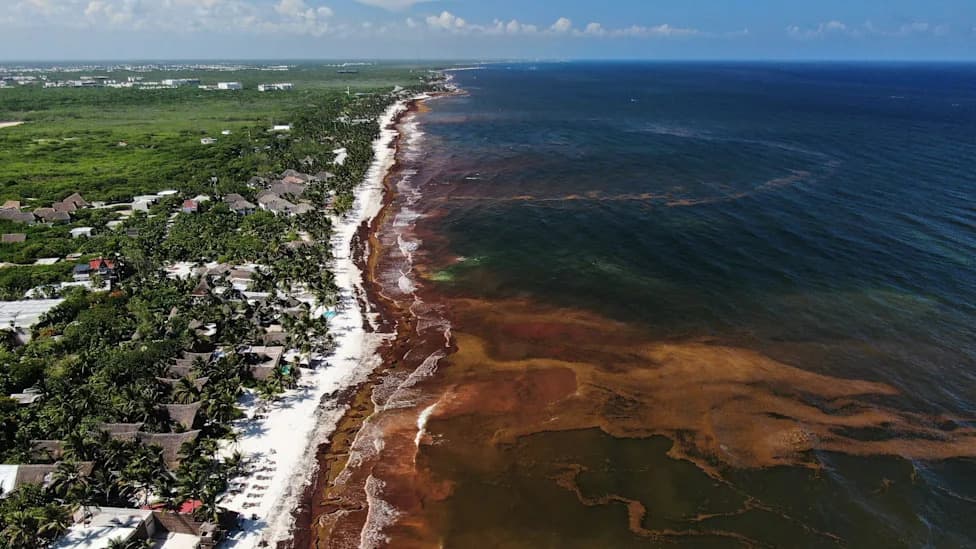
Sargassum gathers in the water off the coast of Tulum, Mexico, Thursday, July 30, 2026.
PUERTO MORELOS, Mexico — Vast mats of sargassum seaweed are smothering beaches and nearshore waters across the Caribbean and the Gulf of Mexico, creating environmental damage, health concerns and an economic hit to tourism-dependent communities.
Scope of the Problem
A July report from the University of South Florida's Optical Oceanography Lab recorded about 27 million metric tons of self-sustaining sargassum across the Atlantic, Caribbean and Gulf. Scientists say this year's regional outbreak was seeded by a record 40 million metric ton bloom in 2025, which never fully dispersed and helped trigger early local reproduction in 2026. In June 2026 alone, researchers measured roughly 34 million metric tons, with the Gulf accounting for about 5 million metric tons that month.
Why It’s Happening
The so-called Great Atlantic Sargassum Belt has been expanding since 2011. Experts attribute the rise to a mix of factors, including agricultural runoff rich in nutrients, warming ocean temperatures, and shifts in wind, current and rainfall patterns. Brian Barnes, a marine scientist at the University of South Florida, warned that “none of this is normal” and that each year brings new dynamics in bloom timing and size.
Environmental and Health Impacts
In open ocean patches, sargassum can provide habitat for turtles, fish and seabirds. Close to shore, however, dense accumulations reduce oxygen levels, smother mangrove roots, and block sunlight to coral and seagrass beds. When it piles on beaches, the algae can prevent newly hatched sea turtles from reaching the sea, and heavy removal machinery can damage fragile nests.
Decaying sargassum emits gases such as ammonia and hydrogen sulfide, producing a rotten-egg odor and causing symptoms—from nausea and headaches to respiratory irritation—for some residents. The U.S. Environmental Protection Agency has warned about these health effects, and in Martinique officials opened a temporary shelter after community protests over toxic gas exposure.
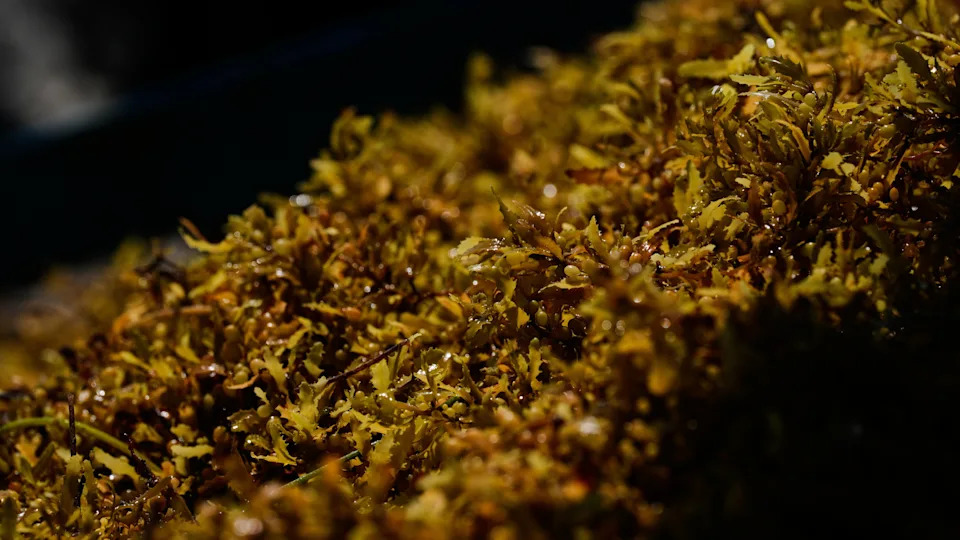
Sargassum gathers in the water off the coast of Tulum, Mexico, Thursday, July 30, 2026.
Economic Toll
Tourism-dependent towns are already feeling the impact. In Playa del Carmen, waiter Alan Vázquez closed his restaurant early after tourists stayed away when normally turquoise waters turned dark with decomposing seaweed. Local businesses estimate sales in Quintana Roo fell about 30% in the first half of the year, and some workers have already been laid off.
Government Responses and Cleanup
Mexico announced plans to invest $115 million to tackle the blooms. The government estimates that on its worst days up to 9,000 tons of sargassum can wash ashore along the Caribbean coast, while current removal capacity is about 1,200 tons per day. In Martinique crews have collected more than 11,500 tons this year, using sea barriers, manual removal and processing for compost or bioenergy in some locations.
Research and Trends
Researchers at the University of South Florida and NOAA used artificial intelligence to analyze satellite data and found macroalgae blooms increased by more than 13% per year in the tropical Atlantic and Western Pacific from 2003 to 2022. Overall bloom coverage in that analysis reached about 16.9 million square miles (43.8 million square kilometers).
What Comes Next
“The coastlines are not built for this,” said Barnes, emphasizing that communities, ecosystems and local economies face repeated and evolving sargassum challenges.
Policy responses under discussion include expanded monitoring, improved shoreline barriers and sustainable processing of collected algae into compost or bioenergy feedstocks. Still, removal capacity and funding lag behind the scale of the problem, and scientists warn the trend could continue without broader changes to nutrient runoff and climate drivers.
Reporting Note: Data and quotes are drawn from the University of South Florida Optical Oceanography Lab, local government statements, scientists and affected community members.
Help us improve.