New modeling and field evidence indicate the Chicxulub impact produced a cloud of ultra‑fine silicate dust that amplified the thermal radiation from falling spherules. Accounting for that dust raises the surface heat pulse by about 3.5 times compared with spherule‑only models and could have delivered roughly 17 times the thermal dose lethal to humans, producing firestorms that killed many surface animals within hours. Definitive wildfire evidence beyond North America is still limited, so the global extent of these infernos remains under investigation.
Chicxulub Firestorms: Asteroid May Have Roasted Dinosaurs With 17× The Human‑Lethal Thermal Dose
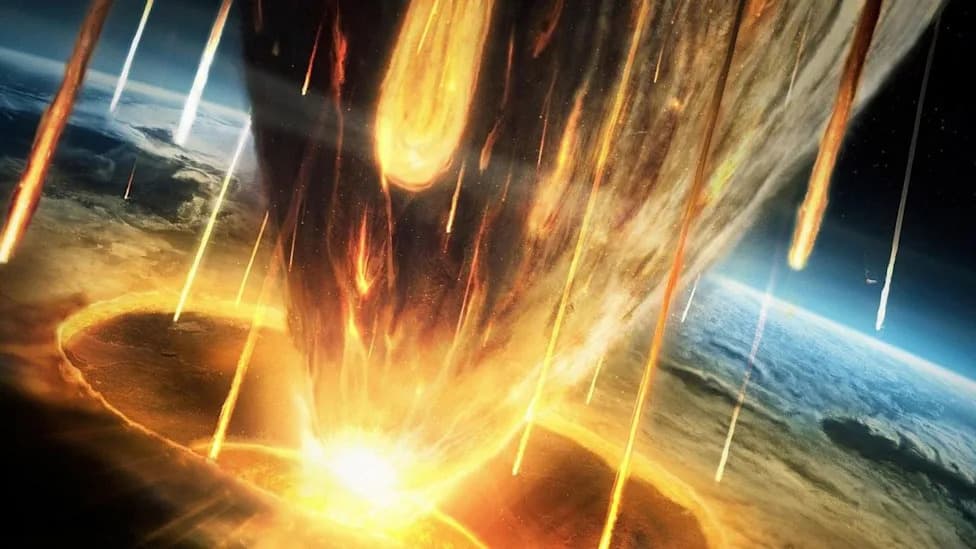
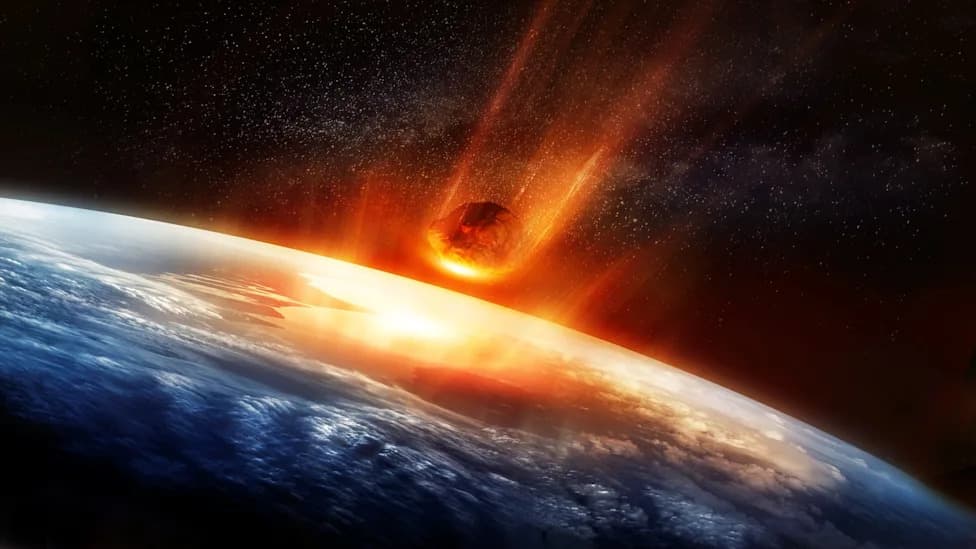
An illustration showing lots of fire coming off from a huge impact on Earth.
New research suggests the asteroid that struck the Yucatán Peninsula 66 million years ago produced a layer of ultra‑fine silicate dust that amplified the thermal pulse from falling spherules, potentially triggering near‑global firestorms that could have killed many dinosaurs within hours.
The roughly six‑mile‑wide (about 10 kilometer) impact excavated the Chicxulub crater and vaporized vast volumes of rock. Much of that vapor condensed into glassy droplets called spherules, which were flung around the globe and fell back through the atmosphere at several miles per second. As the spherules decelerated, their kinetic energy converted into an intense pulse of thermal radiation.
Earlier models treating only the falling spherules concluded that the thermal pulse resembled a global broiler: dangerous to exposed, thin‑skinned animals but not strong enough to ignite vegetation worldwide. The new study argues those models omitted a critical ingredient — a dense blanket of very fine silicate dust formed from rock vapor that did not immediately condense into spherules.
Physical Evidence And Modelling
Field evidence for this fine dust first appeared in 2023 at the Tanis fossil site in North Dakota, where an ultra‑fine, impact‑derived layer sits above the spherule deposit. A comparable dust layer has since been identified at the K–Pg boundary in the Raton Basin on the Colorado–New Mexico border. Incorporating this dust into atmospheric and thermal models, the researchers estimate the surface heat pulse could have been roughly 3.5 times stronger than models that consider only spherules.
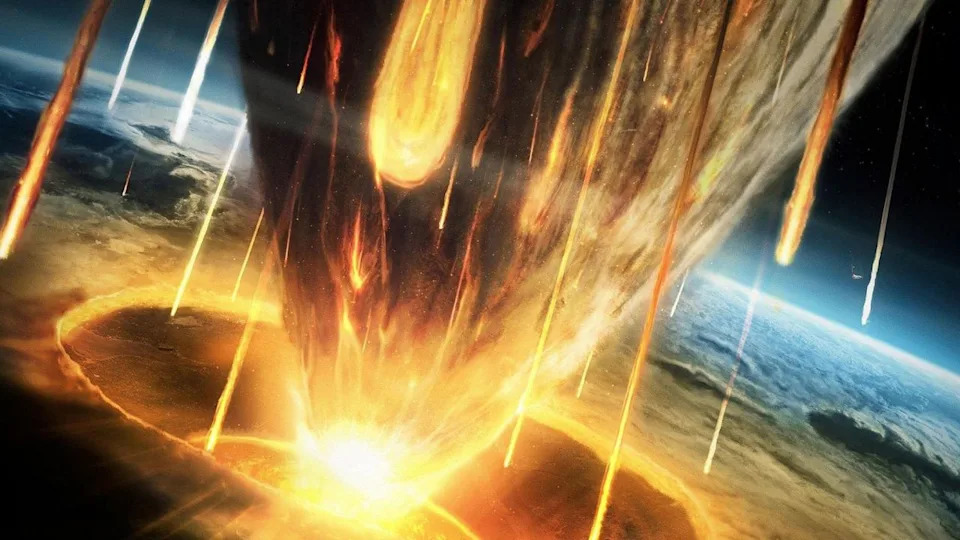
An artist's impression of an asteroid impact. | Credit: nox_box on Pixabay
Lead author Brandon Johnson, a planetary scientist at Purdue University, said the dust finding reinvigorated his interest in what happened to leftover vapor and led to this work.
Implications For Fires And Survival
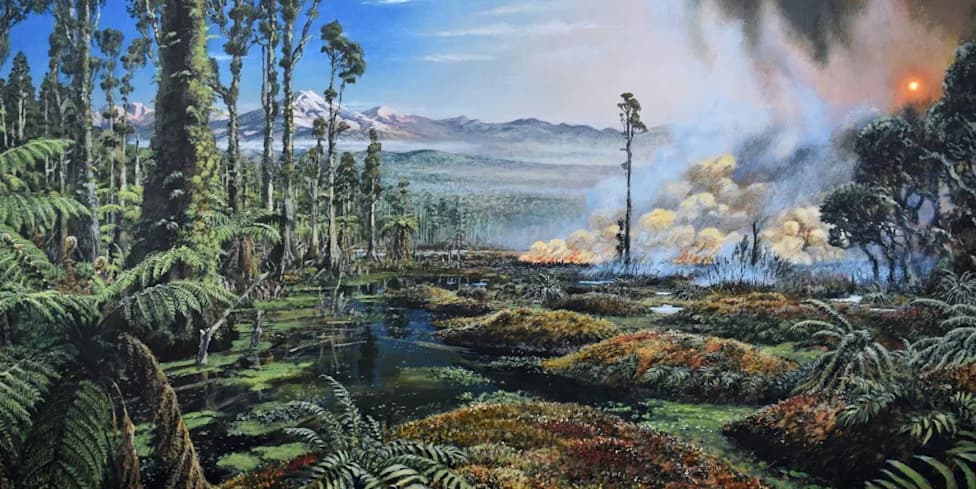
The amplified radiation may not have instantaneously ignited large, dense wood, but it would have exceeded ignition thresholds for fine fuels such as grasses, lichens, and pine needles. Those materials could have fueled larger, spreading fires. The authors calculate that exposed terrestrial animals may have absorbed about 17 times the thermal dose considered lethal to humans, which implies catastrophic mortality for many species at the surface in the first hour or two.
Animals sheltered underground, in burrows, or submerged in water would have had a much better chance of surviving the initial heat pulse. After the immediate catastrophe, the same silicate dust would likely have blocked sunlight for years, producing the longer‑lasting impact winter that has been widely invoked to explain longer‑term extinctions and ecosystem collapse.
However, a notable gap remains: clear, globally distributed sedimentary evidence for widespread wildfires consistent with this dust‑driven inferno has so far been documented only in North America. As Alfio Alessandro Chiarenza, a paleontologist at University College London who was not involved in the study, noted, it is possible that global wildfire traces will be found with additional sampling, but they are not yet ubiquitous in the record.
The study was published on July 28 in the journal JGR Biogeosciences.
Help us improve.