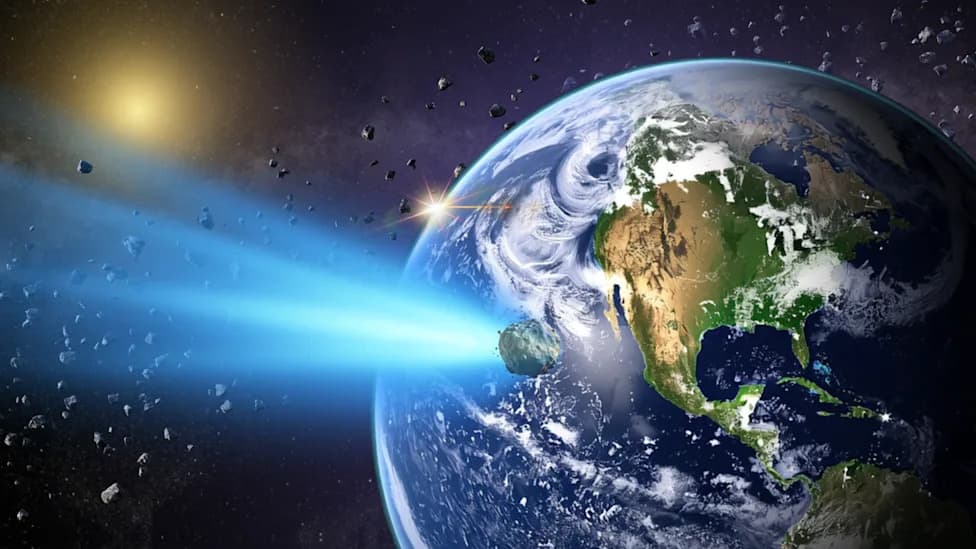
New isotopic evidence links the Chicxulub impactor to a rare CO-class carbonaceous chondrite (Ornans group). High-precision nickel isotope measurements from the global K–Pg clay layer support a low-volatile composition, weakening the idea that sulfur from the meteorite was the primary extinction agent. Instead, the study argues that fine atmospheric dust and debris produced by the impact most likely caused widespread cooling and ecological collapse.
Rare CO Chondrite Struck Mexico — Fine Dust, Not Sulfur, Likely Drove Dinosaur Extinction
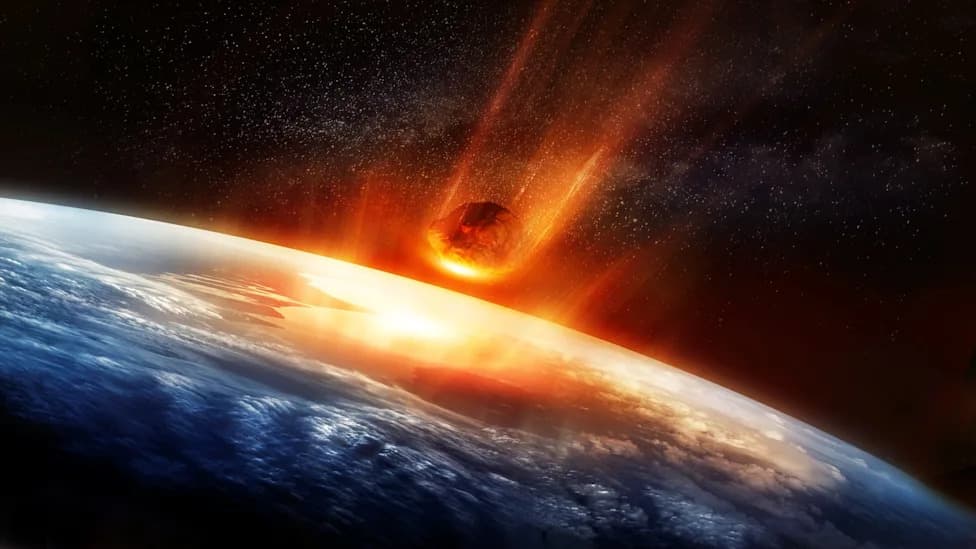
Photo Credit: iStock
A new isotope study narrows the identity of the space rock that produced the Chicxulub crater and helped end the Age of Dinosaurs. Researchers report the impactor was most likely a rare CO-class carbonaceous chondrite (Ornans group) and argue that the global cooling after the strike was driven more by fine atmospheric dust than by sulfur released from the object.
The team, from the Institut de Physique du Globe de Paris and Université de Paris, used high-precision nickel isotope measurements from the thin worldwide clay layer deposited at the Cretaceous–Paleogene boundary (K–Pg, formerly called K–T). Those isotopic fingerprints match the signature of CO (Ornans-type) carbonaceous chondrites, and the results appear in Science Advances.
About 66 million years ago the impactor struck near present-day Mexico at an estimated speed of roughly 40,000 mph and a diameter of about 6–9 miles, excavating the Chicxulub crater and triggering the mass extinction that removed roughly three-quarters of Earth's species, including all non-avian dinosaurs.
"This is challenging work," said Philippe Claeys of Vrije Universiteit Brussel. "Only a minute fraction of the projectile is preserved in the planet's K–Pg clay layer because the entire meteorite vaporized upon impact." The team reconstructed the object's composition from those microscopic remnants.
CO chondrites are among the most primitive solar system materials, but they are relatively depleted in volatile elements — notably sulfur, water, and some metals — compared with many other meteorite types. Because the projectile likely contained less sulfur than previously suspected, the study reduces the probability that sulfur released by the impactor itself was the single "smoking gun" that killed ecosystems worldwide.
"A CO contains much less volatile elements — like carbon, zinc, water, and particularly sulfur — than other classes of meteorites we've recovered on Earth," Claeys told reporters. "That doesn't change our overall explanation for the extinction event, but it makes it less likely that sulfur from the impactor was the smoking gun. The fine debris thrown into the atmosphere would have been the primary factor."
Instead, the study emphasizes the role of vast quantities of fine-grained ejecta and soot lofted into the atmosphere. Those particles would have reduced sunlight, cooled the climate, and disrupted photosynthesis for months to years — mechanisms consistent with rapid and global ecological collapse.
Isotope-level forensics also narrow possible source regions: the impactor may have formed in dusty, distant regions of the outer solar system or come from the outer reaches of the asteroid belt near Jupiter. Knowing the composition of historic impactors helps scientists build better models of how different materials influence climate, ecosystems, and extinction risk after catastrophic collisions.
While this research cannot change what happened 66 million years ago, it refines the story and highlights how subtle chemical clues in a global clay layer can reshape our understanding of planetary-scale disasters.
Help us improve.