Archaeologists recovered an 1,800-year-old rolled silver amulet from a grave near Frankfurt that bears an 18-line Latin inscription now read using high-resolution CT scans. The text explicitly invokes Jesus Christ, names Saint Titus, and includes the triadic acclamation "holy, holy, holy!"—phrases that support an early Christian reading. Dated to about 230–270 A.D., the artifact could push back the earliest clear evidence of Christianity north of the Alps by 50–100 years, though some words remain debated pending further review.
1,800-Year-Old Silver Amulet Found Near Frankfurt Could Rewrite the Timeline of Christianity North of the Alps

A Tiny Amulet May Rewrite Christian HistoryDouglas Sacha - Getty Images
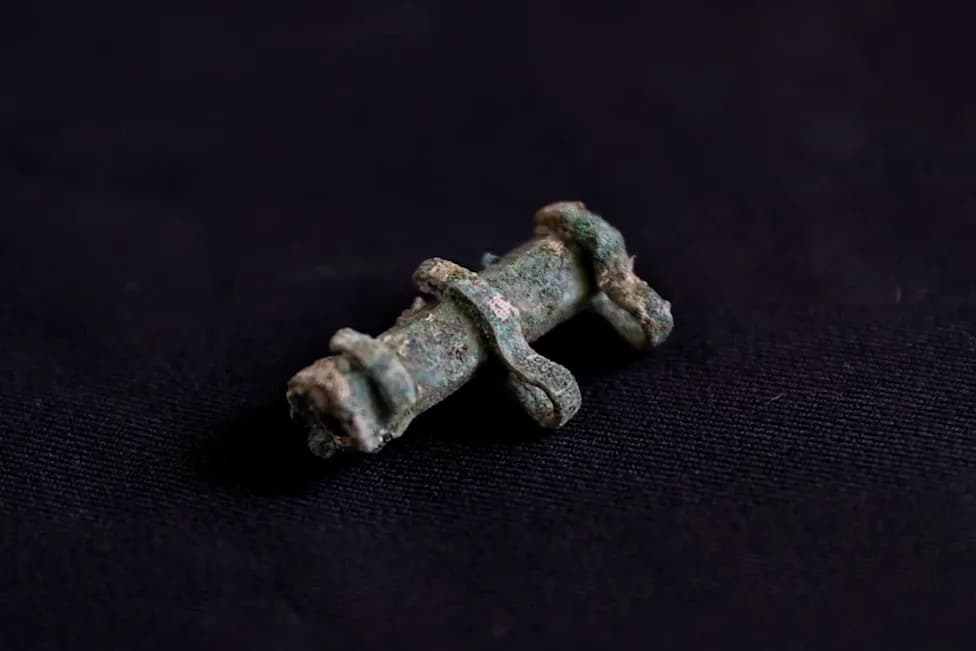
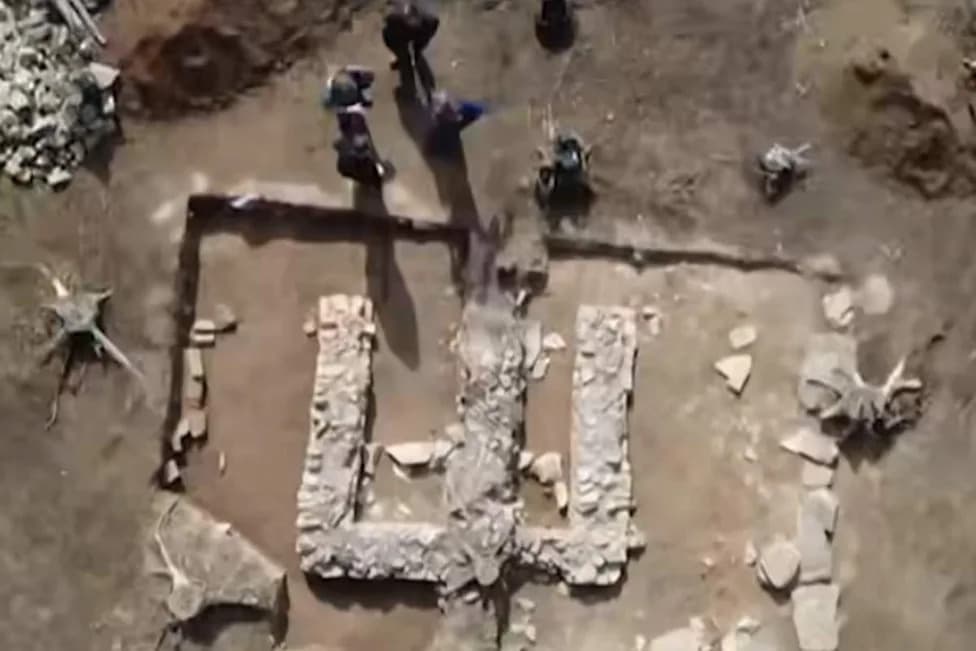
Archaeologists excavating a Roman cemetery near Frankfurt, Germany, uncovered a tiny silver amulet in 2018 that may change our understanding of when Christianity reached the northern provinces of the Roman Empire. The foil, only 1.37 inches long and folded into a rolled phylactery, was found beneath the chin of a male skeleton in the burial catalogued as "grave 134" in the former city of Nida.
How the Inscription Was Recovered
Microscopic inspection and X-rays in 2019 revealed that the brittle silver sheet bore an inscription, but the metal was too fragile to unwrap physically. In May 2024, researchers used a high-resolution computer tomograph at the Leibniz Center for Archaeology in Mainz to generate a detailed 3D model of the crumpled, rolled foil. Imaging specialist Ivan Calandra explained that the CT scans allowed the team to virtually “unfold” and examine the sheet piece by piece, revealing letters and line breaks that had been hidden for nearly two millennia.
Deciphering the Text
Philologist Markus Scholz of Goethe University Frankfurt led the painstaking reconstruction of the 18-line Latin inscription. Working with specialists in theology and classics, the team assembled the text over weeks and months, accounting for damaged edges and disputed readings. The inscription is entirely in Latin—unusual for early amulets, which more often used Greek or Hebrew—and contains explicit Christian language.
Excerpt (based on the team's latest translation): "(In the name?) of Saint Titus. Holy, holy, holy! In the name of Jesus Christ, Son of God! The Lord of the World... all knees bow: the heavenly ones, the earthly and the underground, and every tongue confess (to Jesus Christ)."
Why This Matters
The amulet has been dated to roughly 230–270 A.D. If the reading and dating are upheld by further scholarship, this object would be the earliest direct evidence of Christian devotion north of the Alps—predating the next reliable Christian traces in the region by about 50 to 100 years. Local officials and scholars have described the find as extraordinary: Ina Hartwig, Frankfurt's head of culture and science, said it will influence archaeology, religious studies, philology, and anthropology, while Mayor Mike Josef called the inscription a "scientific sensation."
Context and Caution
The inscription's references—naming Saint Titus, invoking the triadic acclamation "holy, holy, holy!", and echoing a Pauline motif of bending the knees—support a Christian interpretation, but some words and margins remain debated because of damage. The team emphasizes that the wording is unambiguously Christian and does not invoke other contemporary religious formulas, suggesting a committed personal devotion by the wearer.
Wearing an explicitly Christian amulet in the third century could have been risky depending on local politics and periods of persecution. While persecutions of Christians varied across the empire and across time, the presence of such an object in a burial offers a rare, personal glimpse into belief and identity on the Roman frontier.
Next Steps for Research
Scholars will continue to review the CT data, refine translations, and compare the inscription with other early Christian texts. As the scans and readings are subjected to peer review and broader scholarly discussion, the "Frankfurt Inscription" is likely to prompt reassessment of how—and how early—Christian ideas spread into northern Roman provinces.
Note: The discovery and its analysis were the result of collaboration among the Archaeological Museum Frankfurt, Goethe University researchers, and imaging experts at the Leibniz Center for Archaeology.
Help us improve.