New research reveals that many white women in the antebellum South were active participants in the slavery economy, not merely passive bystanders. Southern statutes such as Mississippi's 1839 Married Women's Property Law gave married white women legal ownership rights over enslaved people, and transaction records show women appeared in roughly one-third of recorded sales and purchases. Enslaved women were especially valuable because ownership commonly included their children, creating intergenerational wealth that helps explain some white women's economic stake in defending slavery.
Not Just Men's Business: How White Women Profited From American Slavery
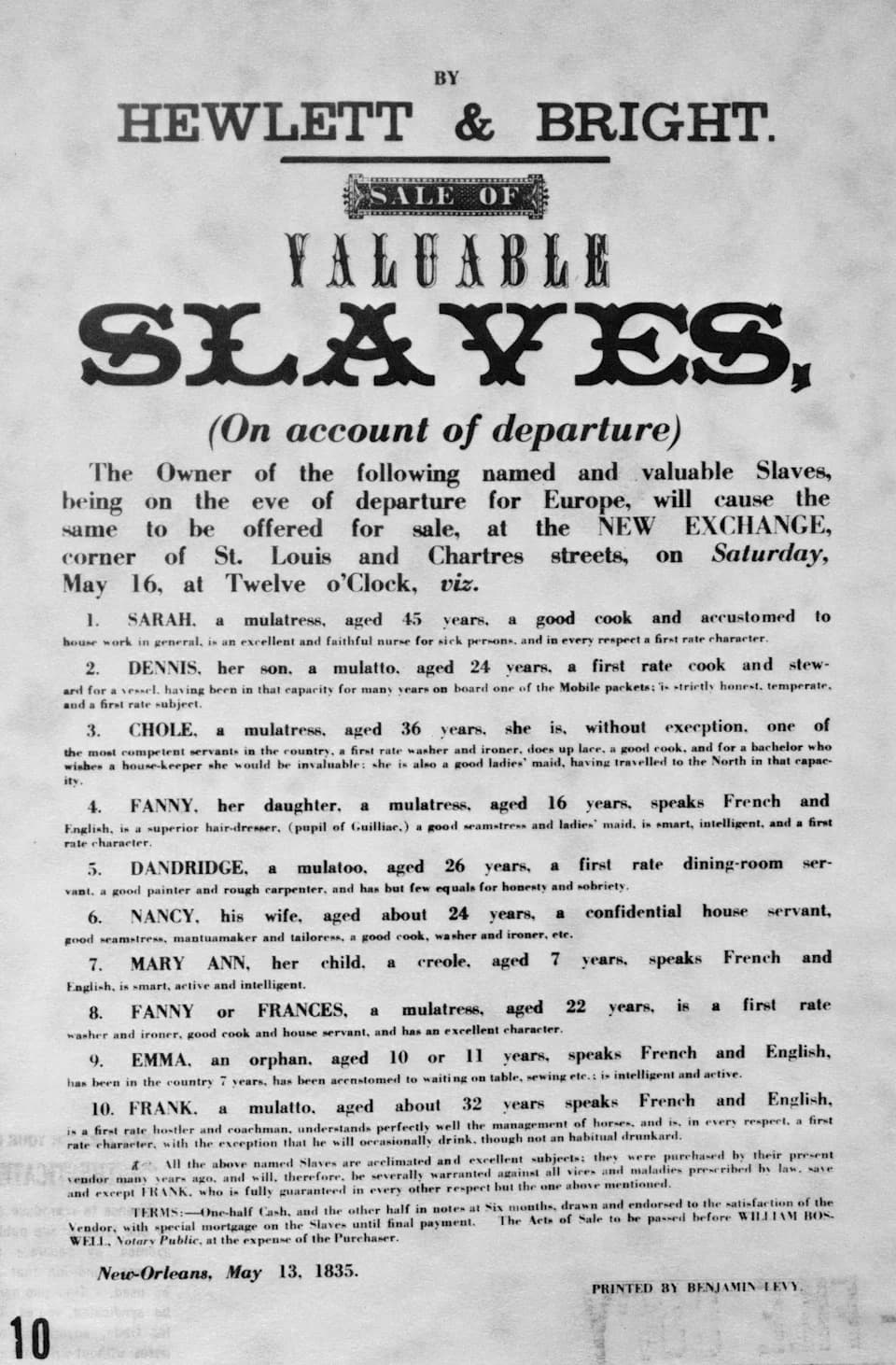
An antebellum print advertisement announces the sale of 'valuable slaves.'Kean Collection/Archive Photos/Getty Images
As the United States continues to reckon with the history and lasting effects of slavery, new research overturns a persistent misconception: the commerce and profit tied to enslavement were not exclusively a male domain. White women in the antebellum South were often active participants — legally and economically — in the system of slavery.
Reassessing Women's Roles
It is true that many white women managed households and supervised day-to-day work by enslaved people. For decades, however, historians argued that women were rarely owners or participants in slave markets. That interpretation relied on conventional archives and legal assumptions about married women's limited property rights under coverture — the doctrine that a married woman's property became her husband's.
New Sources, New Evidence
Recent scholarship moves beyond standard legal records. Historian Stephanie Jones‑Rogers and others have emphasized testimonies from formerly enslaved people, who named the women who owned them and described how being owned by a "missus" shaped daily life. These firsthand accounts correct gaps in elite documentary records and show white women present across the full range of the slavery economy.
Laws That Enabled Female Ownership
Southern legislatures responded to the economics of slavery by creating legal exceptions to coverture. The Mississippi Married Women's Property Law of 1839 is the clearest early example: it explicitly granted married white women ownership rights over enslaved people, with four of its five sections addressing enslaved persons. Other slave states followed with similar statutes designed to protect a married woman's property from her husband's creditors and to allow her to hold and accumulate wealth independently during marriage.
Market Participation and Scale
Where enslaved people were titled property and sales were formally recorded, the names of buyers, sellers and the enslaved persons often appear in archival deeds and bills of sale. Quantitative analyses of those records reveal that white women participated in roughly one in three transactions, buying and selling in nearly equal measure. They were especially prominent in transactions involving enslaved women: white women made up about 40% of buyers and sellers in those exchanges.
Why Enslaved Women Were Particularly Valuable
Enslaved women carried particular economic value because ownership typically included their future children, turning a single purchase into an intergenerational asset. For enslavers, acquiring an enslaved woman could be a means of building wealth across generations — a factor that increased the monetary incentive for white women to own and trade enslaved people.
Implications
These findings complicate earlier explanations that located white Southern women's support for slavery in ignorance or sentimental attachment alone. Legal access to enslaved property granted many white women in the South meaningful economic independence — in some places encompassing a significant share of regional wealth — and provided tangible incentives to defend the institution.
Author: Trevon Logan, The Ohio State University
Republished from The Conversation. The author reports no relevant financial ties or conflicts of interest beyond his academic appointment.
Help us improve.