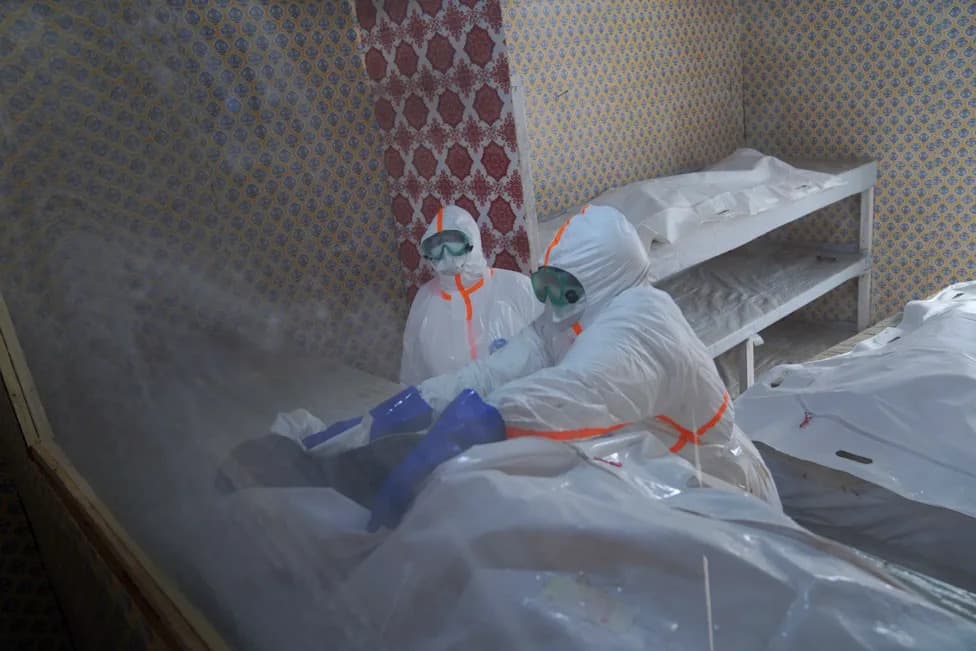
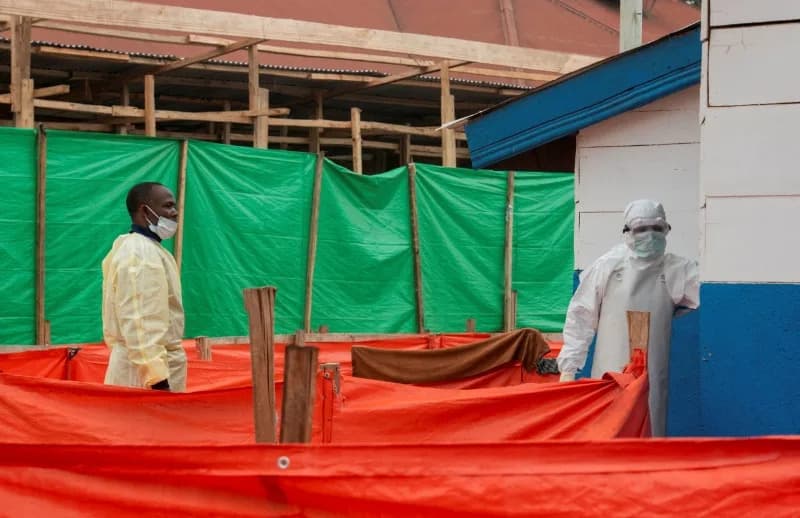
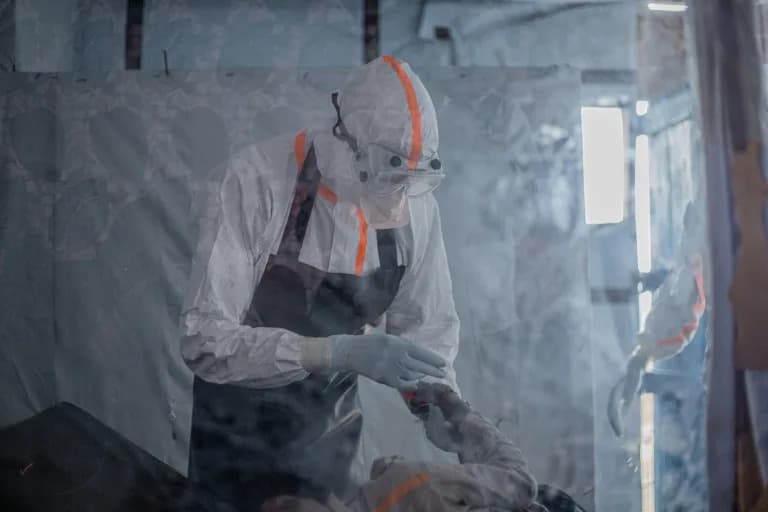
The World Health Organization says the Ebola outbreak in the Democratic Republic of Congo is worsening and has become the largest on record for the country. In the past week there were 567 new cases and 296 deaths, bringing the total to 3,605 confirmed cases and 1,587 deaths. The outbreak involves the Bundibugyo variant, for which no licensed vaccine exists, though a vaccine trial is underway. Containment is hampered by incomplete contact tracing, insecurity and community distrust.
WHO: Ebola Outbreak In DRC Escalates — Now The Country's Largest On Record
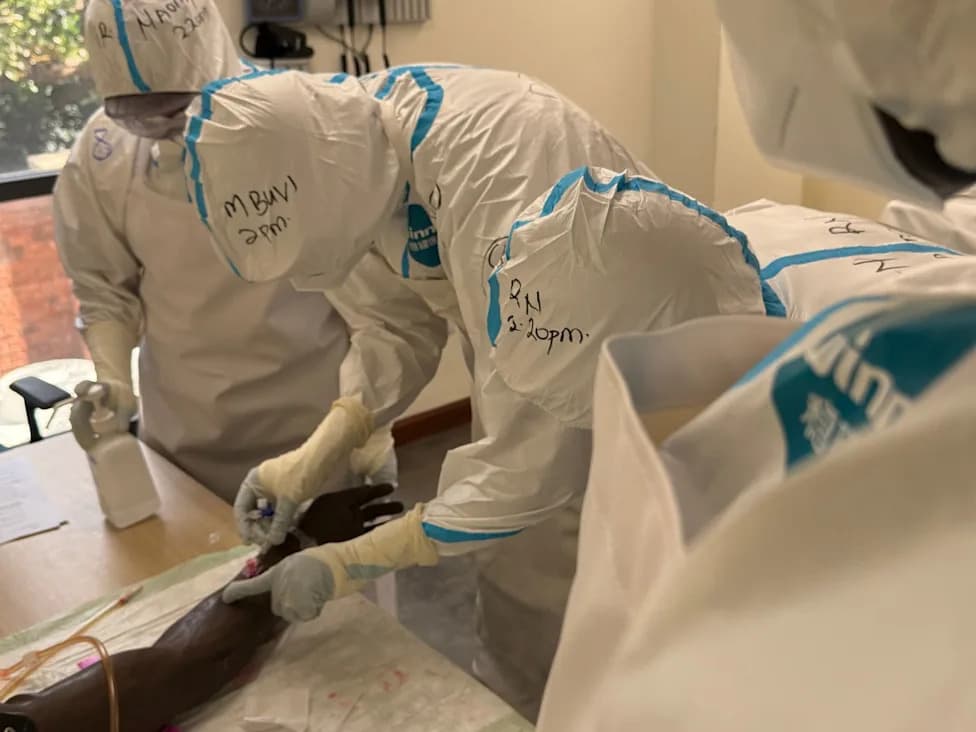
FILE PHOTO: Doctors from various countries in East Africa train in safe practices at an Ebola treatment center as part of the tEACH project, which is being carried out jointly by experts from the Institute of Global Health and the Department of Infectious Diseases and Critical Care Medicine at Charite. (is associated with: «WHO: Ebola outbreak worsens in the Congo and is now biggest ever») Eva Krafczyk/dpa
The World Health Organization (WHO) warns that the Ebola outbreak in the Democratic Republic of Congo (DRC) is intensifying and has become the largest the country has ever recorded. The agency said the risk of cross-border spread is rising and called for a substantial scaling up of response efforts.
Latest Figures
In the past seven days WHO recorded 567 new laboratory-confirmed cases and 296 deaths — the highest single-week toll so far. Overall, WHO lists 3,605 laboratory-confirmed cases, including 1,587 deaths. Some 651 people have recovered.
Variant and Vaccines
This outbreak involves the Bundibugyo variant of the Ebola virus. There is currently no licensed vaccine for this variant; a clinical trial of a newly developed vaccine is under way.
Why Reported Numbers Have Risen
WHO says part of the increase reflects improved surveillance and expanded laboratory testing, but most of the rise represents a genuine expansion of transmission. Contact tracing remains incomplete: roughly 80% of contacts are monitored for the recommended three-week period, while experts advise about 95% coverage to effectively interrupt transmission.
Operational Challenges
Response teams face severe operational constraints, including insecurity linked to rebel activity, hundreds of thousands of displaced people, and deep distrust in affected communities. These factors hinder vaccination drives, safe patient care, contact tracing and safe burials.
WHO Call To Action: A substantial scaling up of response activities is urgently needed to get ahead of the outbreak and reduce the risk of regional spread.
What To Watch: weekly case and death trends, outcomes from the ongoing vaccine trial, and improvements in contact-tracing coverage and community engagement.
Help us improve.