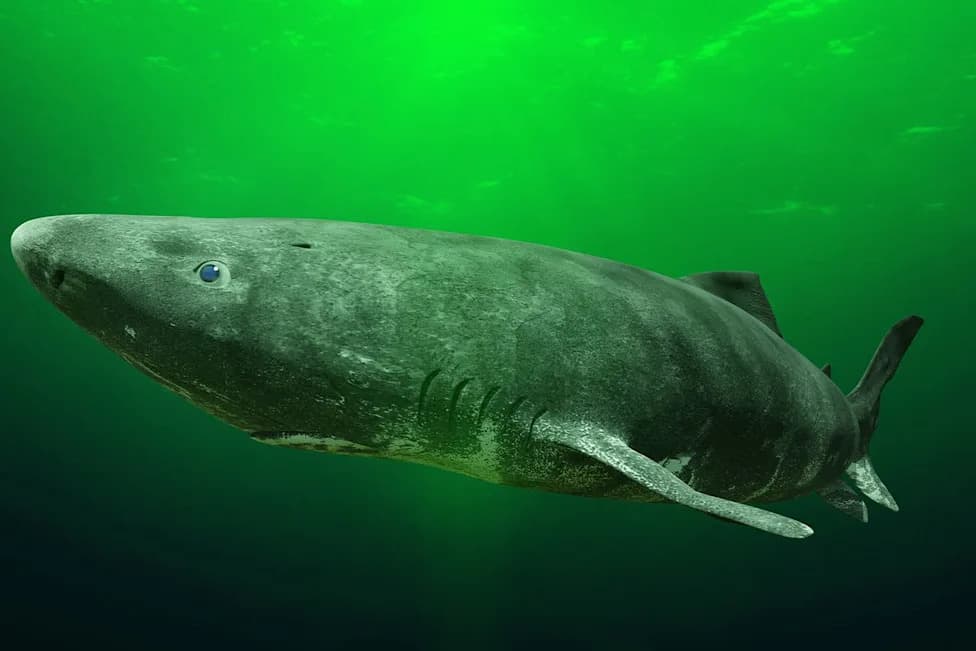
The Greenland shark (Somniosus microcephalus) is among the longest-lived vertebrates, with lifespans of at least 272 years and estimates approaching 400 years. A study led by Dr. Elena Chiavacci found extensive cardiac fibrosis, large lipofuscin deposits, and markers of oxidative stress in these sharks, yet sampled individuals remained active and healthy. Comparisons with short-lived species suggest these age-related markers are linked to extreme longevity, supporting a resilience model in which organisms tolerate molecular damage while maintaining function. Understanding how Greenland sharks preserve performance could reshape strategies for healthy human ageing.
What a 400-Year-Old Greenland Shark Teaches Us About Aging and Resilience
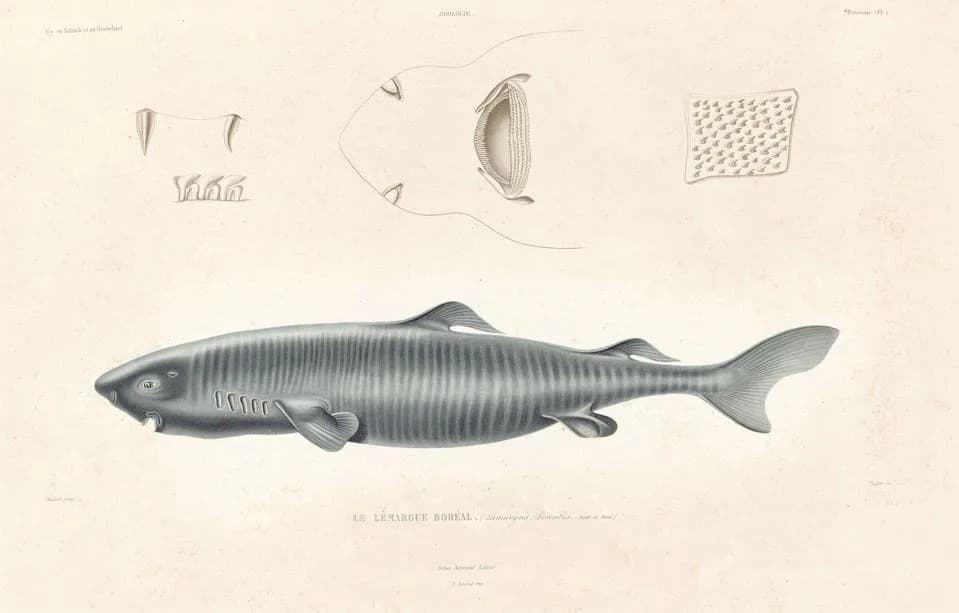
Plate showing the Northern lemargus (lamargus borealis) or Greenland shark. Book "Voyage en Islande et au Groenland" by Louis-Eugene Robert. Illustrated by Antoine Maurin and published in 1835-1836. (Photo by: Photo12/Universal Images Group via Getty Images)Photo12/Universal Images Group via Getty Images
Somewhere beneath the icy waters of the North Atlantic, an ancient predator drifts at a pace slower than many people walk. This is the Greenland shark (Somniosus microcephalus) — a species that can live for centuries and appears to tolerate remarkable amounts of molecular damage while remaining functional.
Slow Lives, Long Lives
Greenland sharks are now considered the longest-lived vertebrates: radiocarbon-based estimates indicate lifespans of at least 272 years, with some individuals plausibly approaching 400 years. They grow extremely slowly (roughly 1 centimeter per year), can exceed 16.5 feet (about 5 meters) in length, and often reach sexual maturity around 150 years of age — ages that turn ordinary biological expectations on their head.
Unexpected Heart Findings
A recent study led by Dr. Elena Chiavacci examined Greenland shark hearts and produced surprising results. Under the microscope, researchers found widespread cardiac fibrosis (collagen-like, scar-forming deposits) and heavy accumulations of lipofuscin — the so-called "aging pigment" made of oxidized fats and proteins that cells struggle to clear. They also detected abundant 3-nitrotyrosine, a marker of oxidative damage from reactive oxygen species.
The sharks' hearts looked old under microscopy, yet the animals sampled were active and showed no signs of acute cardiac failure.
Damage Tolerance Rather Than Damage Avoidance
Traditional theories of ageing often emphasize damage prevention: lower production of reactive molecules, stronger antioxidant defenses, or superior maintenance of cellular components. The Greenland shark — like the naked mole rat in prior studies — challenges that model. Despite clear signs of molecular wear, these sharks appear to maintain cardiovascular function, suggesting a model of resilience: preserving organ performance in the presence of accumulated damage rather than preventing damage entirely.
Comparative Clues
To test whether these cardiac signatures were unique to Greenland sharks, the researchers compared them with two short-lived species: the velvet belly lantern shark (Etmopterus spinax), which lives roughly a decade, and the African turquoise killifish (Nothobranchius furzeri), one of the shortest-lived vertebrates. Neither species showed the dramatic cardiac fibrosis or lipofuscin accumulation present in Greenland sharks, indicating these traits may be specifically related to extreme longevity rather than being generic consequences of deep-water life.
Possible Explanations and Remaining Questions
How do Greenland sharks maintain heart function despite fibrosis and oxidative markers? Several possibilities are plausible but not yet proven: an exceptionally slow metabolism that reduces mechanical demand on the heart, low blood pressure and slow circulation, unusually flexible blood vessels that compensate for a stiffer heart, or molecular adaptations that allow cells and tissues to operate with damage. Much of the shark's biology remains underexplored because these animals live in remote, harsh environments.
Why This Matters
This work reframes an important question in ageing research. If some species live long lives by tolerating damage and preserving function, then promoting resilience — preventing the transition from molecular damage to catastrophic organ failure — could be a valuable strategy for human healthspan research. Rather than a single path toward longer life, evolution may offer multiple strategies, and the Greenland shark highlights resilience as an underappreciated one.
“489 is the new 30” — a humorous reminder that longevity can look very different across species.
Help us improve.