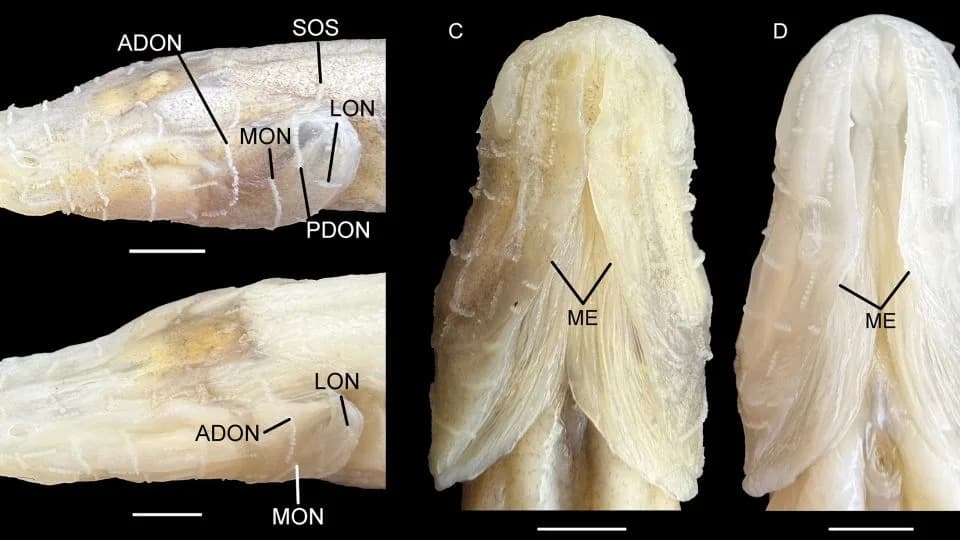
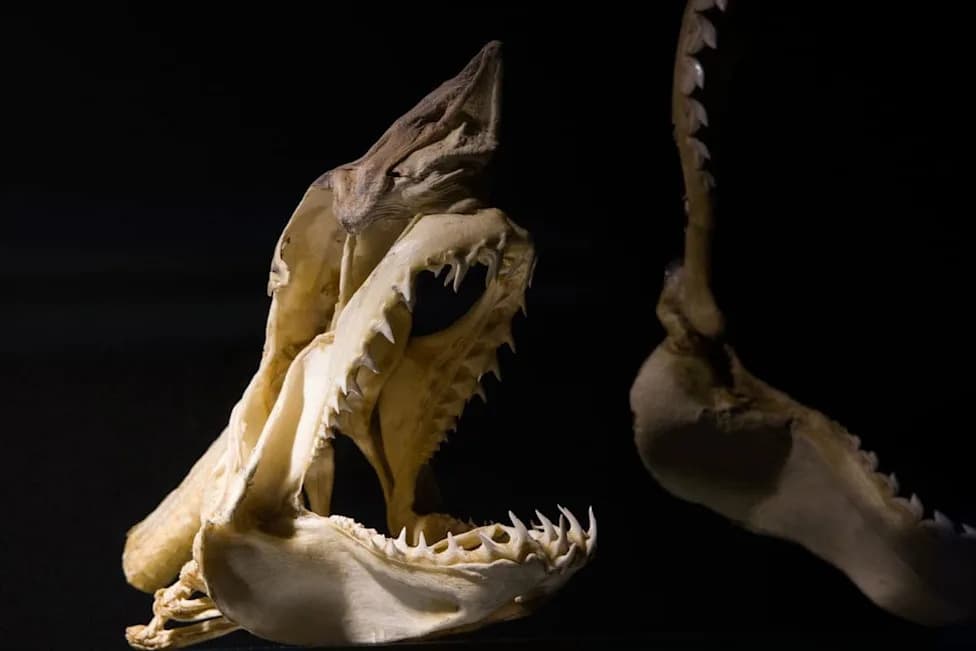
Researchers surveying Bobcat Cave near Huntsville, Alabama, have identified a previously unknown, otherworldly fish that may rank among the rarest on the planet. The eyeless, pigment-free creature—given the scientific name Demogorgonichthys arcanus and nicknamed the "demon cavefish"—was found beneath the U.S. Army's Redstone Arsenal and described after detailed morphological and genetic analyses.
What Makes This Fish Extraordinary
The fish is striking in appearance: entirely unpigmented and translucent, with a pronounced hunchback, spiny fin rays and a snout shape unlike the region's known cavefishes. Its skin is so clear that internal features such as the brain can be seen through the body.
Scientific Analyses and Naming
Lead author Dr. Matthew Niemiller and colleagues compared the specimens with the southern cavefish and performed CT scans, genetic sequencing and detailed skeletal analyses. These data showed the animals are both skeletally and genetically distinct from known cavefish in the system, supporting the description of a new genus and species.
"Over the years, I've seen how variable cavefish can be... But this one was different in ways that kept holding up," said Niemiller, an associate professor at the University of Alabama in Huntsville.
The informal name "demon cavefish" was inspired by the Demogorgon creature from the TV series Stranger Things; the formal binomial honors that pop-culture reference while adhering to taxonomic convention.
Population, Habitat and Conservation Concerns
The species is currently known from a single cave site, Bobcat Cave, and appears to have a very small population. On a recent visit, Niemiller observed 27 individuals, though he cautioned that this count likely does not represent the total population. Because the cave's recharge basin is very small, the species' range and resources may be limited—factors that suggest it could be critically endangered.
Bobcat Cave lies beneath Redstone Arsenal, a restricted military installation; the study notes that restricted or difficult-to-access lands can shelter undescribed biodiversity. Existing local water-quality protections reduce some immediate threats, but cave species can act as sentinels for groundwater health, and declines could signal contamination.
Open Questions
Many aspects of the demon cavefish's biology remain unknown: researchers cannot yet distinguish males from females, have no data on reproduction, and suspect the species is an opportunistic feeder that consumes prey it can fit into its mouth.
The formal description of Demogorgonichthys arcanus was published July 6 in the journal Scientific Reports. Scientists say the discovery highlights how much biodiversity remains undocumented—even in well-studied regions—and underscores the importance of protecting groundwater and subterranean habitats.