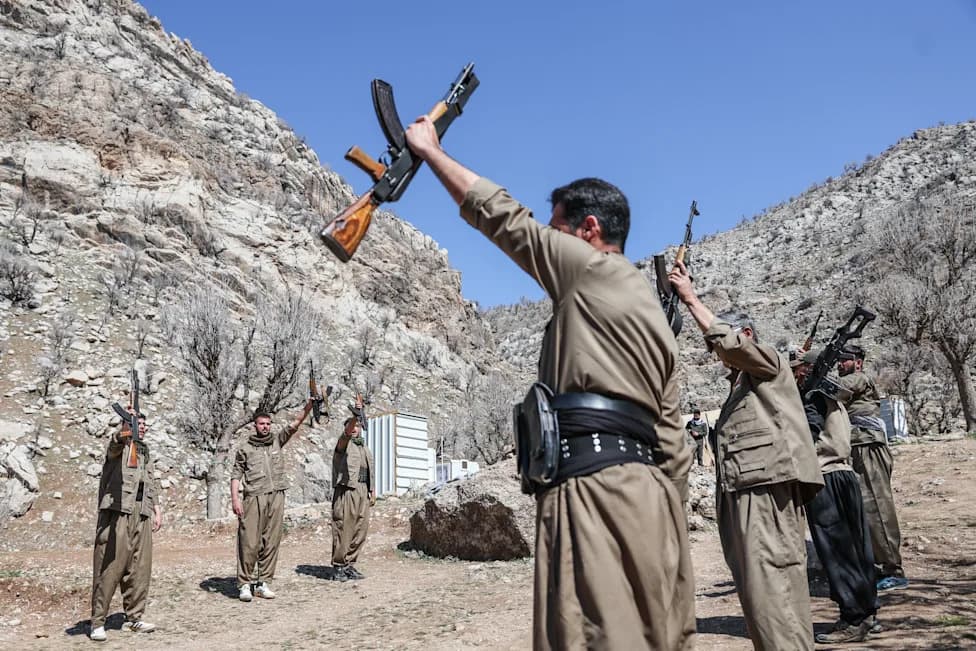
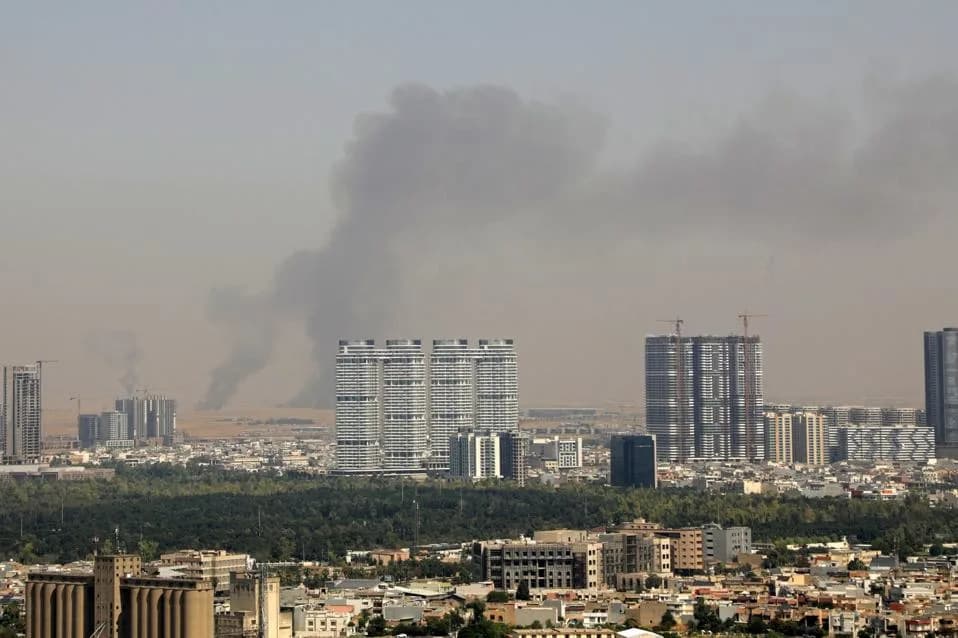
Since US–Israeli strikes on Iran began on February 28, Iranian Kurdish opposition parties based in Iraqi Kurdistan and inside Iran have been thrust onto the conflict’s front lines. Party leaders say they retain organised networks and bases on both sides of the border but deny receiving confirmed foreign military aid. Iranian drones and missiles have repeatedly targeted Kurdish positions in Iraq, prompting KRG appeals for restraint. The evolving situation raises the prospect of either a historic opening for Iranian Kurds or a destabilising security vacuum in the region.
Iranian Kurdish Parties in Iraq Walk a Tightrope as Iran Conflict Escalates
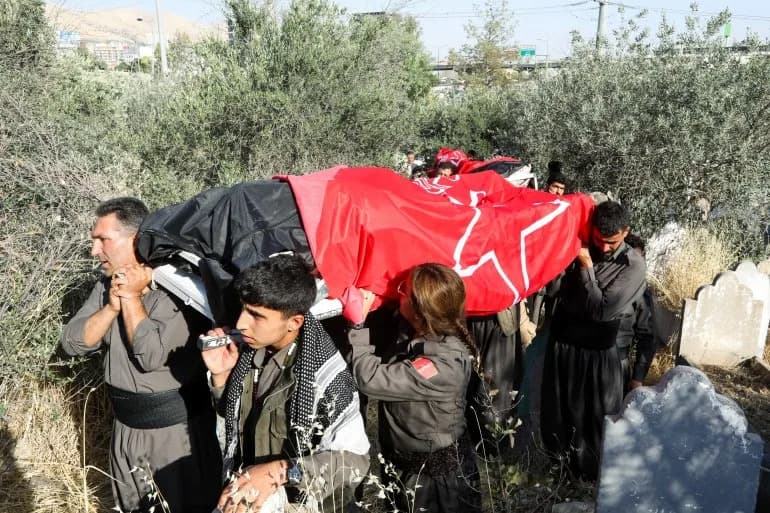
Funeral procession for members of the Komala Party of Iranian Kurdistan who were killed in a missile strike on the group's headquarters, in Sulaimaniyah, Iraq, July 19, 2026 [Ako Rasheed/Reuters]
Erbil, Iraq — Since US and Israeli strikes on Iran began on February 28, Iranian Kurdish opposition parties based in the Kurdistan Region of Iraq and inside Iran have found themselves on the front lines of a widening conflict. Their political headquarters, bases and cross-border networks are increasingly exposed to drone, missile and covert strikes, forcing Kurdish leaders to weigh the risks of escalation against the need to protect civilians and regional stability.
Background
Kurdish organisations on both sides of the Iran–Iraq border expanded their capacity after the 1990–1991 Gulf War, when a no-fly zone enabled the Kurdistan Regional Government (KRG) to consolidate self-rule. After the 2003 US-led invasion of Iraq, Iranian Kurdish groups — from leftist formations to nationalist parties — entrenched longer-standing bases and organisational structures in northern Iraq.
New Coalition, Rising Tensions
On February 22, 2026, five Kurdish groups from Iraq and western Iran formed the Coalition of Political Forces of Iranian Kurdistan in response to the suppression of protests inside Iran. Since the wider war began, Iranian drones and missiles have repeatedly targeted Kurdish political and military assets in Iraqi Kurdistan.
What Kurdish Leaders Say
Leaders from several parties told reporters they maintain organised military formations and sleeper networks inside Iranian Kurdish provinces as well as command centres and bases in northern Iraq. Kako Alyar of the Komala Party of Iranian Kurdistan said Komala had sleeper cells that participated in antigovernment protests in December and January before Tehran's security forces crushed them.
“The outbreak of war has changed the circumstances within the Kurdish areas, especially after the Iranian authorities tightened security measures and suppressed the protests,” Alyar said. He added that 13 fighters linked to Komala have been killed in Iranian attacks since the conflict began.
Rebaz Sharifi, of the Kurdistan Freedom Party of Iran, said his group has thousands of fighters and that its bases have been struck repeatedly — he estimated more than 80 attacks on his group’s positions since the conflict escalated. Both Alyar and Sharifi have denied receiving direct US, European or Arab military assistance, despite widespread speculation and some media reports of contacts between US intelligence and Kurdish operatives.
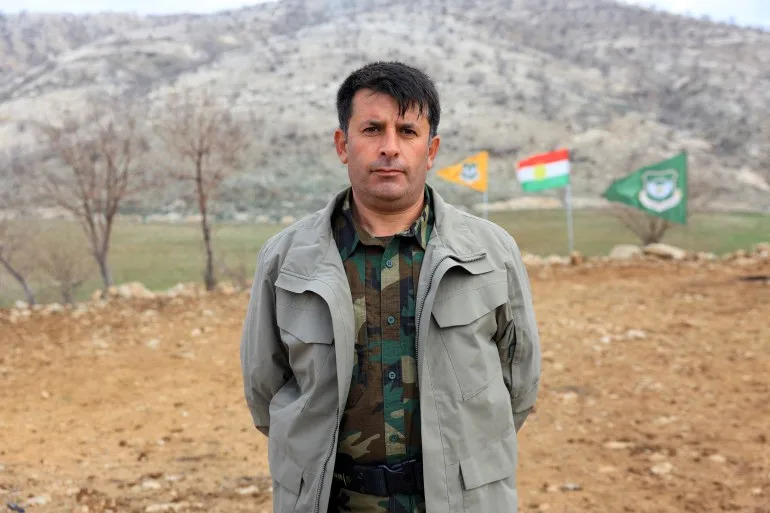
Rebaz Sharifi, a commander in the Kurdistan Freedom Party, at a base on the outskirts of Erbil, Iraq [File: Reuters]
Regional Dynamics and Restraints
The Kurdistan Regional Government has publicly urged Iranian Kurdish parties to refrain from actions that might endanger the Kurdistan Region’s security and economic interests. Baghdad likewise has emphasized that Iraq must not be used as a launchpad for attacks on neighbours. Analysts warn that KRG support for Kurdish activity inside Iran creates vulnerabilities: bases and political structures in Iraqi Kurdistan allow opposition groups to organise, but also expose the region to retaliation from Tehran.
Soran Palani, an analyst and Iranian Kurdish citizen, highlighted another constraint: the absence of clear, direct backing from Arab, European or American governments. That lack of decisive external support, he said, is a major factor limiting Kurdish willingness to open a large-scale military front inside Iran.
What’s at Stake
For many Kurds inside Iran and in the diaspora, a collapse of the Tehran government could present historic opportunities for greater rights or autonomy. Yet Kurdish leaders and analysts warn a regime collapse could also create a dangerous security vacuum, widespread instability and a scramble among regional powers to extend influence. The coming phases of the conflict could therefore determine both the internal future of Iran and broader regional security.
Outlook
Iranian Kurdish parties face a fraught calculus: balancing pressure to act in solidarity with domestic protests and opposition aims, against the realities of Iranian military deployments, the KRG’s desire to avoid destabilisation, and limited external guarantees of support. Until these political and security uncertainties are resolved, Kurdish groups appear likely to exercise caution — even as they prepare and sustain networks on both sides of the border.
Key facts: five-group coalition formed on February 22, 2026; Komala reports 13 fighters killed; some Kurdish groups report dozens of strikes on bases, and leaders estimate thousands of fighters among all groups — yet they insist there is no confirmed foreign military assistance.
Help us improve.