bioMérieux's laboratory data suggest the U.S. cyclospora outbreak may be easing after a mid‑July peak in parasite test positivity. More than 18,000 suspected and confirmed cases were reported by late July; the CDC has confirmed 6,707 U.S.-acquired cases and is verifying about 11,500 more. bioMérieux warns that increased testing driven by public awareness can lower positivity rates even if transmission persists, while the FDA and independent researchers caution the outbreak could still be larger than current counts show.
bioMérieux Says U.S. Cyclospora Outbreak May Be Easing After Mid‑July Peak
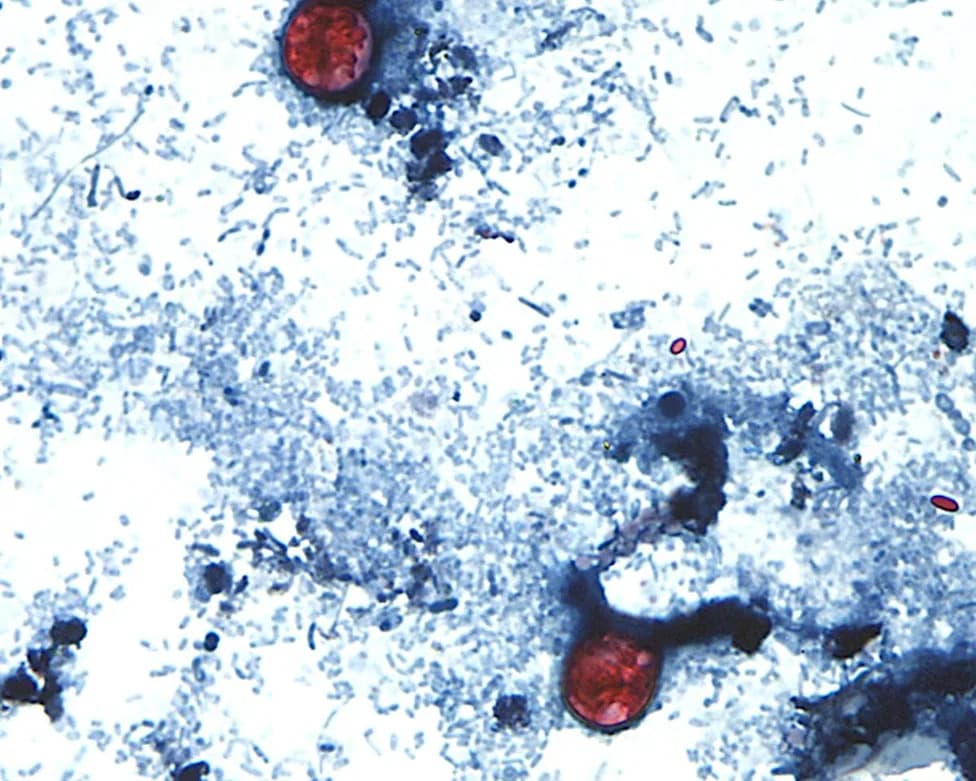
Cyclospora cayetanensisoocysts found in a fresh stool sample.Photograph: Melanie Moser/CDC/AP
The maker of a widely used diagnostic panel, bioMérieux, says its laboratory data indicate the large U.S. cyclospora outbreak may be slowing after a mid‑July peak in test positivity. By late July more than 18,000 suspected and confirmed cases had been reported, making this the nation's largest recorded cyclospora event.
The Midwest has been particularly affected: public health investigators have linked infections in nine states to iceberg lettuce produced by Taylor Farms' operations in Mexico. The Centers for Disease Control and Prevention (CDC) reports at least nine states with apparently linked cases, and the Food and Drug Administration (FDA) says the implicated lettuce was distributed to 27 states.
"I'm feeling confident we're heading in that direction, but we need to continue to monitor this as we go forward,"said John Osiecki, vice president of medical affairs at bioMérieux, referring to signs the outbreak may be waning.
bioMérieux's Syndromic Trends data show a decline in overall parasite test positivity after a mid‑July peak of 15.6%. The company cautions, however, that increased public awareness has driven more people to seek testing — and if many of those tests are negative, the overall positivity rate can fall even while transmission continues.
Osiecki said public caution may itself be helping reduce spread:
"I've been in a lot of social settings, and I've heard people request not to have lettuce just because they're aware of cyclospora,"he said, noting behavioral changes could partly explain the drop.
The CDC provides slower but more confirmed counts: it has verified 6,707 U.S.-acquired cyclospora cases and is following up on interviews and other data to confirm about 11,500 additional cases.
There are several important limitations to the test‑maker's data. The diagnostic panel detects 22 gastrointestinal pathogens overall and screens for four parasites (not cyclospora alone). Medicare generally covers the panel only for immunosuppressed patients, and the test carries a retail price of about $417. The panels are also more readily available in population centers than in rural areas, which can bias the dataset.
Independent food‑safety researchers warn the true size of the outbreak could be larger than current counts indicate. The FDA continues to investigate multiple related outbreak clusters that lack a confirmed cause. Separately, state health officials in New Hampshire — not initially counted in the main outbreak — identified cases tied to Taylor Farms lettuce in mid‑July linked to a hospital cafeteria in Keene.
What to watch next: public health agency confirmations as CDC interviews are completed, FDA traceback results, and whether positivity rates in diagnostic labs continue to fall once testing patterns stabilize.
Help us improve.