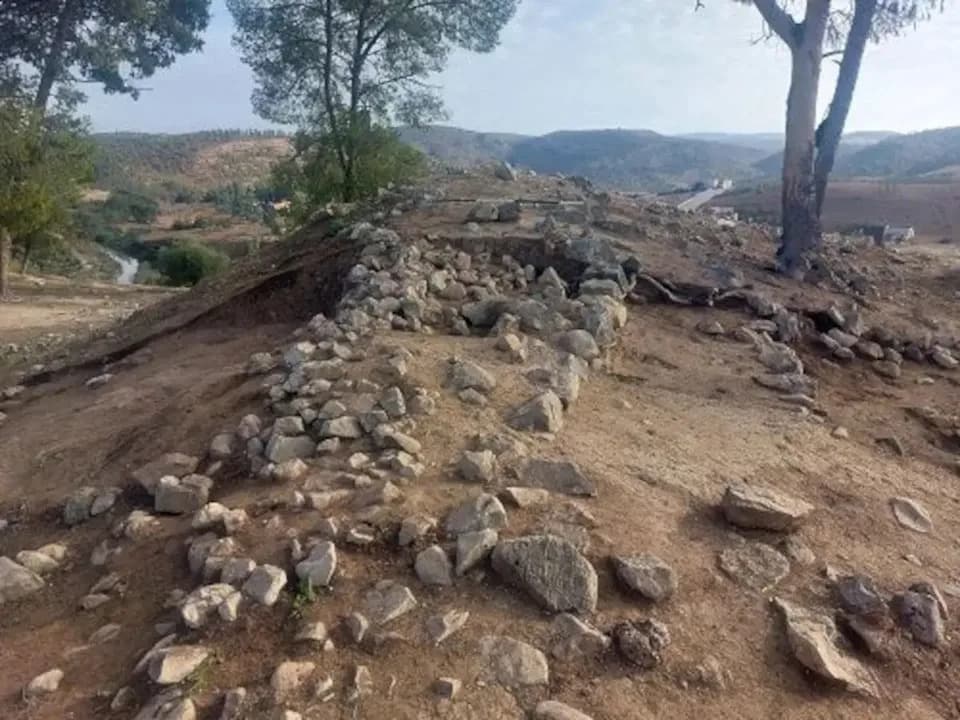
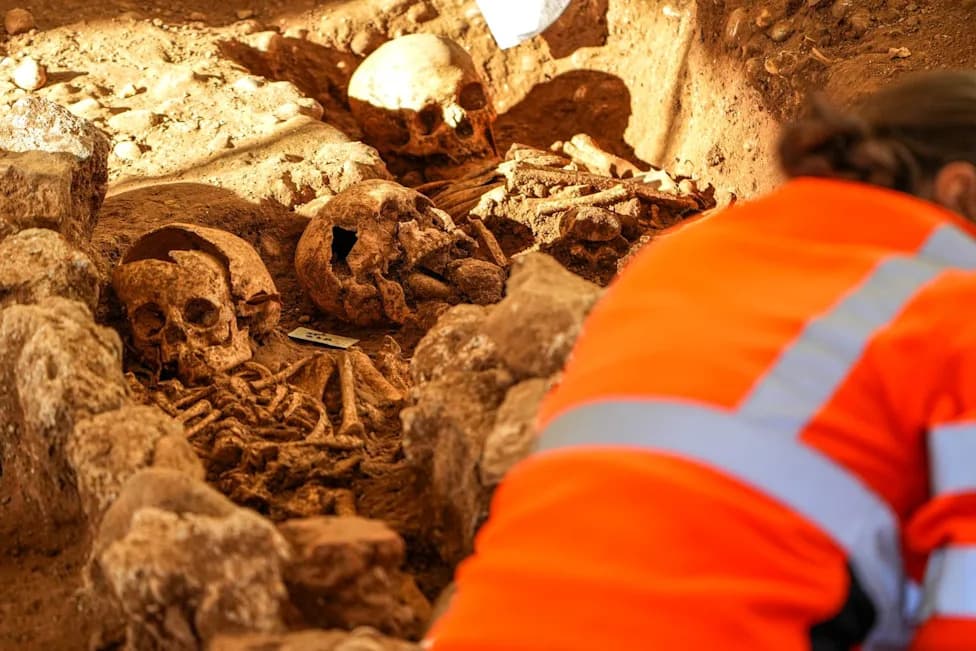
An emergency excavation at Caculo Cabaça in Angola recorded 117 stone-feature clusters and excavated 65 structures before planned dam flooding. Radiocarbon dates place burials in the early 1400s, making them the oldest dated burials in Angola, and researchers recovered the country's only documented cremation—an unusual burned urn with skull and tooth fragments. The discoveries push back the timeline for stone-built settlements in central Angola and highlight the cultural costs of large infrastructure projects conducted without early heritage surveys.
Before the Flood: Rescue Dig at Caculo Cabaça Reveals Angola's Oldest Burials and a Unique Cremation
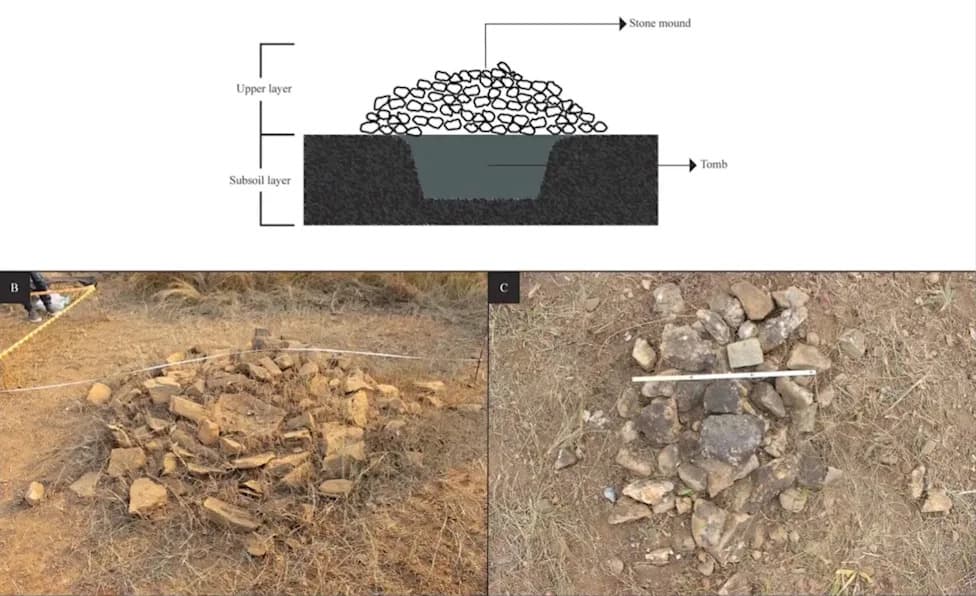
Photo Credit: D'Olivera et al. 2026
A planned hydroelectric dam threatens to submerge the 15th-century settlement of Caculo Cabaça in Angola. An urgent rescue excavation carried out after construction workers discovered exposed stone ruins in 2023 has documented discoveries that could reshape understanding of the region's precolonial past.
Key Discoveries
Field teams recorded 117 clusters of stone features and excavated 65 separate stone structures, including stone tumuli built over graves. Radiocarbon dating places several burials in the early 1400s, decades before Portuguese contact, making them the oldest dated burials yet identified in Angola. The project also recovered the only cremation currently known in the country's archaeological record: a broken, burned urn containing cremated fragments of skull and teeth.
Context and Procedure
Because the region still bears remnants of Angola's civil war, the area was inspected for landmines before excavation began. The salvage dig was launched urgently after construction workers flagged the ruins; local sobas (community elders) performed a protective ceremony that included a goat sacrifice, underscoring the site's continuing cultural significance.
Burial Practices and Architecture
The range of funerary treatments provides new insight into local social practices. Some individuals were laid on their sides; others were interred upright with knees drawn to the chest, a posture traditionally associated in Angola with chiefs and elites. The stone-built structures at Caculo Cabaça are the earliest dated examples recorded in central Angola — until now, no stone architecture in the country had been dated earlier than the 16th century.
Heritage at Risk
The imminent flooding will erase an irreplaceable link between present-day communities and their ancestors at a time when war, displacement and development have already destroyed much of the nation's physical history. The excavation team prioritized features most likely to be lost beneath the rising reservoir, preserving critical data in the scientific record even if the landscape itself cannot be saved.
Local Participation and Future Research
Local people played a central role: construction workers first identified the ruins, and the sobas’ ceremony reaffirmed the site's status as a place of memory, belief and ancestry rather than merely an archaeological locus. Archaeologists also identified additional stone structures outside the area expected to be inundated, raising the possibility of further study beyond the immediate rescue dig.
“We gave priority to the places that we knew would soon disappear,” said doctoral candidate Sofia Mateus Simplicio D'Oliveira of the Muséum National d'Histoire Naturelle in Paris.
Implications
The findings push back the timeline for stone-built settlements in central Angola and underline the high cultural cost of large infrastructure projects that omit early heritage surveys. The team argues that comprehensive cultural assessments should be integrated into planning processes so that development does not become a race against time for salvage archaeology.
Sources: Journal of Field Archaeology; reporting by Phys.org.
Help us improve.