American research universities face declining public confidence and must choose between reaffirming foundational principles or defending the status quo. The post–World War II model of agency-funded, peer-reviewed research has driven major innovations and high public returns. To rebuild trust, the essay urges sector-led reform around three commitments: pathbreaking research, transformative education, and a transparent covenant with society.
The University and Its Purpose: Reaffirming First Principles to Restore Public Trust
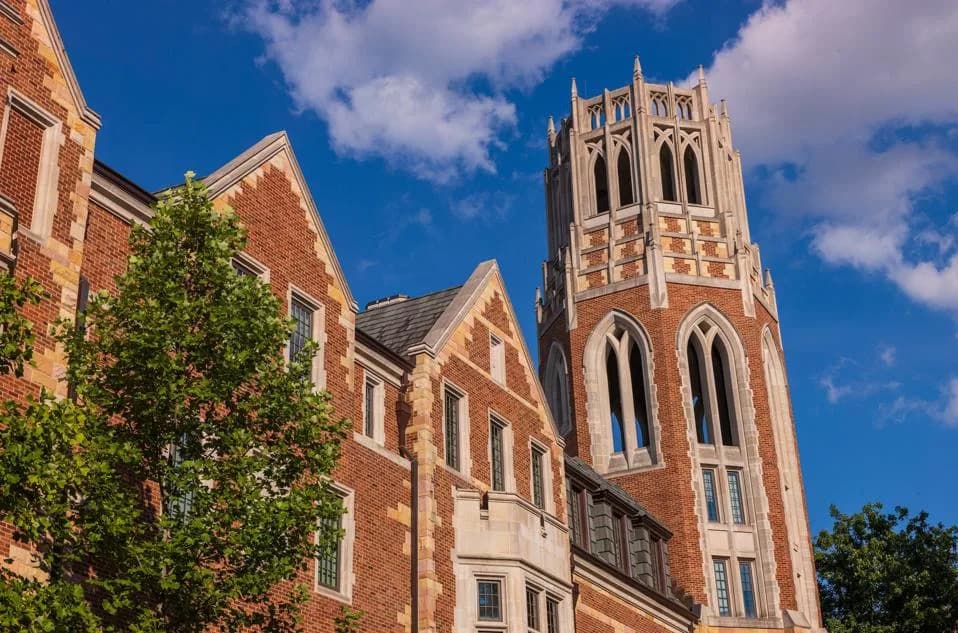
E. Bronson Ingram College - Vanderbilt UniversityHarrison McClary/Vanderbilt University
American higher education stands at a crossroads. Universities must choose whether to recommit to the enduring principles that earned public trust or to preserve the status quo and risk a deeper credibility crisis.
The American research university has been one of the most consequential institutional designs for creating and disseminating knowledge. Over decades, universities have produced innovations that reshaped modern life—from GPS and X-ray technology to synthetic insulin and foundational work in artificial intelligence.
Central to that success is the U.S. post–World War II model of research support. In his landmark report Science, the Endless Frontier, Vannevar Bush recommended that the federal government fund independent science agencies (such as the National Science Foundation) that allocate research dollars through merit-based, peer-reviewed competitions rather than direct political allocation. The strength of this approach lies in rigorous peer review and in the complementary roles of public funding, institutional investment, and philanthropic support.
At leading research universities, federal grants are typically supplemented by institutional resources: for roughly every federal research dollar, universities contribute about fifty cents from their own budgets—often aided by donors who believe in discovery. Research delivers a strong public return; studies suggest that each taxpayer dollar invested in university research produces at least five dollars in public benefit.
Nevertheless, public confidence in higher education is eroding. Recent Gallup data show that only about 38% of Americans express a "great deal" of confidence in universities. When asked why, respondents point to concerns about perceived political agendas on campus, rising costs of attending college, and doubts about whether graduates are prepared for the workforce.
These criticisms merit careful attention. University leaders should not dismiss them; they must confront legitimate concerns honestly and lead reforms from within academia, rather than waiting for external mandates. Reaffirming core commitments can help restore trust while preserving universities' essential missions.
Three Enduring Commitments
Pathbreaking Research
Research universities exist to generate, preserve and share knowledge. This mission depends on academic freedom, the free exchange of ideas, and rigorous scholarly standards. Faculty and students must be free to follow the evidence wherever it leads—even when results challenge popular views—while holding to high standards of peer review and methodological rigor.
Academic freedom advances discovery; it should not be used primarily as a vehicle for political objectives. Both scholars and institutional leaders share the responsibility to keep inquiry focused on evidence and scholarly merit.
Transformative Education
Universities should teach students how to think, not what to think. Education that exposes learners to diverse perspectives and trains them to evaluate claims by reason and evidence produces independent judgment and lifelong learning. Faculty should have the freedom to teach and innovate in the classroom; students should have the freedom to learn, question, and debate without fear of censorship or reprisal.
Institutional neutrality—meaning restraint by university leaders from taking formal positions on matters outside their core academic mission—helps preserve an open intellectual environment and protect public trust.
Covenant Between the University and Society
Universities rely on public, private and corporate support to fulfill their missions. That support rests on an implicit covenant: in exchange for resources, universities provide education and research that advance the public good. Since World War II, this partnership has produced large social and economic returns, but erosion of public trust threatens that relationship and its funding foundations.
Universities must demonstrate transparent stewardship of resources, recommit to their core purposes, and engage the public constructively. At the same time, society must recognize the value of sustained investment in inquiry, teaching and innovation.
Conclusion
The American research university is not merely one institution among many; it has been a primary engine of discovery, innovation and opportunity. It has saved lives, trained generations of leaders, strengthened the economy, and contributed to national security and human knowledge on an unparalleled scale.
The challenges ahead are serious but solvable. By reaffirming commitments to pathbreaking research, transformative education, and a transparent covenant with society, universities can rebuild public trust and adapt through thoughtful, principled reform.
Note: This statement is aligned with Vanderbilt University's "The University and Its Purpose: A Declaration of First Principles," adopted by the Vanderbilt Board of Trust and rooted in the university’s 2024 bylaws and statement of principles.
Help us improve.