The first drone-recorded humpback whale birth was filmed off New South Wales, showing blood in the water before the calf surfaced to breathe. Photographer Alexander Forrest captured the rare event during a migration and ORRCA monitored the mother and calf for hours. ORRCA says this is only the fourth complete humpback birth ever recorded and the first filmed by drone. NOAA notes humpbacks were driven to endangered status by commercial whaling, and several population segments remain protected.
Drone Captures First-Ever Humpback Whale Birth on Film Off New South Wales
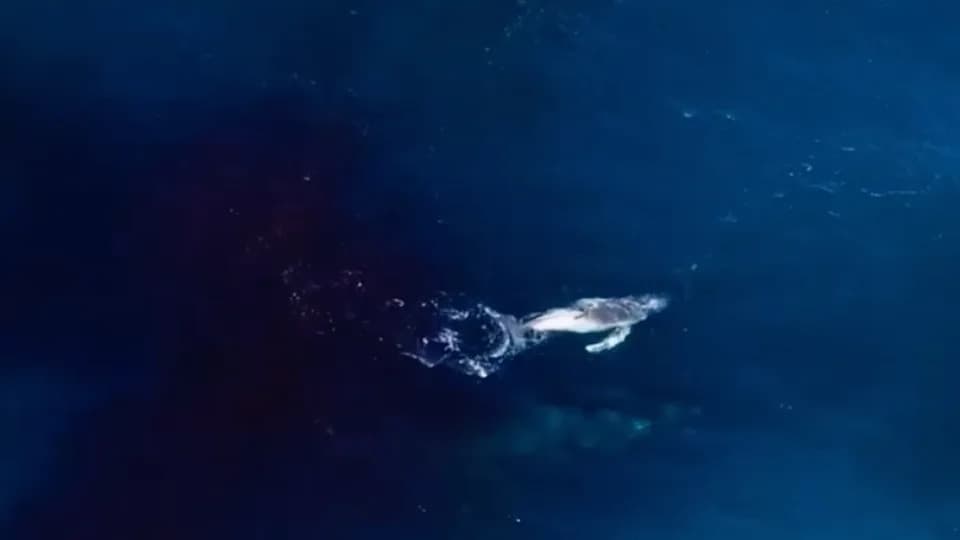
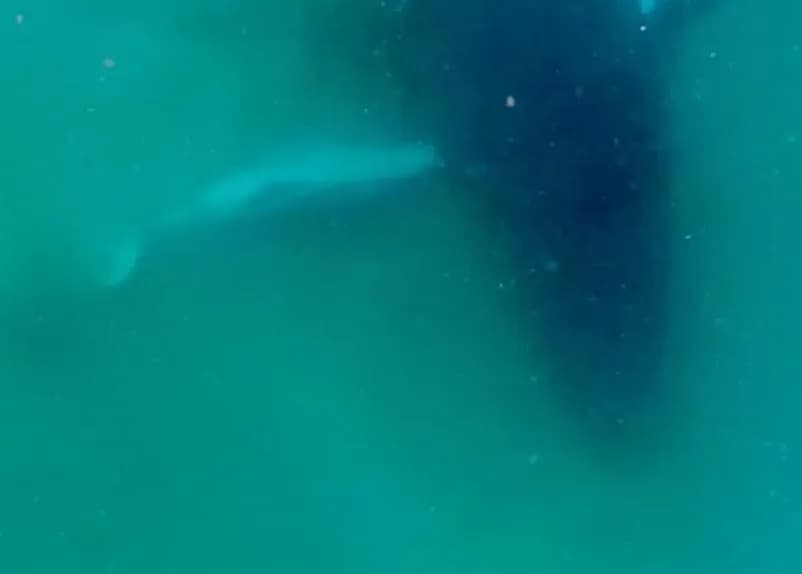
A rare video of a humpback whale birth was captured via drone off the coast of New South Wales, Australia. / Credit: Alexander Forrest, ORRCA via Storyful
For the first time, a humpback whale birth has been captured by drone off the coast of New South Wales, Australia. The rare footage, recorded on Tuesday, shows the water cloud with blood before a newborn calf surfaces and takes its first breath.
How It Was Filmed
Wildlife photographer Alexander Forrest was documenting a northbound humpback migration when he noticed an adult female exhibiting unusually slow, deliberate movement. Forrest said he hit record when the whale rose toward the surface — not to exhale, but to give birth.
"I was naïve in the rarity I was about to document," Forrest wrote on Instagram. "It's a privilege to have witnessed such a remarkable moment... Watching this unfold in front of me, I wasn't just a filmmaker or a photographer. I was a spectator."
Monitoring and Scientific Value
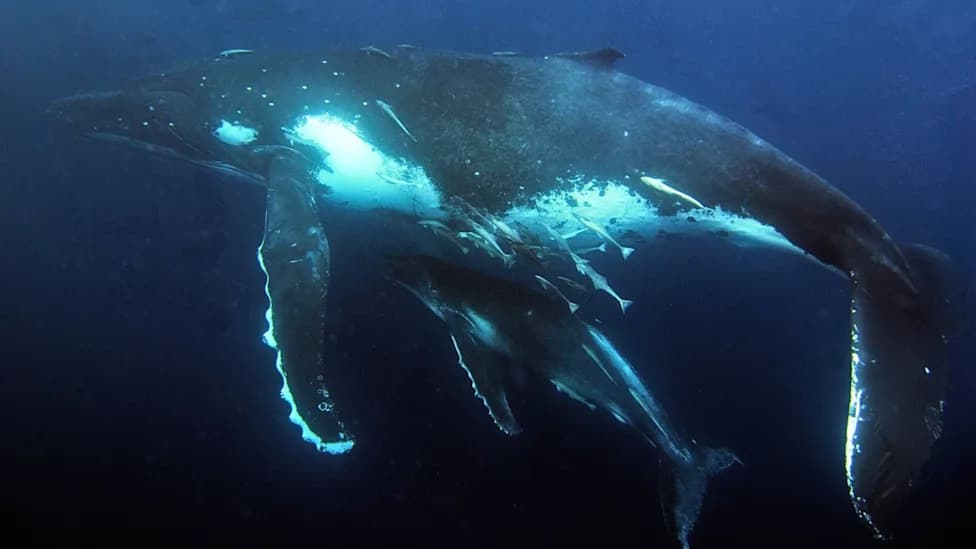
The nonprofit Organisation for the Rescue and Research of Cetaceans in Australia (ORRCA) joined Forrest and continued to monitor the mother and calf for several hours, collecting observations during the calf's critical first hours of life. ORRCA says the recording is believed to be only the fourth complete humpback birth ever filmed worldwide and the first to be captured by drone.
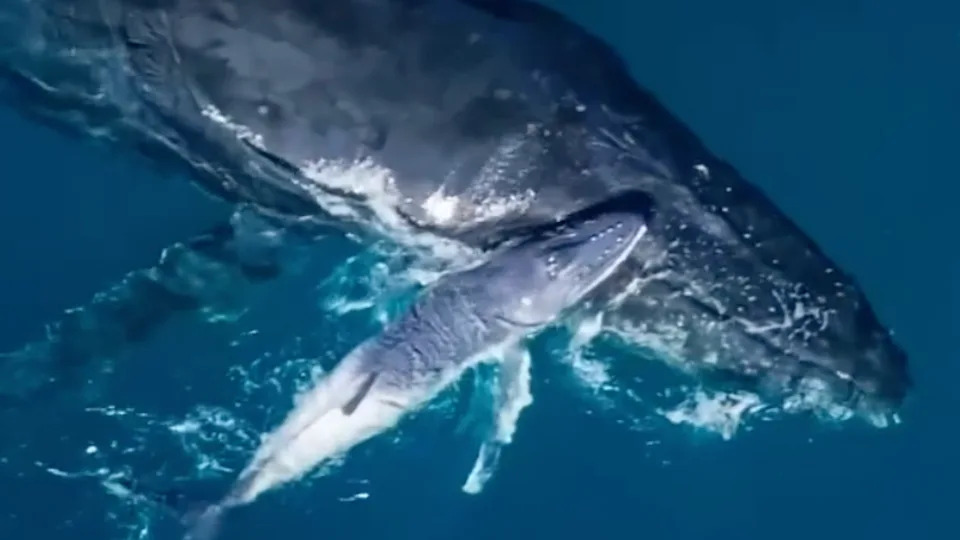
A humpback whale calf and its mother reunite after its birth off the coast of New South Wales, Australia, on July 28, 2026. / Credit: Alexander Forrest, ORRCA via Storyful
"Every observation like this has the potential to expand our understanding of humpback whale reproduction, maternal behaviour and the earliest stages of a calf's life," ORRCA said.
Conservation Context
The National Oceanic and Atmospheric Administration (NOAA) notes that commercial whaling drove humpback populations to endangered status in the United States in the 1970s, and a final moratorium on commercial whaling was established in 1985. Today, NOAA reports that four of 14 distinct humpback population segments in the U.S. remain listed as endangered and one is listed as threatened.
This first drone-recorded birth not only provides a rare window into cetacean maternal behaviour but may also offer useful data for researchers studying early calf survival and population recovery.
Help us improve.