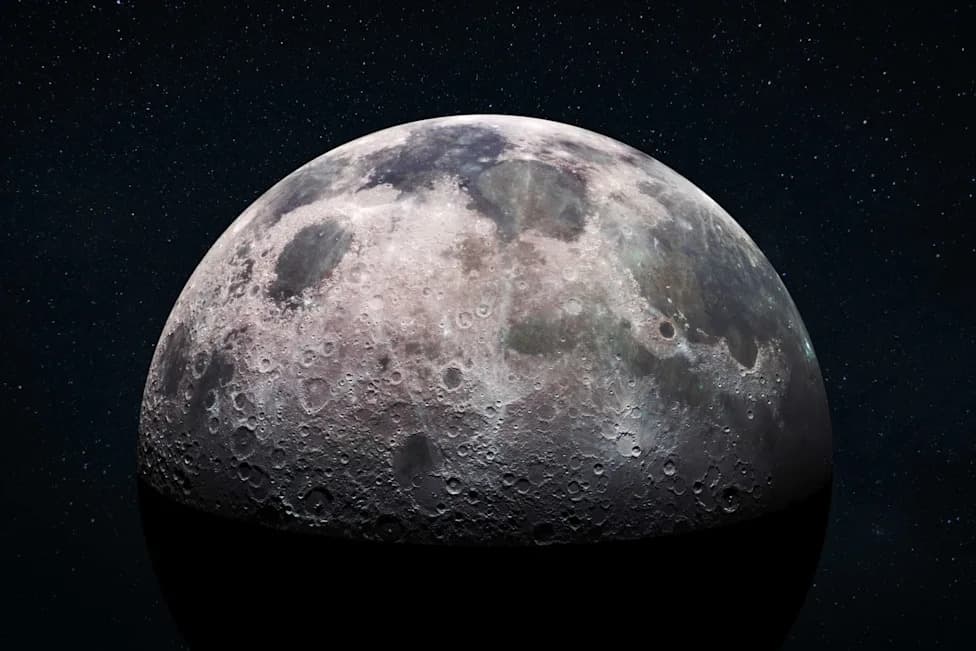
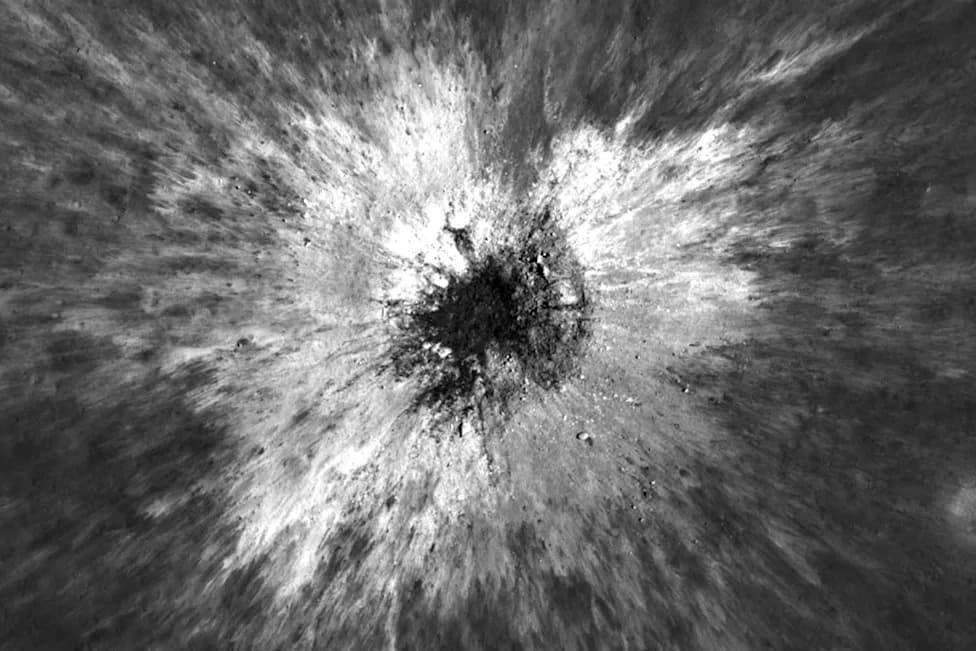
A spent SpaceX Falcon 9 upper stage is predicted to impact the Moon on Aug. 5 at about 2:34 a.m. ET near Einstein crater on the western limb at roughly 5,400 mph. The stage, launched Jan. 15, 2025 with Firefly's Blue Ghost and ispace's Resilience, was left in a high Earth orbit that later intersected the Moon's path. Scientists expect a crater roughly 90 feet wide and 16 feet deep with energy comparable to about three tons of TNT; NASA's LRO and South Korea's Danuri will image the site before and after. The event provides a rare chance to study impact effects and debris hazards to future lunar bases.
Spent SpaceX Falcon 9 Upper Stage Expected To Strike Moon On Aug. 5 — Small Crater, Big Science Opportunity
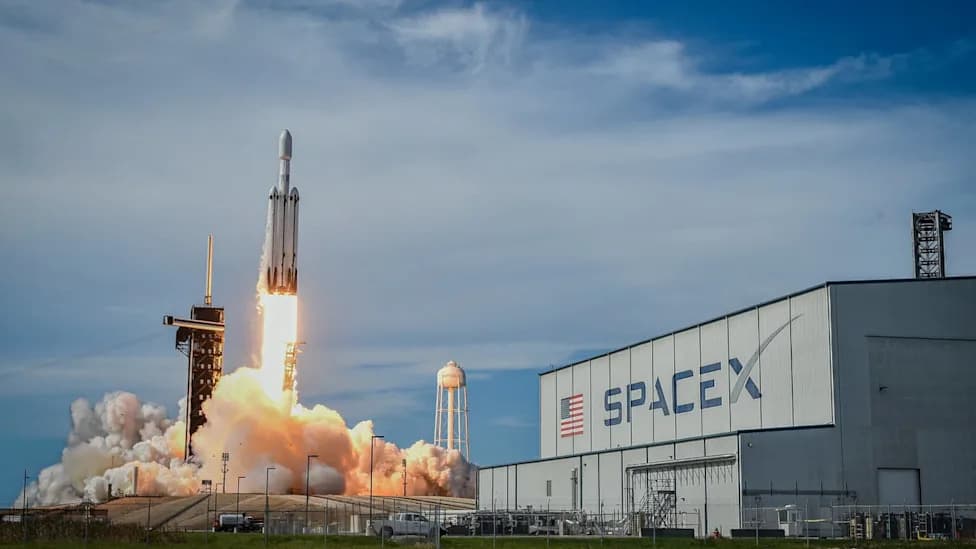
SpaceX Falcon 9 rocket stage to hit the moon on Aug. 5
A spent SpaceX Falcon 9 upper stage is predicted to impact the Moon on Aug. 5 at about 2:34 a.m. Eastern Time, more than a year after it launched two landers and was left in an orbit that later intersected the Moon's path, according to ABC News.
Impact Prediction and Where It Will Hit
Bill Gray of Project Pluto, who develops widely used software for tracking celestial objects, calculated that the upper stage will strike near Einstein crater on the lunar western limb at roughly 5,400 miles per hour — about seven times the speed of sound. If confirmed, this would be only the second documented instance of an uncontrolled rocket stage impacting the Moon (a Chinese booster left twin craters on the lunar far side in 2022, CNBC reported).
Background: How The Stage Got There
The upper stage launched on Jan. 15, 2025, carrying Firefly Aerospace's Blue Ghost lander and ispace's Resilience lander. The stage is roughly 40 feet tall and weighs about 10,000 pounds. After delivering the landers, mission controllers left the stage in a high Earth orbit that periodically crossed the region where the Moon travels; over time those crossings placed it on a collision course.
Expected Effects And Observations
Benjamin Fernando, a postdoctoral researcher at Los Alamos National Laboratory and lead author of a study modeling the impact, estimates the strike will excavate a crater about 90 feet (≈27 meters) across and roughly 16 feet (≈5 meters) deep — large enough for lunar orbiters to detect but too small to resolve from Earth with amateur telescopes. The impact energy is estimated to be roughly equivalent to three tons of TNT.
NASA's Lunar Reconnaissance Orbiter (LRO) and South Korea's Danuri probe are expected to photograph the site before and after the collision. Danuri's trajectory may bring it within one to two miles of the incoming stage roughly two minutes prior to impact, offering a close observational opportunity.
What Observers Can Expect
The visible flash at the moment of impact is likely to be extremely brief (under one second) and too faint for casual naked-eye viewing. However, scientists expect a debris plume that could rise several miles above the surface and remain visible in telescopes for tens of minutes afterward. Because the predicted impact is timed for pre-dawn hours, skywatchers in the eastern United States, Canada, and much of South America will be best positioned to attempt observations with suitable equipment.
'Part of the reason for our interest in this event is to figure out how much of a hazard debris impacts pose to future astronauts,' said Benjamin Fernando.
Retired astrophysicist Jonathan McDowell stressed the broader operational lesson: uncontrolled hardware in chaotic Earth-Moon orbits can eventually pose collision risks, and planners should avoid leaving stages in trajectories likely to intersect the Moon if sustained lunar operations are to be safe.
Why This Matters
Beyond the immediate scientific value of observing an impact in real time, the event gives researchers a real-world test of impact models and a chance to study how debris from collisions could threaten future lunar infrastructure and crews. Planned imaging by orbiters will help validate predictions about crater size, ejecta plume behavior, and detectability from orbit.
Help us improve.