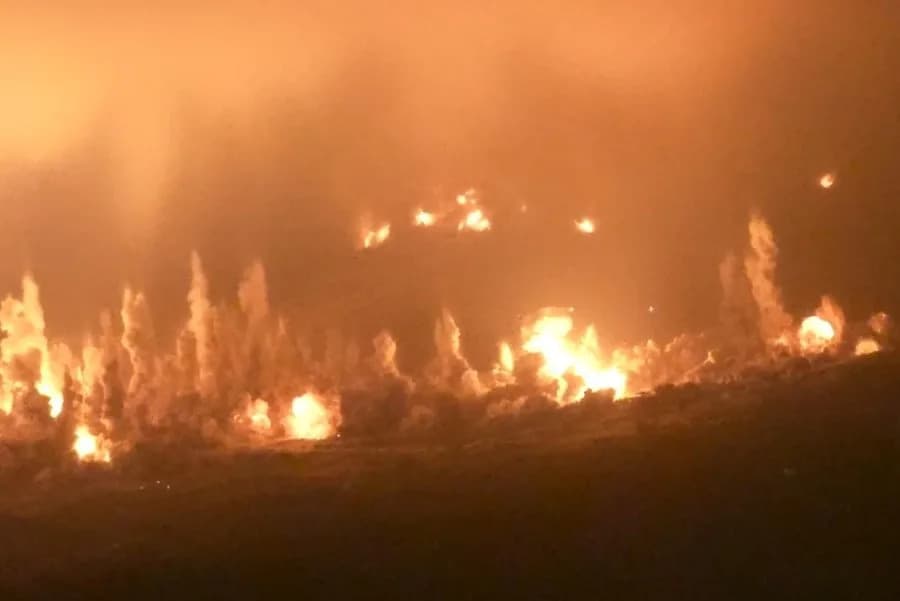
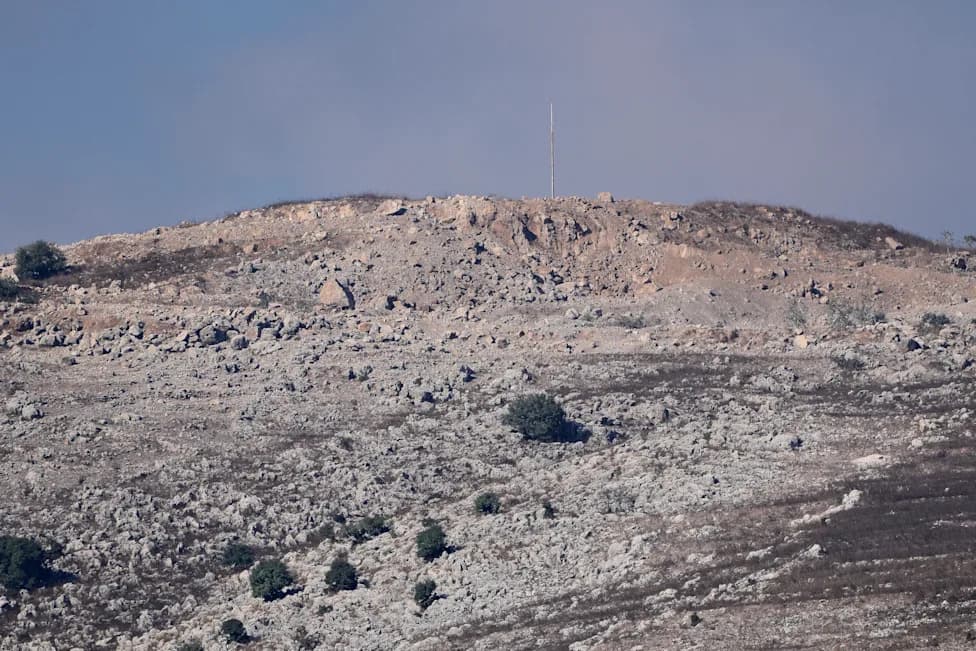
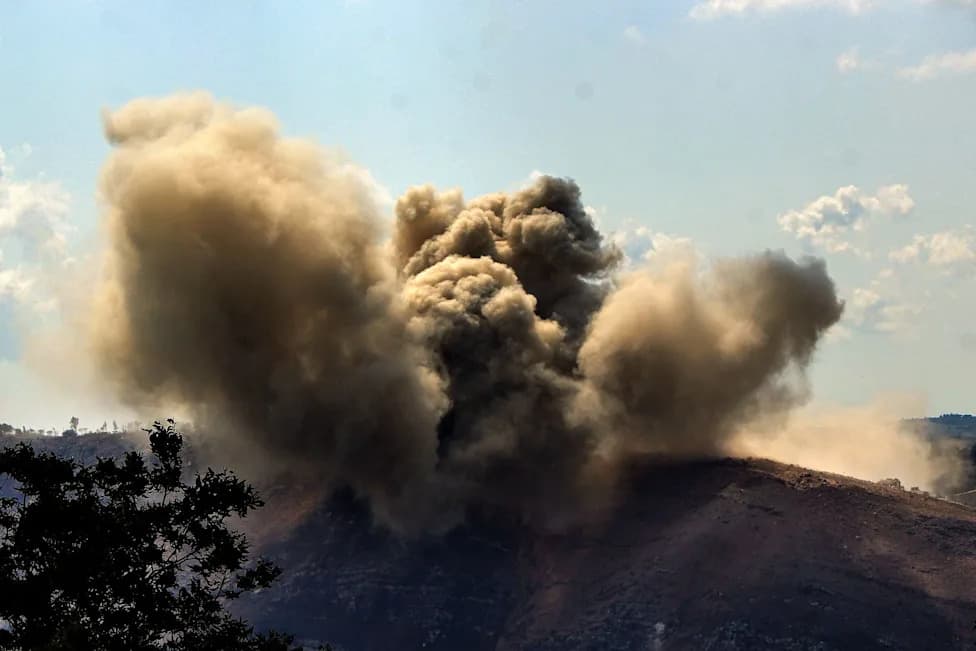
Lebanese President Joseph Aoun condemned Israeli detonations near UNESCO-listed Beaufort Castle as "a highly dangerous escalation," saying seismologists recorded tremors equivalent to a 3.8-magnitude quake. Israeli officials said about 700 tons of explosives were used to destroy Hezbollah tunnels roughly 3.7 miles from the border. The blasts occurred days before renewed Lebanon–Israel talks in Rome intended to advance a U.S.-brokered framework agreement and have raised concerns about heritage damage and regional stability.
Lebanon's President Condemns Massive Israeli Blasts Near UNESCO-Listed Beaufort Castle
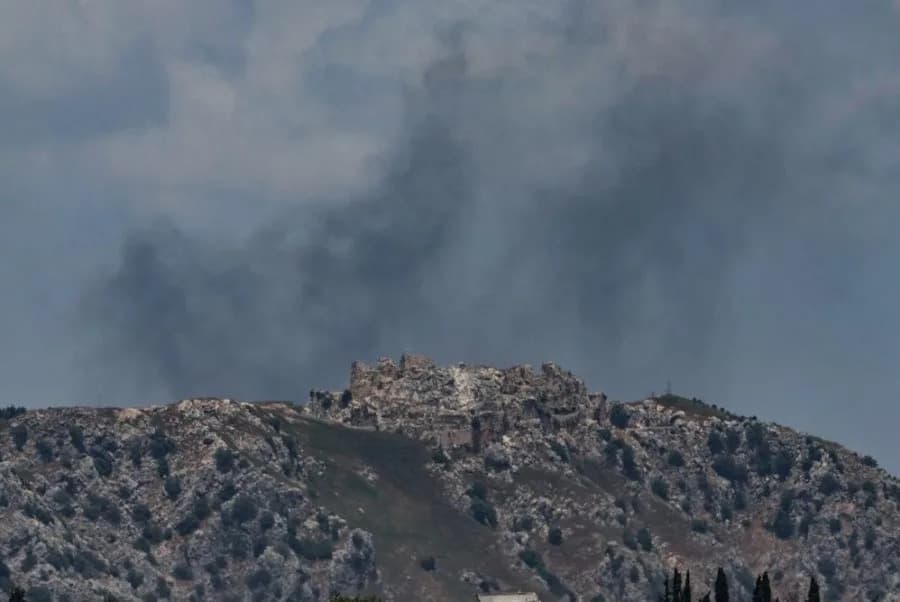
Smoke rises after an Israeli strike next to the Crusader-period Beaufort Castle, as seen from the Israeli side of the border in the Upper Galilee, northern Israel, in June. File Photo by Atef Safadi/EPA
BEIRUT — Lebanese President Joseph Aoun on Friday strongly condemned large Israeli detonations near the historic Beaufort Castle, calling the strikes "a highly dangerous escalation" that risks undermining diplomatic progress between Lebanon and Israel.
What Happened
Lebanese authorities said the explosions, which Israeli officials say involved approximately 700 tons of explosives, occurred close to Beaufort Castle and produced ground tremors the National Center for Geophysics equated to a 3.8-magnitude earthquake. Israel said the blasts destroyed a portion of an extensive underground tunnel network it attributes to Hezbollah.
"A highly dangerous escalation and a blatant violation of existing commitments," Aoun said, citing seismological data and warning that the strikes threaten ongoing negotiations and stability in southern Lebanon.
Diplomatic Context
The detonations came days before a scheduled round of direct Lebanon–Israel negotiations in Rome to continue implementing a U.S.-brokered framework agreement reached on June 26. Implementation of the framework began on July 21, when the Lebanese Army deployed to Zawtar al-Gharbieh, a pilot zone near the Litani River.
Israeli Account
In a joint statement early Friday, Israeli Prime Minister Benjamin Netanyahu and Defense Minister Israel Katz said the Israeli Army used roughly 700 tons of explosives to destroy tunnels near the Beaufort area — a network the military described as "strategic," multilayered and built over two decades roughly 3.7 miles from the Israeli border. The statement framed the action as a response to alleged Hezbollah cease-fire violations and warned that any attack on Israeli forces would be met with a "severe and powerful response."
Heritage Concerns and Damage Assessment
Beaufort Castle was among five fortified sites in the Jabal Amel region that UNESCO added to the World Heritage List and the List of World Heritage in Danger six days before the explosions. Lebanon's Culture Ministry said vibrations from the detonations may have caused damage near the castle but that a thorough field assessment is impossible while the location remains under occupation.
Other Security Notes
The explosions followed Israeli accusations that Hezbollah launched an explosive drone that struck an Israeli bulldozer on Ali Taher Ridge earlier in the week; Hezbollah has not issued a public comment. Separately, the U.N. peacekeeping force UNIFIL said its teams neutralized nearly four tons of mainly ammonium nitrate explosives during a routine patrol near the Israeli-occupied border town of Houla on July 2.
Implications
President Aoun urged the United States, as sponsor of the framework, and the international community to act to prevent further violations he said threaten the prospects for the diplomatic track. The incident highlights tensions between military objectives, heritage protection and fragile efforts to consolidate stability in southern Lebanon.
Help us improve.