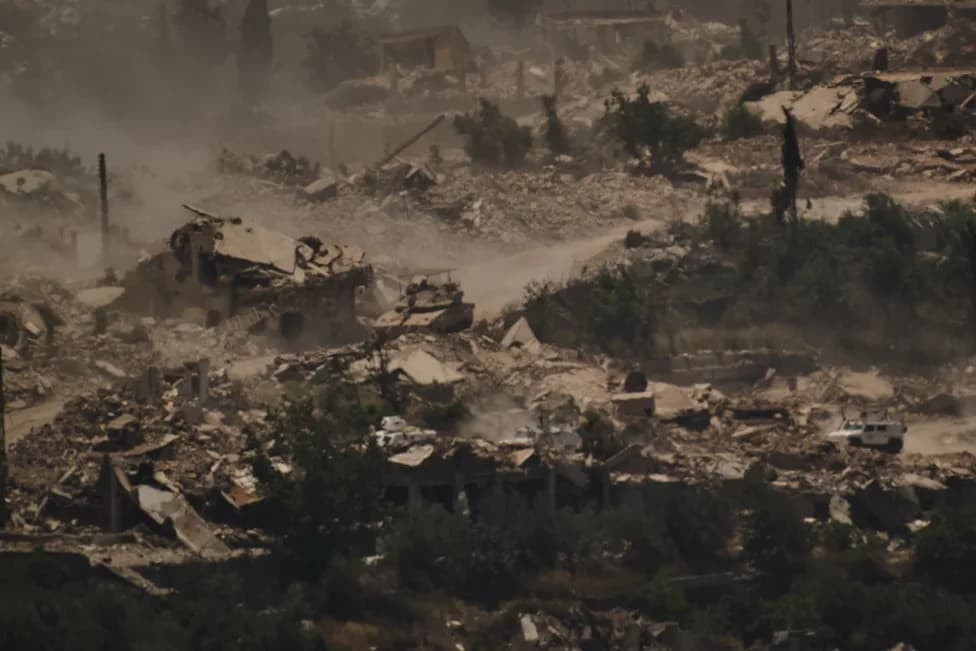
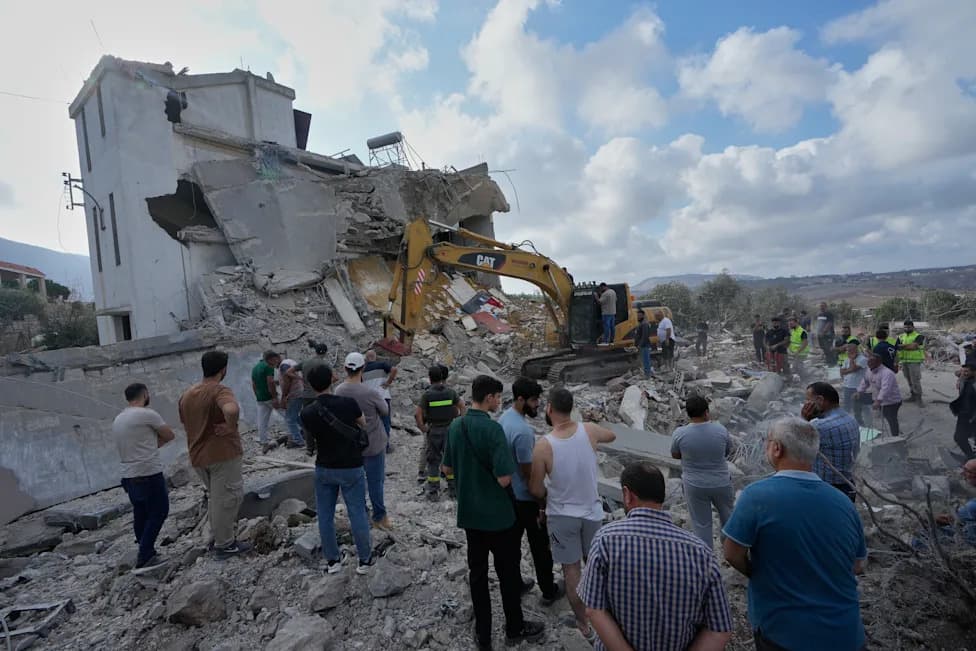
Lebanon's President Joseph Aoun visited Nabatiyeh after Israeli forces seized parts of the Ali Taher ridge, raising concerns about renewed strikes despite a June 20 ceasefire. Aoun, accompanied by senior security chiefs, pledged state support to help displaced residents remain in their communities. The truce has allowed hundreds of thousands to return home, but strikes and drone activity continue. Diplomatic talks between Lebanon and Israel are due to resume in Rome in October, though Hezbollah opposes direct negotiations.
Lebanon President Visits Nabatiyeh Near Captured Hill Amid Rising Fears Of Israeli Strikes
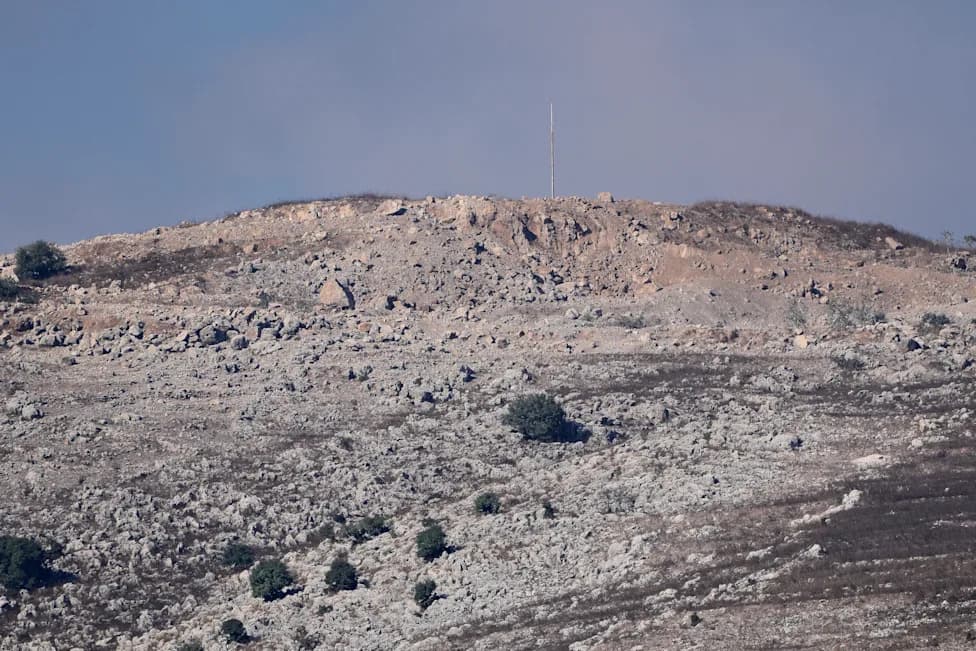
Destroyed stones on the top of Ali al-Taher ridge, which Israeli forces captured after fighting with Hezbollah and where the Israeli military said it blew up a network of Hezbollah tunnels Thursday night near Nabatiyeh town, southern Lebanon, Friday, Sept. 11, 2026. (AP Photo/Hussein Malla)
Lebanon's president, Joseph Aoun, paid a rare visit on Saturday to Nabatiyeh in the south, coming close to the area where Israeli forces recently captured parts of the strategic Ali Taher ridge. The visit comes amid growing concerns about further Israeli strikes despite a U.S.-brokered ceasefire.
Visit and Local Concerns
According to the state-run National News Agency, Aoun was accompanied by the heads of Lebanon's security agencies. Residents in Nabatiyeh have urged the Lebanese Army to increase its presence in the city to deter a possible Israeli ground offensive and to reassure families displaced during months of fighting.
Footage shown on local television captured a man telling the president that residents want to feel secure and to ensure their children are safe after being displaced and humiliated. Aoun pledged that the state would follow up on residents' needs "so that you stay here," underscoring an emphasis on reconstruction and support for returnees.
Ceasefire And Ongoing Tensions
A U.S.-brokered ceasefire that took effect on June 20 largely paused the active fighting that began on March 2, after cross-border exchanges and escalation between Hezbollah and Israel. Despite the ceasefire, Israeli forces have carried out strikes and air raids in parts of southern Lebanon. Hezbollah has also launched explosive drones in the area, though it has not claimed responsibility for all such incidents.
The recent Israel–Hezbollah fighting has been deadly and disruptive: more than 4,000 people were killed in Lebanon and over 1 million displaced during the height of the conflict. Since the June truce, hundreds of thousands of displaced residents have returned to homes in southern Lebanon and in Beirut's southern suburbs, though security concerns remain.
Aoun: "The state will follow up on the needs of the residents so that you stay here."
Diplomacy And The Road Ahead
Lebanon and Israel have held several rounds of direct talks in Washington and Rome to address stabilization and security issues along the border. The U.S. State Department announced that the next round of Israel–Lebanon talks is scheduled for Rome in October. Hezbollah, however, rejects direct talks with Israel and has urged the Lebanese government to abandon the framework agreement reached in June.
The president's visit to Nabatiyeh highlights both the fragility of the current calm and the government's efforts to reassure affected communities while diplomatic channels continue.
Help us improve.