Researchers engineered a foldamer, SK‑129, that binds multiple regions of alpha‑synuclein and prevents toxic clumps from forming and spreading in mice. The molecule stabilizes early oligomers, stopping them from growing into larger aggregates. SK‑129 shows promise in cell and animal models but has not been tested in humans; questions remain about safety, dosing and brain penetration. Foldamers may offer a new approach to target "undruggable" proteins and could be relevant to other aggregation‑driven disorders such as Alzheimer’s and ALS.
Foldamer SK‑129 Disarms Toxic Alpha‑Synuclein Clumps in Mice — A New Strategy for Parkinson’s
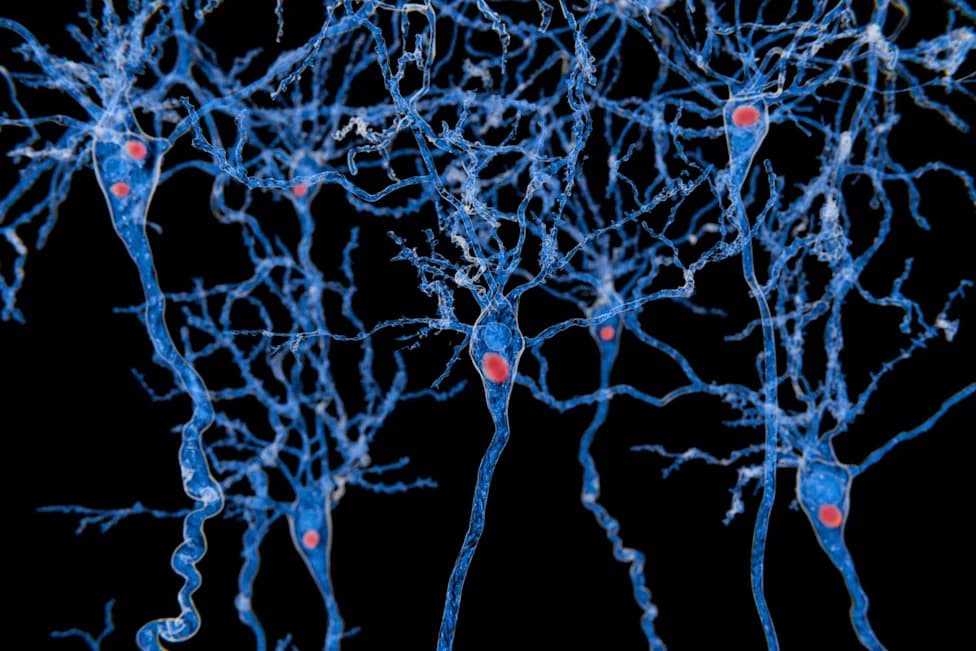
Toxic clumps of abnormal proteins damage neurons and cause dementia.Juan Gaertner/Science Photo Library via Getty Images
Existing treatments for Parkinson’s disease and related disorders mostly relieve symptoms but do not stop the molecular processes that drive neuronal damage. New preclinical work identifies a synthetic, foldable molecule that can prevent and break up toxic alpha‑synuclein assemblies in animal models — a promising step toward therapies that target disease causes rather than symptoms.
What the Research Shows
My laboratory has developed a synthetic compound called SK‑129 that acts like a molecular brace on the protein alpha‑synuclein. SK‑129 binds to multiple regions of the protein and stabilizes it in a conformation that is far less likely to stick to other alpha‑synuclein molecules. By binding preferentially to early, oligomeric forms, SK‑129 prevents these seeds from growing into larger aggregates and from spreading between cells in mouse models — and this effect reduced disease signs in those animals.
Why Foldamers Matter
SK‑129 belongs to a class of engineered molecules called foldamers. Foldamers are laboratory‑designed constructs that fold into predictable three‑dimensional shapes, much like natural proteins. Their structural stability and larger interactive surfaces allow chemists to design them to recognize and engage targets that are difficult for conventional small molecules — including highly flexible, "undruggable" proteins like alpha‑synuclein.
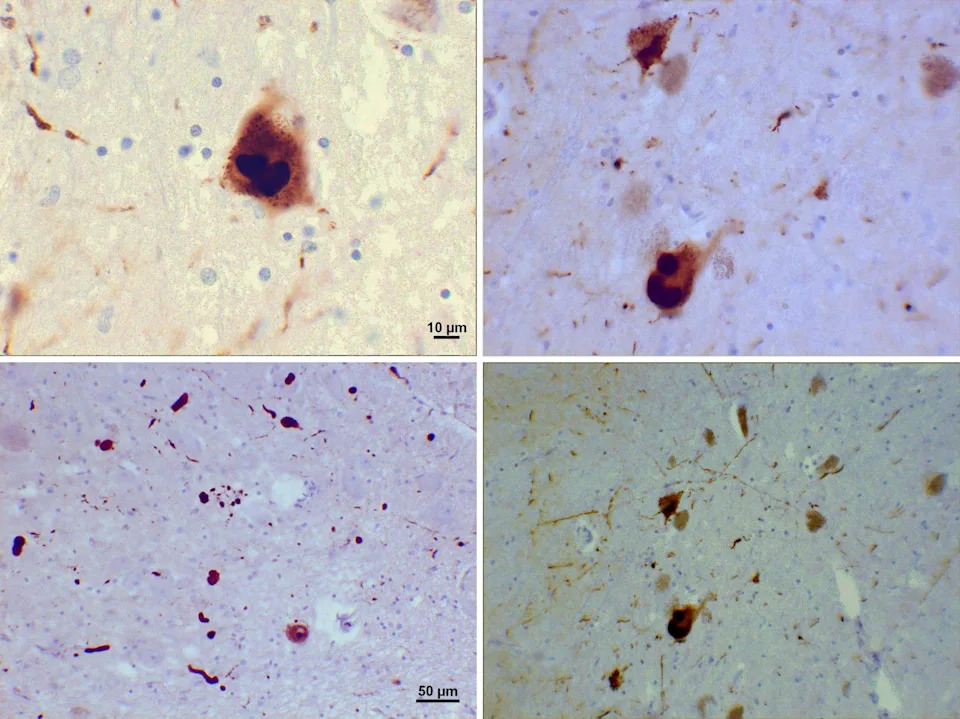
Alpha-synuclein make up the Lewy bodies (darker spots) that form in neurons in Parkinson's.Suraj Rajan/Wikimedia Commons,CC BY-SA
Alpha‑synuclein is the main component of Lewy bodies — dense protein inclusions that accumulate in neurons in Parkinson’s disease and are implicated in neuronal dysfunction.
Potential Beyond Parkinson’s
Because toxic protein aggregation is a shared feature of many neurodegenerative diseases, foldamers could have wider applications beyond Parkinson’s. Similar strategies might be adapted to target pathological aggregates in Alzheimer’s disease, amyotrophic lateral sclerosis (ALS), and other disorders driven by misfolded proteins.
Important Limitations and Next Steps
SK‑129 has produced encouraging results in cell culture and mouse models, but it has not yet been tested in humans. Key questions remain: long‑term safety, optimal dosing, brain penetration and overall pharmacokinetics in people. Additional work is needed to fully characterise SK‑129’s molecular mechanism, improve its drug‑like properties and demonstrate efficacy and safety in clinical trials.
Other labs are pursuing complementary approaches — such as antibodies or small molecules that clear aggregates, reduce alpha‑synuclein production, or block aggregation — and several strategies are now in clinical trials. Each approach faces challenges, including distinguishing toxic from non‑toxic protein forms and achieving sufficient delivery across the blood–brain barrier.
Collaboration and Outlook
Progress will depend on close collaboration among neuroscientists, chemists, biophysicists, clinicians and translational researchers. While foldamers like SK‑129 are an exciting addition to the drug discovery toolbox, translating them into safe, effective medicines for people will require careful, rigorous preclinical and clinical development.
Help us improve.