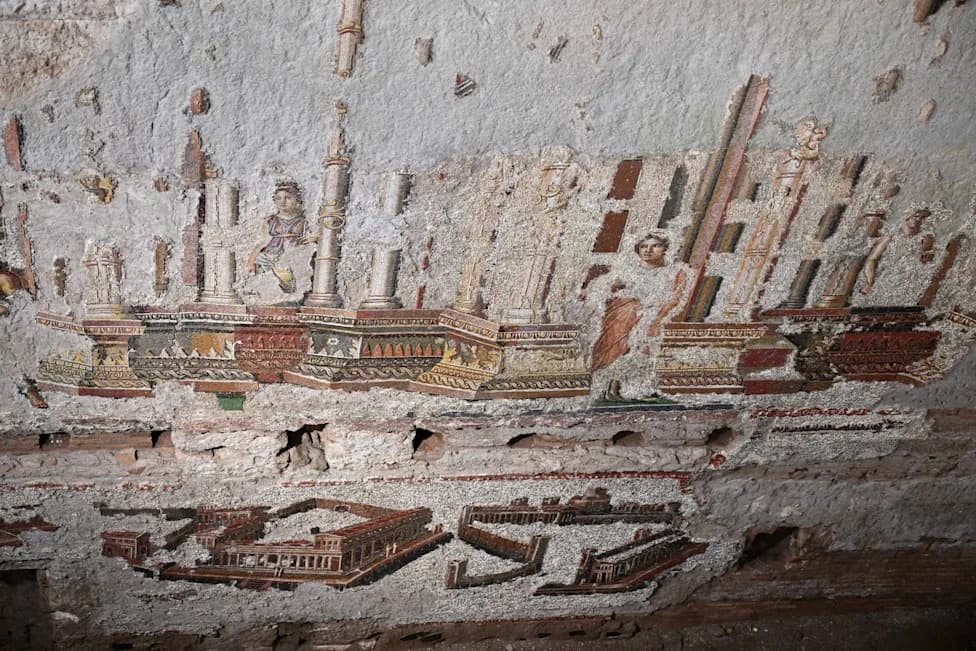
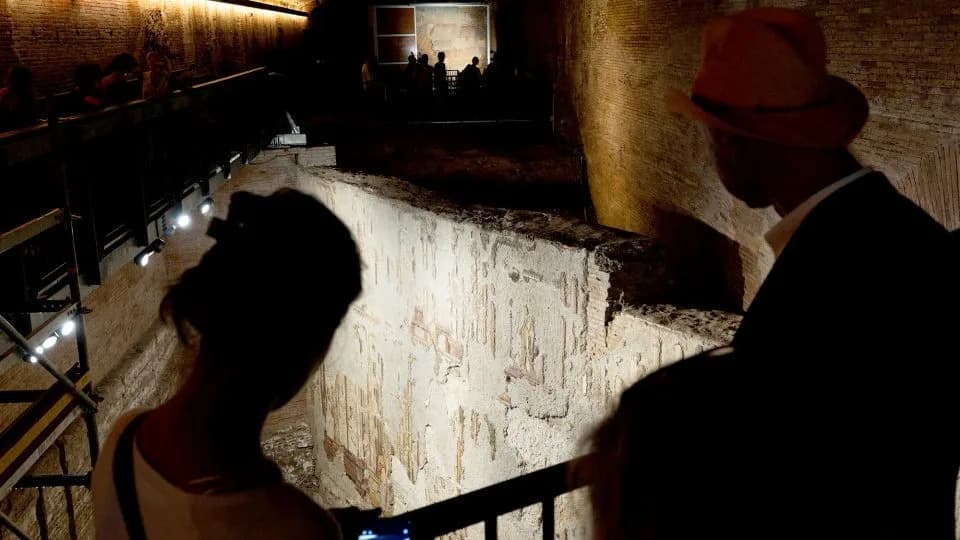
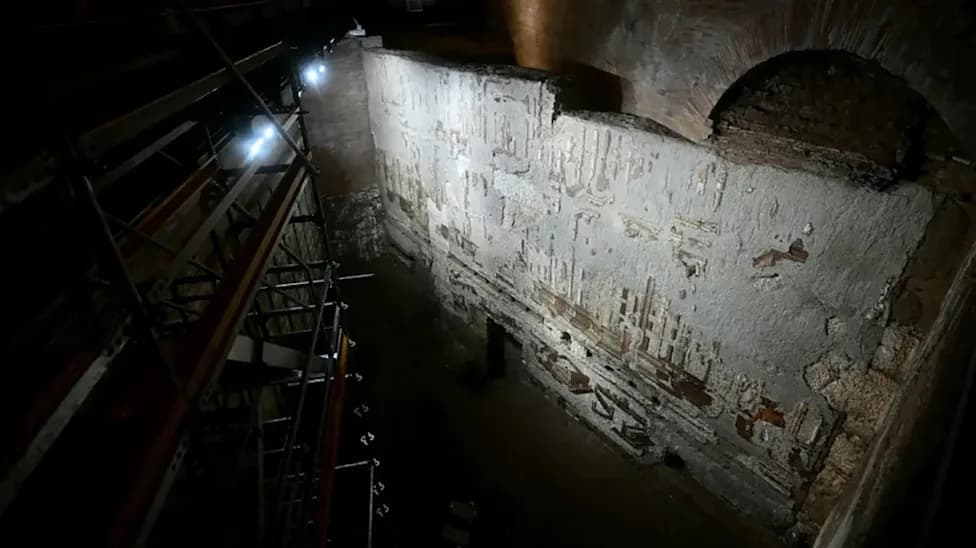
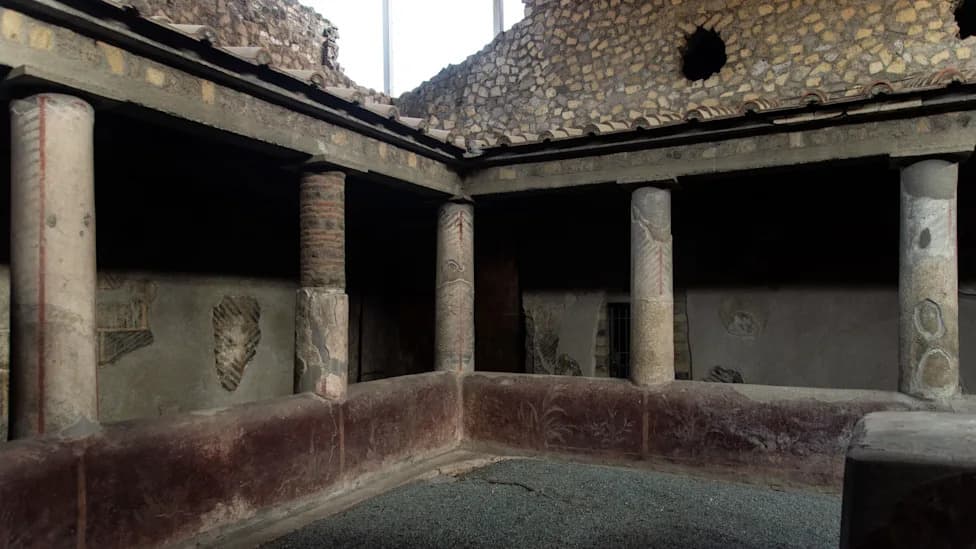
The Pompeii Archaeological Park has restored a large painted ceiling fragment depicting Dionysus and Ariadne, reassembling more than a quarter of the original decoration from recovered fragments. Conservators used a modular approach that preserves existing pieces while allowing future additions. The project highlights how artworks survived the 79 AD eruption that buried Pompeii under 14–17 feet of ash and killed more than 2,000 people.
Pompeii Ceiling Fresco Restored: Dionysus and Ariadne Reconstructed After 2,000 Years
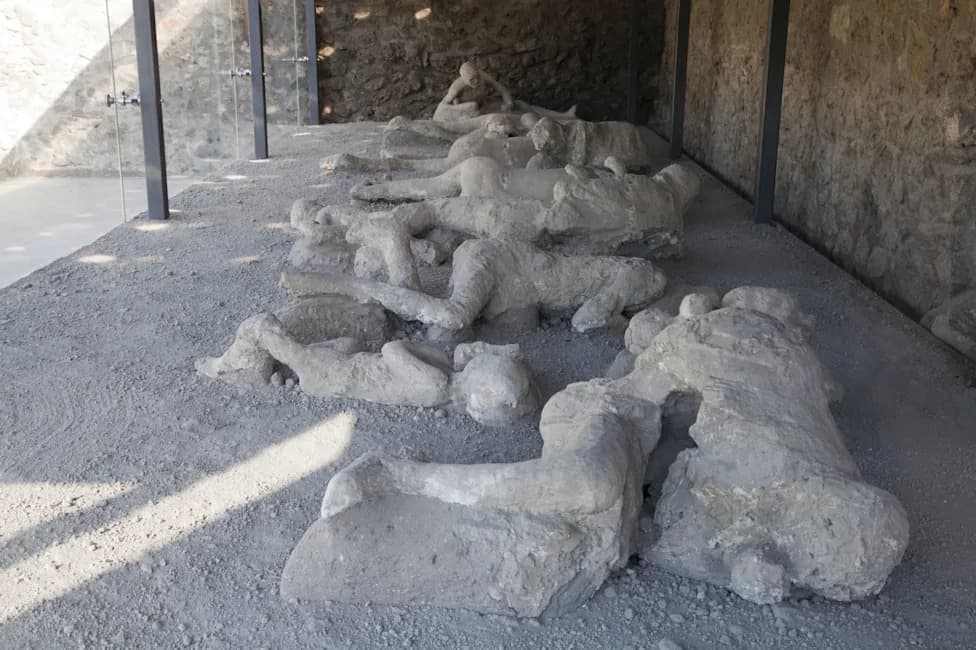
This picture taken on November 9, 2012 through the protective glass of the Orto dei fuggiaschi (The garden of the Fugitives)shows the13 bodies of victims who were buried by the ashes as they attempted to flee Pompeii during the 79 AD eruption of the Vesuvius volcano. The garden of the fugitives reoponed the same day to public after about a year of restoration works.
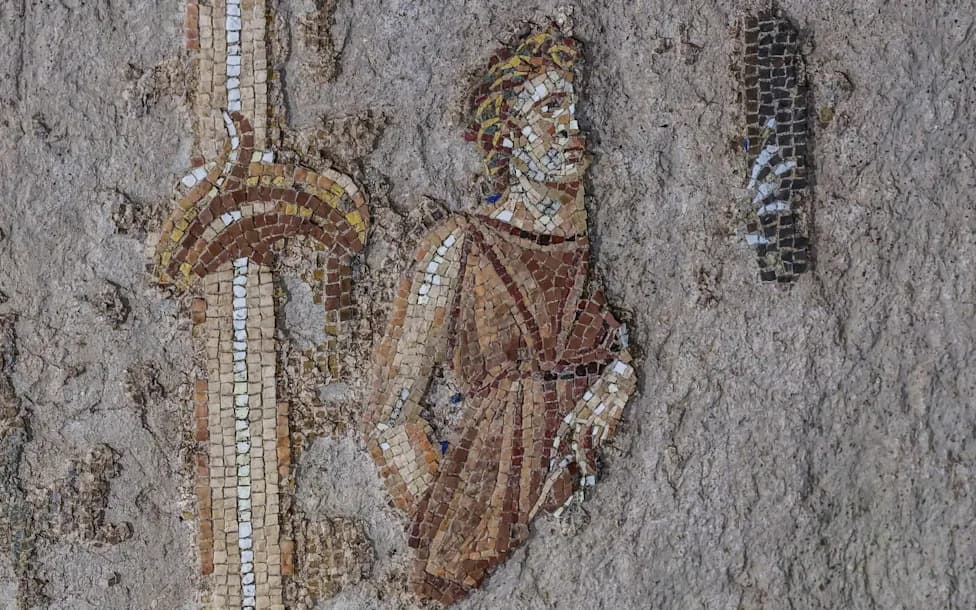
Archaeologists and conservators at the Pompeii Archaeological Park have completed a major restoration of a painted ceiling from a house in Pompeii, recovering a large fresco that had been lost since the catastrophic eruption of Mount Vesuvius in 79 AD. The recovered scene centers on the Greek god of wine, Dionysus, together with Ariadne, the Cretan princess.
Conservators reconstructed more than a quarter of the original ceiling decoration by carefully matching and reintegrating fragments found during ongoing excavations. The recovered fragments were analyzed and assembled to restore the central compositional scene while respecting the integrity of the surviving material.
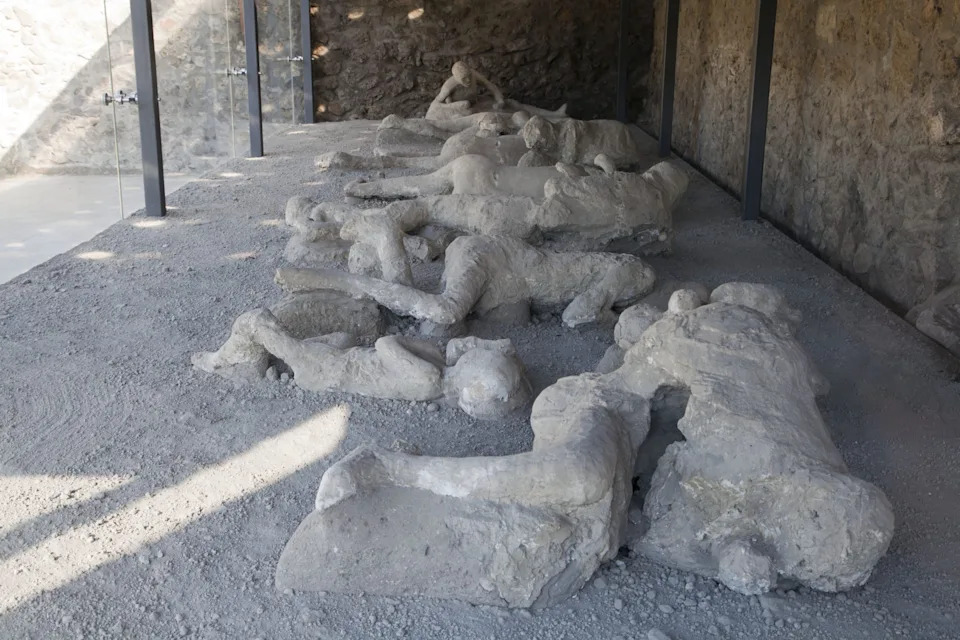
This picture taken on November 9, 2012 through the protective glass of the Orto dei fuggiaschi (The garden of the Fugitives)shows the13 bodies of victims who were buried by the ashes as they attempted to flee Pompeii during the 79 AD eruption of the Vesuvius volcano. The garden of the fugitives reoponed the same day to public after about a year of restoration works.
Modular, Updateable Conservation
The restoration follows a modular conservation plan: preserved fragments are mounted in a way that keeps the reconstructed surface stable but also allows new pieces to be added if they are discovered later. This flexible method both protects what has already been reassembled and leaves the door open for future enhancements.
"The modular structure allows for the addition of new fragments without compromising the reconstruction already completed, transforming the restoration into an open and updatable process," the Pompeii Archaeological Park said.
Context and Significance
Frescoes like this one offer exceptional insight into the artistic tastes, mythological themes, and domestic decoration of Roman-era Pompeii. They also demonstrate the surprising resilience of painted surfaces and pigments despite burial under volcanic deposits for nearly two millennia.
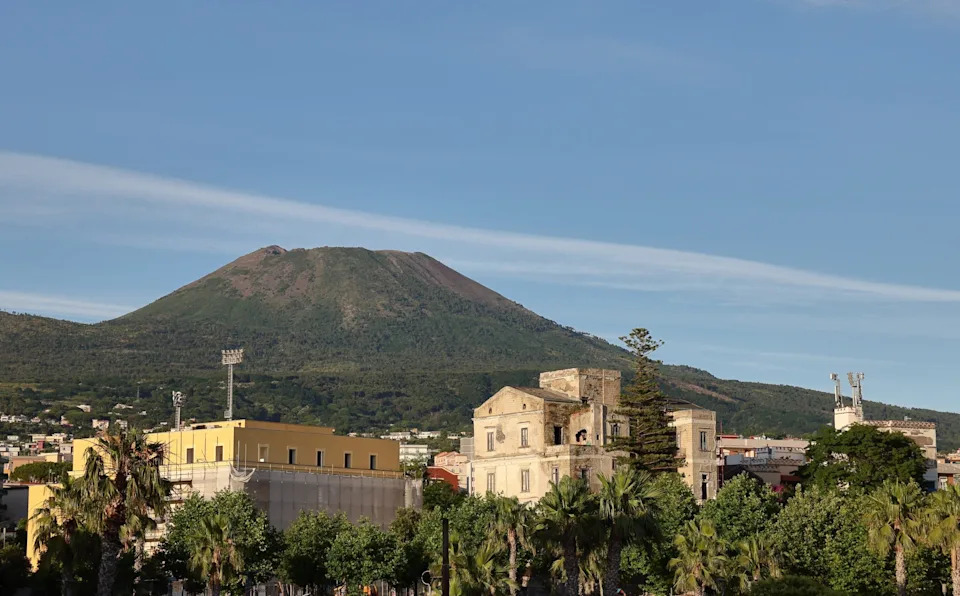
Mount Vesuvius captured from Ercolano (Italy), June 12th, 2026
The 79 AD eruption buried Pompeii under roughly 14–17 feet (about 4–5 meters) of ash and volcanic debris, preserving buildings, artworks, and the plaster outlines of victims. Contemporary accounts, including those of the Roman writer Pliny the Younger, describe an eruption that lasted many hours and devastated the surrounding towns. Nearby Herculaneum was buried under far greater depths of pyroclastic material.
Archaeological work at Pompeii continues to yield new finds and restorations that deepen our understanding of daily life in the Roman world. Mount Vesuvius remains an active volcano, with its most recent eruption occurring in 1944 and the last major premodern eruption in 1631.
Photo note: A widely circulated 2012 photograph taken through the protective glass of the Orto dei Fuggiaschi (Garden of the Fugitives) shows casts of people who perished while attempting to flee the eruption. The garden reopened to the public after restoration work.
Help us improve.