Echolocation is a biological sonar used by more than a thousand species — including many bats, all toothed whales, some birds and small mammals — to find prey and navigate in low-light or cluttered environments. Animals generate and focus sounds in diverse ways: throats, noses, wings, and specialized fat deposits such as a dolphin’s melon. Some prey, like tiger moths, produce clicks that can jam bat sonar. Blind humans can also learn to echolocate, recruiting visual brain regions to interpret echoes.
How Echolocation Works: Nature’s Sonar From Bats to Blind Humans
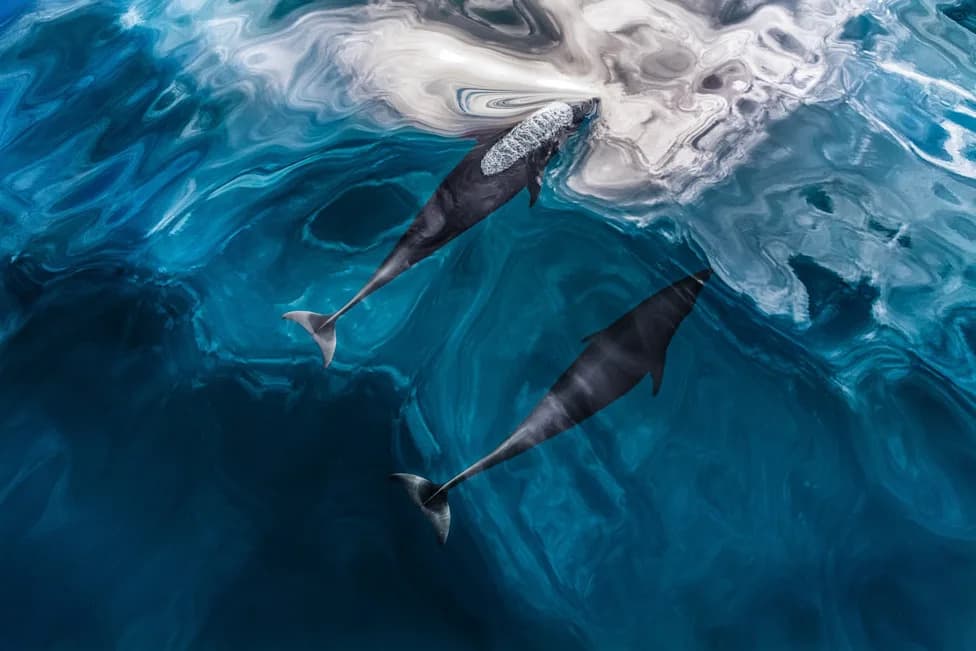
Northern right whale dolphins swim just under the surface near British Columbia, Canada. Echolocation is a logical strategy in the ocean, where sound travels five times faster than in air.Photograph by Paul Nicklen, Nat Geo Image Collection
Echolocation is nature’s sonar: an animal emits sound waves that bounce off objects and return as echoes, carrying information about distance, size and shape. More than a thousand species use echolocation — from many bats and all toothed whales to some birds and small mammals — relying on sound when light is scarce or environments are cluttered.
How Animals Produce and Focus Sound
Animals generate echolocation signals in different ways: by vibrating throat structures, clicking the tongue, beating wings, or using specialized nasal anatomy. Some cave-adapted birds, such as oilbirds and certain swiftlets, “produce short clicks with their syrinx, the vocal organ of birds,” says Kate Allen, a postdoctoral fellow in the Department of Psychological and Brain Sciences at Johns Hopkins University.
Bats: Masters Of Aerial Sonar
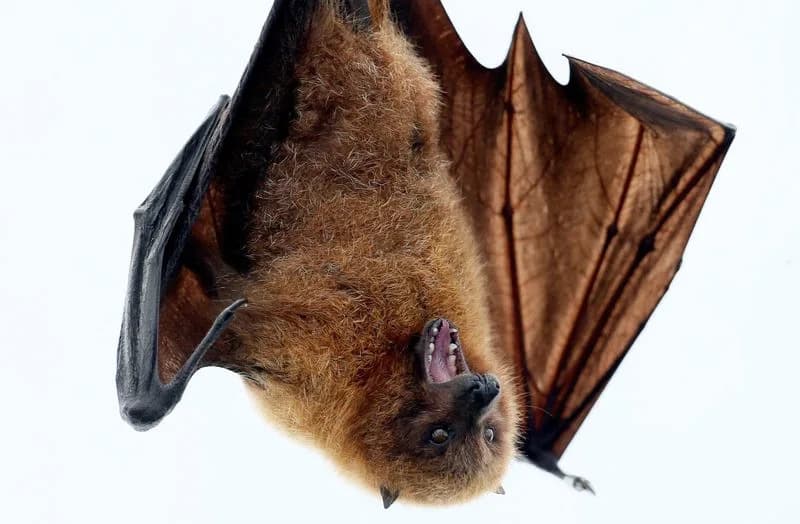
Bats are the most familiar echolocators. Most species, including the tiny Daubenton's bat, contract laryngeal muscles to produce ultrasonic calls — the bat equivalent of a loud shout. Call structure varies dramatically between species, helping individuals pick out their own signals in a crowded night sky. Calls are adapted to habitat and prey: some European bats drop to near-whisper levels when hunting moths to avoid detection.
“Brains don’t like undeveloped real estate,” Allen notes, explaining how specialized abilities are retained only when useful.
Prey That Fight Back
Some prey have evolved acoustic defenses. Tiger moths, for example, flex tymbal organs to produce clicks that can jam or confuse bat sonar, reducing predation. These evolutionary arms races shape both predator calls and prey countermeasures.
Precision, Speed, And Special Adaptations
Top echolocators are astonishingly precise. Certain bats can detect objects as small as about 0.007 inch (roughly the width of a human hair). Because prey like insects move quickly, bats may call continuously during pursuit, reaching rates up to ~190 calls per second. Many insectivorous bats consume up to half their body weight in insects each night.
Some bats have specialized facial structures — for example, leaf-nosed bats emit focused calls through complex nose leaves and can rapidly change ear shape to better localize returning echoes. Recently, researchers discovered that a few fruit bats, such as the South Asian lesser dawn bat, produce clicks with wingbeats.
Sonar Underwater: Dolphins, Whales And The Melon
Echolocation is particularly effective in water, where sound travels faster and farther than in air. Toothed whales and dolphins generate clicks in nasal passages (via structures often called phonic lips) and focus sound with a fatty organ called the melon. The melon reduces acoustic impedance between the animal’s tissues and water, sharpening outgoing signals. A fatty channel running from the lower jaw to the ear helps transmit returning echoes to the auditory system, clarifying the location of prey such as fish and squid.
Harbor porpoises produce very rapid, high-frequency clicks that are difficult for some predators to detect, helping them remain inconspicuous. Most marine echolocation clicks are ultrasonic and beyond human hearing, though species such as sperm whales, orcas and some dolphins produce sounds we can perceive.
Navigation And Human Echolocation
Beyond hunting and defense, echolocation helps animals navigate cluttered or dark environments. Big brown bats use sonar to thread through noisy forests; Amazon river dolphins likely rely on echolocation to weave among branches during seasonal floods.
Some blind or visually impaired humans learn to echolocate by producing tongue clicks or tapping a cane and interpreting echoes. Brain imaging shows that skilled human echolocators recruit visual cortical areas to process echo information — a striking example of neural plasticity.
Conclusion: Echolocation is a versatile, convergently evolved solution to sensing in darkness or clutter. From wings and syrinxes to phonic lips and the melon, evolution has produced many ways to build biological sonar — including the remarkable ability of some humans to learn it.
Help us improve.