Melaleuca quinquenervia, an invasive paperbark tree introduced to Florida in the late 1800s and spread further by aerial seeding in the 1930s, once covered hundreds of thousands of acres. Four insect biocontrol agents—two gall midges, a weevil, and a psyllid—work together to slash seed production (by up to 99%), stunt seedlings (~80% growth reduction), and defoliate young growth, reducing Melaleuca to roughly 10% of its peak coverage. Continued monitoring is needed to ensure ecosystem recovery and guard against unintended impacts.
Tiny Insects Are Turning Back a Century-Old Melaleuca Invasion in Florida
pryzmat/Shutterstock
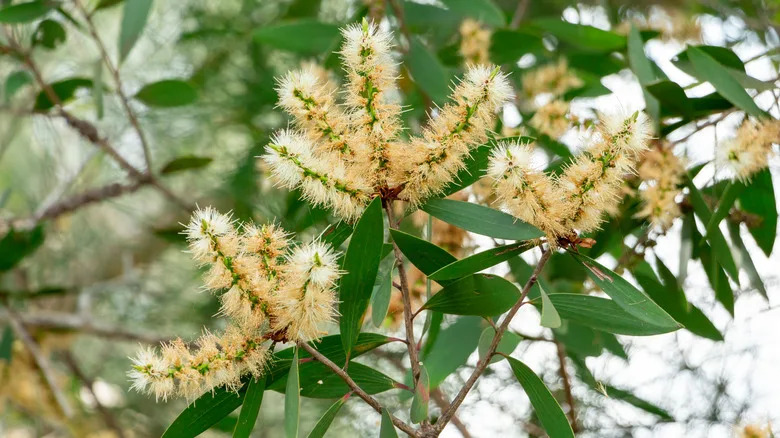
Florida’s battle with an invasive tree species has a surprising hero: tiny insects. Melaleuca quinquenervia, the paperbark tree native to Australia and Papua New Guinea, was introduced to Florida more than a century ago and became one of the state’s most damaging invasive plants. In recent decades, four insect species have been used as biological controls and have driven the invader back dramatically.
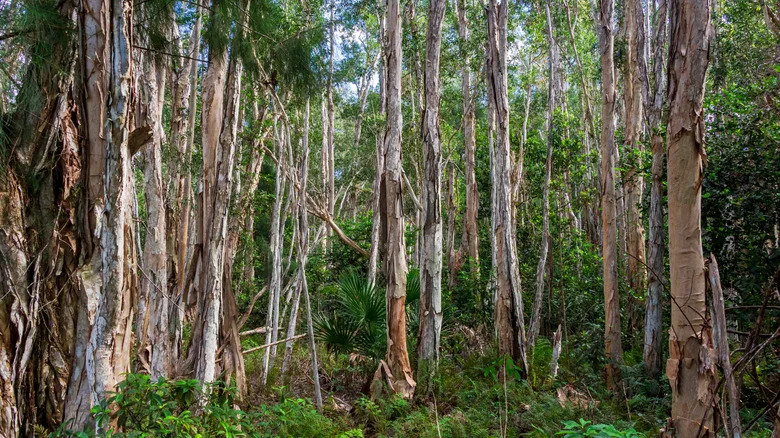
How bad was the invasion? Introduced for shade and erosion control in the 1880s, Melaleuca was later sown from airplanes by the U.S. Army Corps of Engineers in the 1930s to stabilize levees around Lake Okeechobee — a move that greatly accelerated its spread. A single mature tree can produce up to 20 million seeds per year. By the 1990s, Melaleuca covered roughly half a million acres across South Florida, displacing native plants and altering wetlands and waterways.
Sunshower Shots/Shutterstock
USDA Agricultural Research Service: Insect biocontrols can reduce Melaleuca seed production by as much as 99% and have helped shrink the invader to about 10% of its peak coverage.
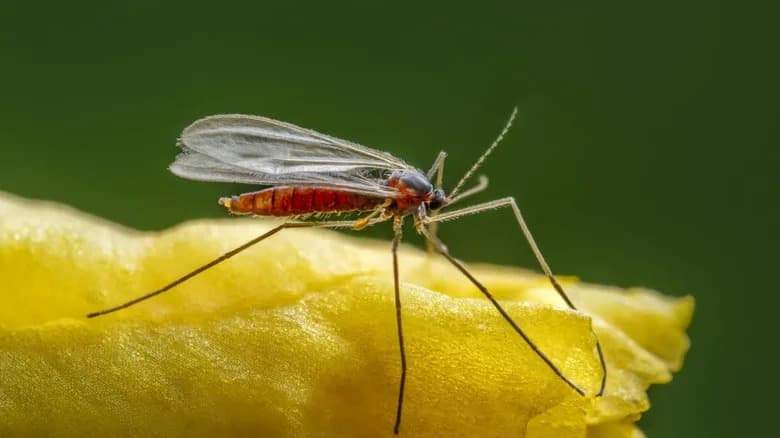
The insect team comprises two gall midges (Lophodiplosis trifida and Lophodiplosis indentata), the Melaleuca weevil (Oxyops vitiosa), and the Melaleuca psyllid (Boreioglycaspis melaleucae). They attack Melaleuca in complementary ways:
- Gall midges: The midges lay larvae that induce galls—growths that divert the tree’s energy to feed the insects. Treated seedlings can show about an 80% reduction in growth.
- Melaleuca weevil and psyllid: These insects feed on leaves and new shoots. The weevil bores and chews plant tissue while the psyllid siphons sap, weakening young growth and reducing future seed production.
All four insects appear to be highly host-specific to Melaleuca, which minimizes risk to native species. Used together as classical biological control agents, they have substantially reduced seed production and slowed tree growth at landscape scale. The result: a large drop in Melaleuca’s coverage across Florida’s wetlands and a rare, scalable success story in invasive-species management.
Sunshower Shots/Getty Images
Why continued vigilance matters — Although the insects have produced impressive results, long-term monitoring is essential to ensure native ecosystems recover, to check for unforeseen non-target effects, and to manage remaining Melaleuca stands where mechanical removal or targeted herbicide treatment may still be needed.
Bottom line: A small cast of specialized insects has helped roll back a century-old invasion, demonstrating the potential power and caution of classical biological control in restoring threatened wetland ecosystems.
Help us improve.