Researchers from the Australian Institute of Marine Science and Murdoch University attached camera-equipped tags to five juvenile whale sharks off Ningaloo Reef. The 24-hour recordings — the largest behavioral catalog for the species to date — show whale sharks feeding both below the surface (by sinking with open mouths) and at the surface. Most of the time they used energy-saving 'low-effort' feeding, switching to active feeding when they encountered dense krill swarms. The findings, published in Marine Biology, clarify how these ~20-ton animals cope with variable prey availability.
Shark-Mounted Cameras Reveal Surprising Feeding Strategies of Whale Sharks

Credit: Khaichuin Sim / Getty Images
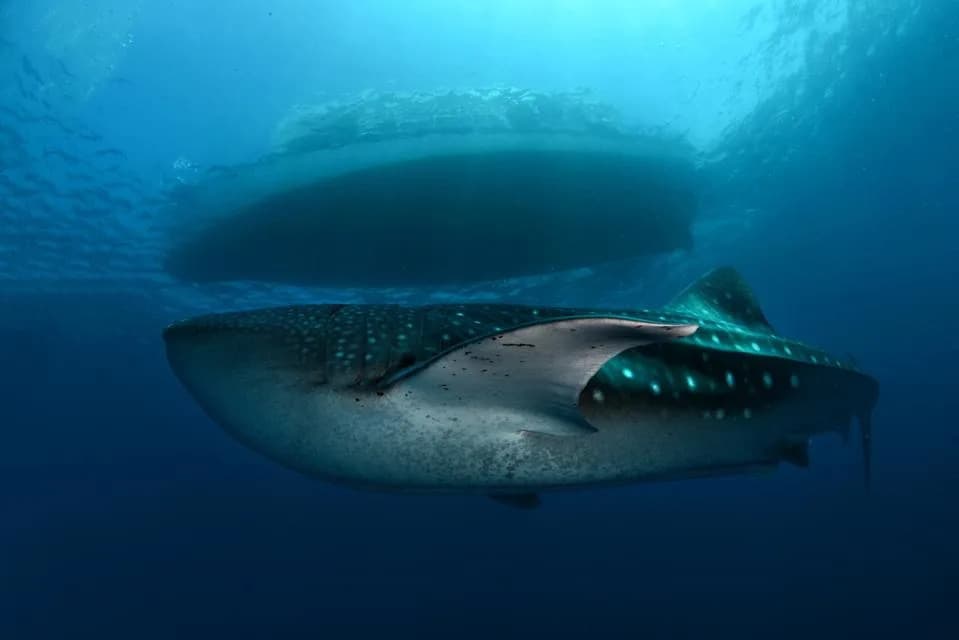
Ever wondered what the ocean looks like from a whale shark's point of view? New camera-tag footage from juvenile whale sharks off Ningaloo Reef is changing how scientists understand the world's largest fish — and delivering stunning underwater scenes.
Credit: Khaichuin Sim / Getty Images
How the Study Worked
Researchers from the Australian Institute of Marine Science and Murdoch University attached small electronic tags with built-in cameras to the dorsal fins of five juvenile whale sharks near Ningaloo Reef, Western Australia. Each tag was programmed to detach after 24 hours so the team could track its signal, recover the device and retrieve the footage.
What the Tags Showed
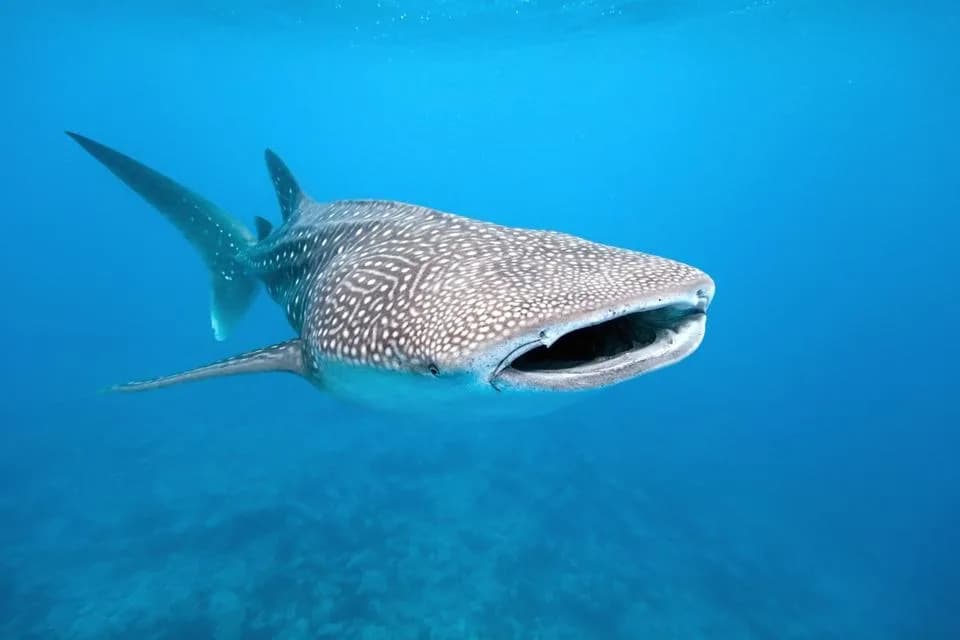
The recovered recordings, combined with previous observations, produced what the authors describe as the largest catalog of whale shark behavior collected to date, with particular focus on feeding tactics. Contrary to earlier assumptions that these giants feed mainly at the surface, the footage captured a mix of behaviors: sharks sometimes sank with open mouths to intercept prey below the surface, and at other times fed at or near the surface.
Most of the 24-hour observations were dominated by so-called "low-effort" feeding — intermittent, energy-saving moves — punctuated by short bursts of active, high-effort feeding when the sharks encountered dense swarms of krill.
Why It Matters
These behavioral insights help explain how whale sharks — animals that can weigh around 20 tons — persist in tropical waters where prey availability can be patchy. By switching between energy-efficient and intensive feeding modes, they appear better adapted to exploit unpredictable food resources. The study was published in the journal Marine Biology.
Implications: The approach demonstrates the value of animal-borne cameras for revealing fine-scale behavior that surface observations alone can miss. Continued camera-tag studies could illuminate migration, feeding ecology and conservation needs of these gentle giants.
Help us improve.